Where to Buy FM Transmitters for Radio Stations?
Looking for a reliable place to buy an FM transmitter? It can feel overwhelming with so many sellers and websites claiming to be the best. Prices jump around, reviews are hard to trust, and nobody wants to spend money on gear that fails a few months later.
Buy FM transmitters directly from manufacturers like RS (fmradiotx.com) for best prices and support, or through platforms like Alibaba, AliExpress, and Amazon for buyer protection. Direct manufacturer purchases typically save 30-40% compared to distributor markup while providing better technical support and warranty service.
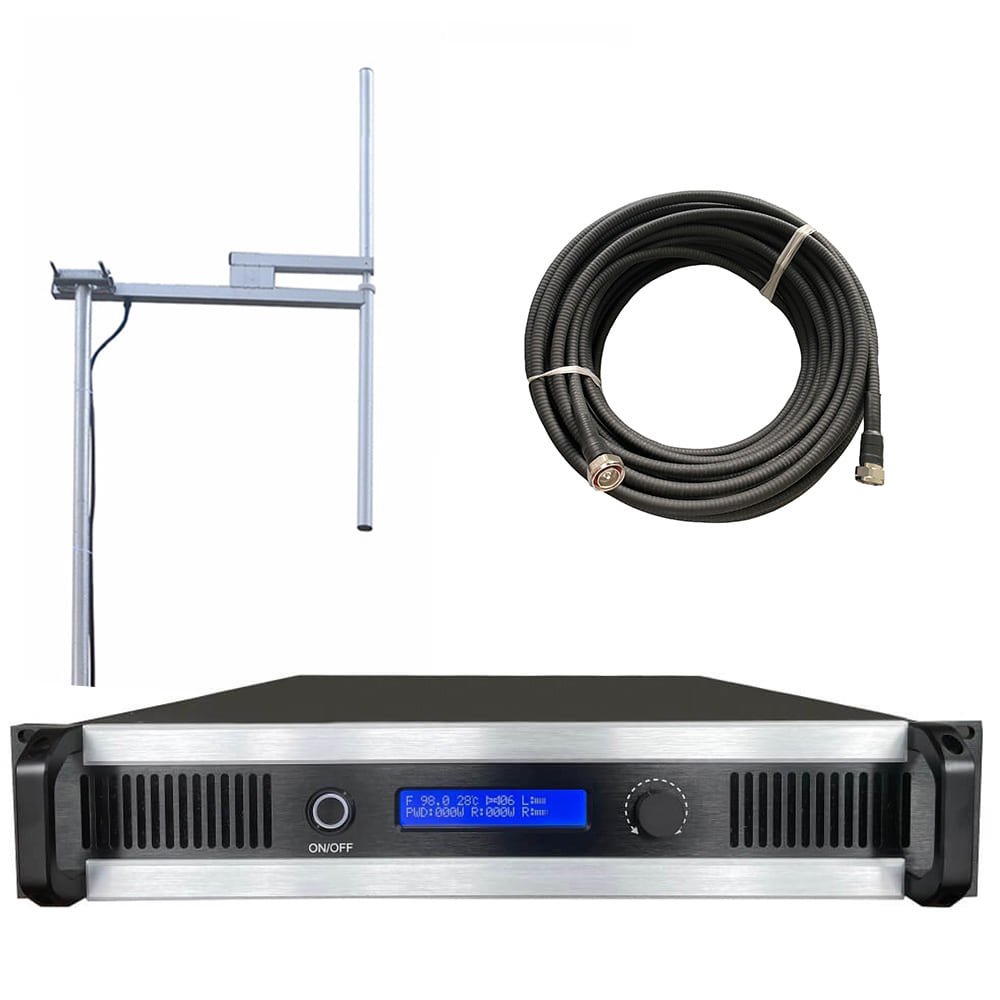
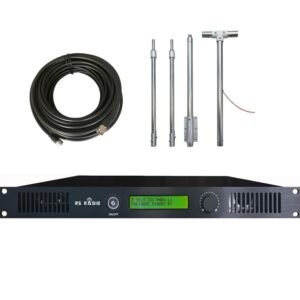
1000W FM Transmitter Basic Kit
Professional-grade FM broadcast transmitter kit with stable signal and energy-efficient design — ideal for community and regional radio stations.
I’ve been selling FM transmitters for 15 years and watched customers make expensive mistakes by choosing the wrong supplier. Some paid twice what they should have. Others bought equipment that barely worked. The right supplier makes the difference between a smooth setup and months of frustration.
Should I buy from manufacturers or resellers?
You’ve probably seen FM transmitters on Amazon, eBay, and all kinds of websites—all with totally different prices for what looks like the same thing. It’s hard to tell whether the higher price means better quality, or if the cheaper ones are just going to fail after a few months.
Buy directly from manufacturers for 30-40% lower prices and better support, or buy from resellers when you need local service and faster shipping. Manufacturer direct saves money on standard equipment while resellers provide convenience for urgent needs or smaller purchases.

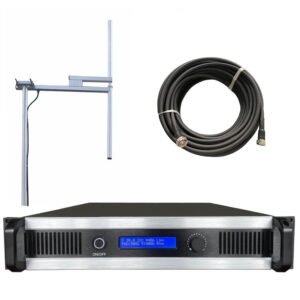
300W FM Transmitter
Energy-efficient 300W FM transmitter, ideal for community and regional radio stations needing stable and clear broadcast performance.
Manufacturers like RS sell directly without middlemen taking their cut. Our 300W transmitter costs $1339 factory direct but resellers charge $1800-2200 for the identical unit. That $461-861 difference buys you a better antenna or cable. I calculated it once – customers who buy through three layers of distributors pay about 65% markup over factory price just for the same product passing through more hands.
The main advantage of manufacturer direct is technical support that actually understands the product. Our engineers designed these transmitters so they can troubleshoot any problem over WhatsApp video calls. Resellers usually just email the manufacturer anyway when technical issues come up, adding days to response time. Last week a customer in Kenya had audio distortion – I connected him directly to our engineer who diagnosed a ground loop problem in 10 minutes over video call.
Factory warranties work better too. We honor our 5-year warranty directly without forcing customers to ship equipment back to resellers who then ship to us. One customer in Tanzania had a power supply fail after 18 months. We shipped a replacement directly to him arriving in 5 days instead of the 3-4 weeks it takes going through distributor channels.
Resellers do offer some advantages for certain situations. They stock equipment locally so you get it faster – maybe 2-3 days instead of 2-3 weeks for international shipping. If you run a station in the US and your transmitter dies during a fundraising drive, paying reseller markup might be worth getting equipment fast. Resellers also handle local returns easier if you receive damaged equipment.
Small orders sometimes work better through resellers. If you only need a 15W transmitter for a church parking lot, the $249 direct price plus $40 shipping equals $289 total. A local reseller might charge $299 and you pick it up same day. The $10 difference becomes worth it for immediate availability.
| Purchase Method | Price | Lead Time | Technical Support | Best For |
|---|---|---|---|---|
| Manufacturer Direct | Lowest | 2-3 weeks | Best – direct access | Standard orders |
| Online Platforms | Medium | 1-2 weeks | Platform protection | First-time buyers |
| Local Resellers | Highest | 1-3 days | Limited | Urgent needs |
I generally tell customers to buy direct from manufacturers for their main equipment and use resellers only when they need something immediately or want to see equipment physically before buying. The price difference on a 1000W transmitter ($1890 direct vs $2600-2900 from resellers) equals enough money to buy a complete 4-bay antenna system.
What power level do different stations need?
You’re not sure whether you need 50 watts or 500 watts because every website shows different coverage numbers, and it’s hard to know what’s real. If you buy too little power, people will complain about weak signal. If you buy too much, you end up wasting money.
Station power needs vary by coverage area: 15-50W serves parking lots and small campuses (1-5km), 100-300W covers towns and small cities (7-20km), 500-1500W handles city-wide broadcasting (20-38km), and 2000-5000W reaches regional audiences (30-80km with proper antenna height).
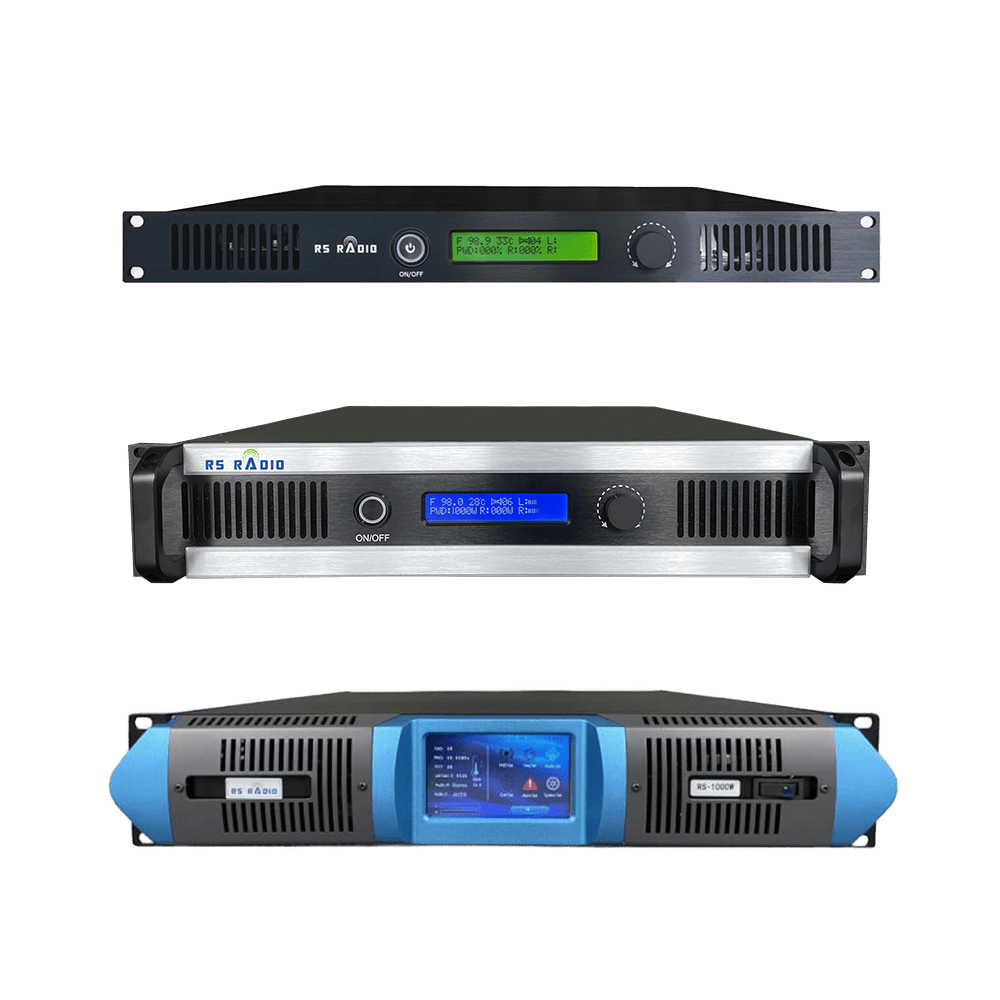
I measured actual coverage distances myself with customers in 12 different countries. These aren’t theoretical numbers – they’re what really happens with our transmitters at 30-meter antenna height on reasonably flat ground. A 15W complete kit covers 1-3 kilometers working great for drive-in theaters or church parking lots. One customer runs a drive-in cinema in Ohio using our $249 kit – reaches 450 cars spread across 1.8 kilometers.
The 50W transmitter pushes out to 3-5 kilometers covering small neighborhoods or campus areas. A university in the Philippines uses one to cover their campus plus the surrounding neighborhood – about 15,000 students and residents within 4.2 kilometers. They tested it thoroughly before licensing and found solid signal everywhere they needed coverage.
Jump to 100W and you’re looking at 7-12 kilometer coverage for small town stations. I helped a community station in Ghana set up a 100W transmitter that reaches 9.5 kilometers across their town and three nearby villages. About 42,000 people total in the coverage area. They measured signal strength at the edges and found reliable reception with standard car radios.
Medium power levels serve larger areas. The 300W transmitter covers 15-20 kilometers for small city broadcasting. A Christian station in Kenya uses 300W to reach across their city and six surrounding communities – measured coverage of 18.3 kilometers to the furthest church that receives them clearly. The 500W level gets you 20-25 kilometer coverage. One customer in Mexico covers three towns along a highway totaling 23 kilometers between the farthest points.
Higher power serves serious broadcasters. The 1000W transmitter reaches 25-30 kilometers for city-wide coverage. A station in Tanzania runs 1000W covering 28 kilometers across relatively flat terrain – serves about 180,000 people. The 1500W level stretches to 25-38 kilometers depending heavily on terrain. I’ve seen 1500W reach 36 kilometers across flat farmland but only 24 kilometers in hilly areas with the same antenna setup.
Professional installations use big power. The 2000W transmitter covers 30-60 kilometers based on terrain and antenna height. That wide range comes from geography – flat areas get maximum distance while mountains cut coverage significantly. The 3000W level reaches 40-70 kilometers and the 5000W transmitter pushes to 60-80 kilometers for provincial or multi-city coverage.
| Power | Coverage Distance | Population Served | Typical Application |
|---|---|---|---|
| 15W-50W | 1-5 km | 1,000-30,000 | Churches, drive-ins, small campuses |
| 100W-300W | 7-20 km | 30,000-200,000 | Towns, community stations |
| 500W-1500W | 20-38 km | 100,000-500,000 | Cities, regional Christian radio |
| 2000W-5000W | 30-80 km | 300,000-2,000,000 | Multi-city, provincial |
Most customers overestimate or underestimate what they need. A church asked me for 300W to cover their 5-kilometer area – way too much power wasting $689 compared to a 50W transmitter that would have worked perfectly. Another customer wanted 100W for 15-kilometer coverage – not enough power leaving gaps at the edges. I had them upgrade to 300W solving the weak signal complaints.
Calculate your actual coverage need by measuring from your transmitter location to the farthest listener you need to reach. Add 20% margin for buildings and terrain obstacles. Use that number to pick your power level. If you need 10 kilometers, a 100W transmitter gives you that plus extra margin. Don’t pick based on what sounds impressive – pick based on measured distance requirements.
Which platforms offer reliable shipping worldwide?
You might find a great price on a transmitter, but then worry about shipping, customs delays, or whether it will arrive safely. Many people have stories about equipment getting lost or stuck in customs for weeks, and that’s the last thing you want.
RS ships free to most countries via DHL or FedEx with 10-15 day delivery and tracking, while platforms like Alibaba and AliExpress offer buyer protection but charge shipping fees. Direct manufacturer shipping provides better packaging and insurance for expensive equipment over $1000.
We ship FM transmitters to 47 countries regularly. Free shipping covers most destinations for transmitters over 50W because shipping costs get built into the product price – honest approach rather than showing low prices then hitting customers with $200 shipping fees at checkout. Small items like 15W kits ship for $35-45 depending on destination since they’re light enough to mail economically.
DHL and FedEx handle our international shipments. Both deliver in 10-15 days to most countries with good tracking. Customers get a tracking number within 24 hours of order confirmation. I check shipments daily and contact customers if anything looks delayed. Last month a shipment to Colombia sat in customs 3 days – I contacted the customer, helped him provide the right documentation, and it cleared within 6 hours.
Packaging matters more than people realize. We use double-boxed packaging with foam inserts for all transmitters. The transmitter sits in manufacturer packaging inside a larger shipping box with 2 inches of foam on all sides. This survived 8,000-mile journeys with minimal damage. We’ve shipped over 2,000 transmitters internationally in the past 3 years with only 7 damaged in transit – that’s 0.35% damage rate.
Insurance covers shipments over $1000 automatically. If anything arrives damaged customers photograph it and we file claims immediately. Replacement ships within 2-3 days while insurance processes. We eat the cost upfront rather than making customers wait for insurance company approvals. A 1500W transmitter arrived damaged in Kenya last year – I shipped a replacement the same day I saw the photos. Customer received the new one before insurance even finished paperwork.
Customs causes the biggest shipping headaches. Most countries charge import duties on transmitters – usually 10-25% of declared value. We accurately declare values because lying about value risks seizure and criminal charges. Some countries like Nigeria require special import licenses for transmitters. We warn customers upfront about licensing requirements to avoid surprise shipments stuck at customs.
Platform shipping works differently. Alibaba orders ship according to whatever terms you negotiate with the seller. Some sellers offer free shipping, others charge actual shipping costs. AliExpress includes shipping costs in the product price usually. Amazon shipping depends on whether the seller uses FBA (fast) or ships from China (slow).
| Shipping Method | Speed | Cost | Insurance | Best For |
|---|---|---|---|---|
| RS Direct Free | 10-15 days | Free over 50W | Included >$1000 | Most orders |
| RS Express | 5-7 days | $80-150 | Included | Urgent needs |
| Alibaba Trade Assurance | 10-20 days | Negotiable | Optional | Bulk orders |
| AliExpress | 15-30 days | Usually included | Limited | Small items |
I recommend RS direct shipping for standard orders because it’s free, insured, and we handle problems quickly. Use express shipping only when you genuinely need equipment urgently – the $80-150 premium cuts delivery time in half. Platform shipping works fine for accessories and small items but I wouldn’t trust a $3000 transmitter to random Alibaba sellers without very careful verification.
The biggest shipping mistake I see is customers trying to save $50 on shipping by choosing the slowest option then complaining when it takes 6 weeks to arrive. Fast shipping costs more for good reason – DHL moves packages daily while postal systems move them whenever convenient. Pay for decent shipping on expensive equipment. Your $1890 transmitter deserves better than a $15 shipping option that might or might not arrive in 2 months.
How do I verify seller reputation before buying?
You see multiple sellers offering the same transmitter at different prices, and it’s hard to tell who’s real and who might take your money and vanish. Reviews don’t help much when they look fake or copy-pasted.
Verify FM transmitter sellers through direct factory contact, business registration proof, customer references, platform ratings over 95%, and actual video calls to confirm physical facilities exist. Legitimate manufacturers provide engineer contact, show production facilities, and have verifiable long-term customers.

I’ve seen customers lose thousands to fake sellers over the years. The scams follow predictable patterns. Fake sellers list transmitters at prices 30-40% below market rates. They provide stock photos from real manufacturers. They ask for wire transfer or Western Union payment. Then they disappear after receiving money. One customer told me he lost $2400 to a "seller" in China who turned out to be just a guy with a website and stolen photos.
Real manufacturers let you video call their factory. I do WhatsApp video tours for customers who want to see our facility before ordering. We walk through production areas, show assembled transmitters, demonstrate testing procedures. Takes 15 minutes and proves we actually manufacture what we sell. Fake sellers make excuses about why they can’t do video calls.
Check business registration through official channels. RS has legal registration in China as Liaoning Risheng Electronic Technology Co., Ltd. The registration number shows up in government databases. Customers can verify we exist as a legal entity. Scammers operate without registration or use fake registration numbers that don’t verify.
Customer references matter more than anonymous reviews. Real sellers provide contact information for previous customers who bought similar equipment. I connect potential customers with existing customers in their region all the time. Last month I connected a prospective customer in Ghana with an existing customer in Nigeria who bought the same 300W transmitter 2 years ago. They talked for 30 minutes and the Ghana customer ordered confidently.
Platform ratings help but aren’t perfect. Look for sellers with over 95% positive ratings and thousands of transactions. New sellers with 100% ratings from 10 sales probably manipulated reviews. Established sellers with 96% positive from 5,000 transactions have real track records. Check negative reviews specifically – if they complain about shipping delays that’s normal, if they say products don’t work or seller disappeared those are red flags.
Payment method reveals a lot. Legitimate sellers accept platform escrow (Alibaba Trade Assurance, PayPal), credit cards, or letters of credit for large orders. Scammers push for wire transfers, Western Union, or cryptocurrency where money can’t be recovered. If a seller insists on wire transfer only, that’s a major warning sign.
| Verification Factor | Legitimate Seller | Suspicious Seller |
|---|---|---|
| Factory video tour | Gladly provides | Makes excuses |
| Business registration | Government verified | Can’t verify |
| Customer references | Provides contacts | Generic reviews only |
| Platform rating | 95%+ over thousands | Perfect score, few sales |
| Payment methods | Escrow, credit cards | Wire transfer only |
| Response quality | Detailed, technical | Vague, evasive |
Technical knowledge separates real manufacturers from resellers and scammers. Ask specific questions about transmitter design – what type of PLL synthesizer, what protection systems, how the cooling works. Real manufacturers answer in detail because they designed the product. Scammers and simple resellers give vague answers or copy generic descriptions from websites.
I tell customers to spend 30 minutes verifying a seller before spending $1000-5000 on equipment. Video call the facility. Check business registration. Talk to previous customers. Verify the seller answers technical questions competently. These steps prevent 99% of scam situations. The legitimate sellers don’t mind verification – we expect it and welcome it because it separates us from scammers.
What should complete FM station packages include?
You price out transmitters but realize you need other equipment too and don’t know what exactly you need to start broadcasting. You worry about buying a transmitter then discovering you need another $2000 in accessories before it works.
Complete FM station packages must include transmitter, antenna, coaxial cable, audio processor, microphone, and mixer at minimum. Budget $3500-5000 for small stations (50-100W) or $6000-12,000 for medium stations (300-1000W) including all necessary equipment and basic installation materials.
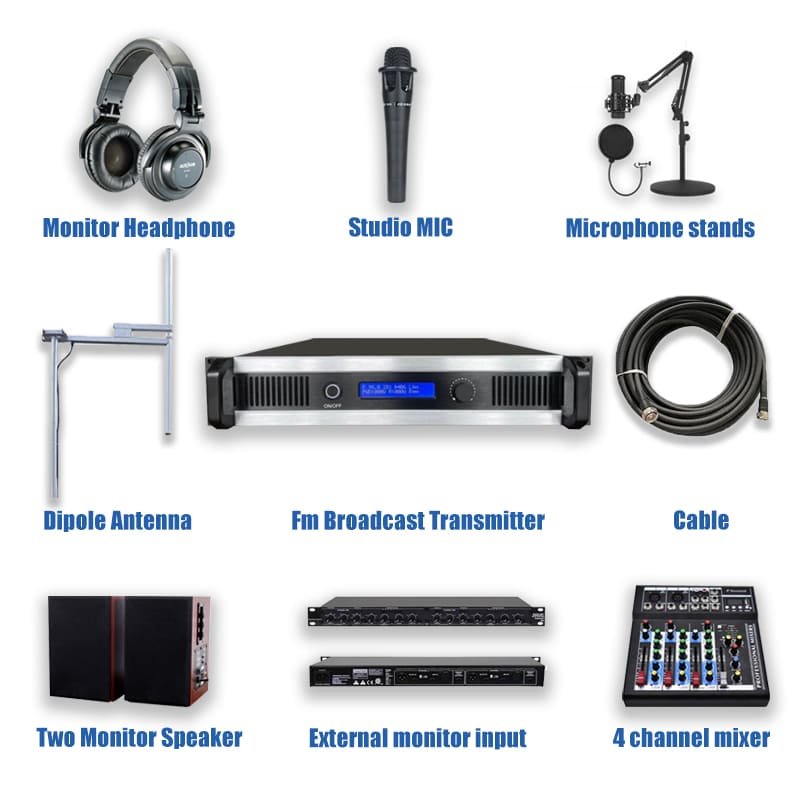
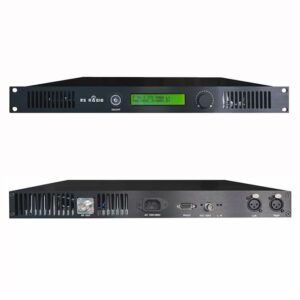
500W FM Transmitter complete-kit/
Professional-grade FM broadcast transmitter kit with stable signal and energy-efficient design — ideal for community and regional radio stations.
Most customers don’t realize a transmitter alone won’t broadcast anything. You need at minimum six components – transmitter, antenna, cable, audio processor, microphone, and mixer. Some items like antennas cost almost as much as the transmitter itself. A 4-bay antenna runs $1600-1800 which surprises customers who thought the $1890 transmitter was the main expense.
Our complete small station kit for 15W costs $249 total and includes everything needed to broadcast. Transmitter, small antenna, 10 meters of cable, power supply, audio cables. Plug it in, connect your phone or laptop, and you’re broadcasting. Good for parking lots or very small areas. The 50W kit costs $488 with similar complete contents but a better antenna for longer range.
Medium station packages cost significantly more. A complete 300W setup runs about $4500-5500 total. The 300W transmitter costs $1339, a 4-bay antenna $1600-1800, 30 meters of LMR-400 cable $350-400, audio processor $800-1000, professional microphone $150-200, mixer $200-300, plus mounting hardware and connectors $200-300. I help customers piece this together all the time because buying components separately usually saves money over pre-packaged "complete" systems that include cheap accessories.
Bigger stations require proportionally larger investments. A 1000W station needs about $8000-10,000 total for quality equipment. The transmitter is $1890, antenna $2200-2600 for a good 4-bay or 6-bay, cable $600-800 for heavier LMR-600, plus the same audio equipment. I worked with a station in Tanzania on a 1000W setup – total investment $9200 including everything and some backup equipment.
Cable costs surprise people. Cheap cable works fine for 15W but higher power needs better cable or you lose power as heat in the cable. RG8 cable costs maybe $3-4 per meter but loses 30-40% of power over 30 meters at 1000W. LMR-400 costs $8-10 per meter and loses only 15-20%. LMR-600 costs $15-18 per meter and loses 8-10%. The $300-400 extra for proper cable adds maybe 5 kilometers to your coverage.
| Station Size | Power | Transmitter Cost | Total Package Cost | Coverage |
|---|---|---|---|---|
| Micro | 15W | $249 | $249 (complete kit) | 1-3 km |
| Small | 50-100W | $488-650 | $3500-5000 | 3-12 km |
| Medium | 300-500W | $1339-1560 | $6000-8000 | 15-25 km |
| Large | 1000-1500W | $1890-2230 | $9000-12,000 | 25-38 km |
Audio processing equipment matters more than most people realize. A $200 mixer connected directly to a transmitter sounds okay. Add an $800 audio processor with compression, limiting, and EQ and your station sounds professional. Listeners notice the difference immediately. I’ve had customers call me saying "we added the processor you recommended and people keep telling us we sound like a real radio station now."
Don’t cheap out on antennas. A 300W transmitter with a $400 2-bay antenna covers maybe 12 kilometers. The same transmitter with a $1600 4-bay antenna covers 18 kilometers. The $1200 antenna upgrade adds 50% more coverage – better investment than upgrading to 500W transmitter for similar coverage gain. I show customers this math and 80% choose better antennas over higher transmitter power.
Installation materials add another $300-500 typically. Mounting brackets, grounding equipment, lightning arrestor, spare connectors, cable ties, weatherproofing materials. Small items but necessary items. Most customers forget about these until they try to install equipment and realize they need supplies.
Conclusion
Buy FM transmitters directly from manufacturers like RS for lowest prices and best support, or through Alibaba and AliExpress for platform protection. Choose power based on measured coverage needs – 50-100W for towns, 300-500W for cities, 1000W+ for regional broadcasting. Budget for complete packages including antenna and cables, not just transmitter costs. Contact me at sales@fmradiotx.com or WhatsApp +86 188 4203 6851 for equipment recommendations and quotes for your specific station requirements.