Where can I buy a reliable FM transmitter online?
Buying an FM transmitter online isn’t always straightforward. Without seeing the equipment in person, comparing quality and reliable sellers becomes harder.
Buy reliable FM transmitters from manufacturer websites like RS (fmradiotx.com), established platforms like Amazon and Alibaba with buyer protection, or authorized dealers like Best Buy for certified equipment. Direct manufacturer purchases offer best prices while platforms provide return policies and dispute resolution.
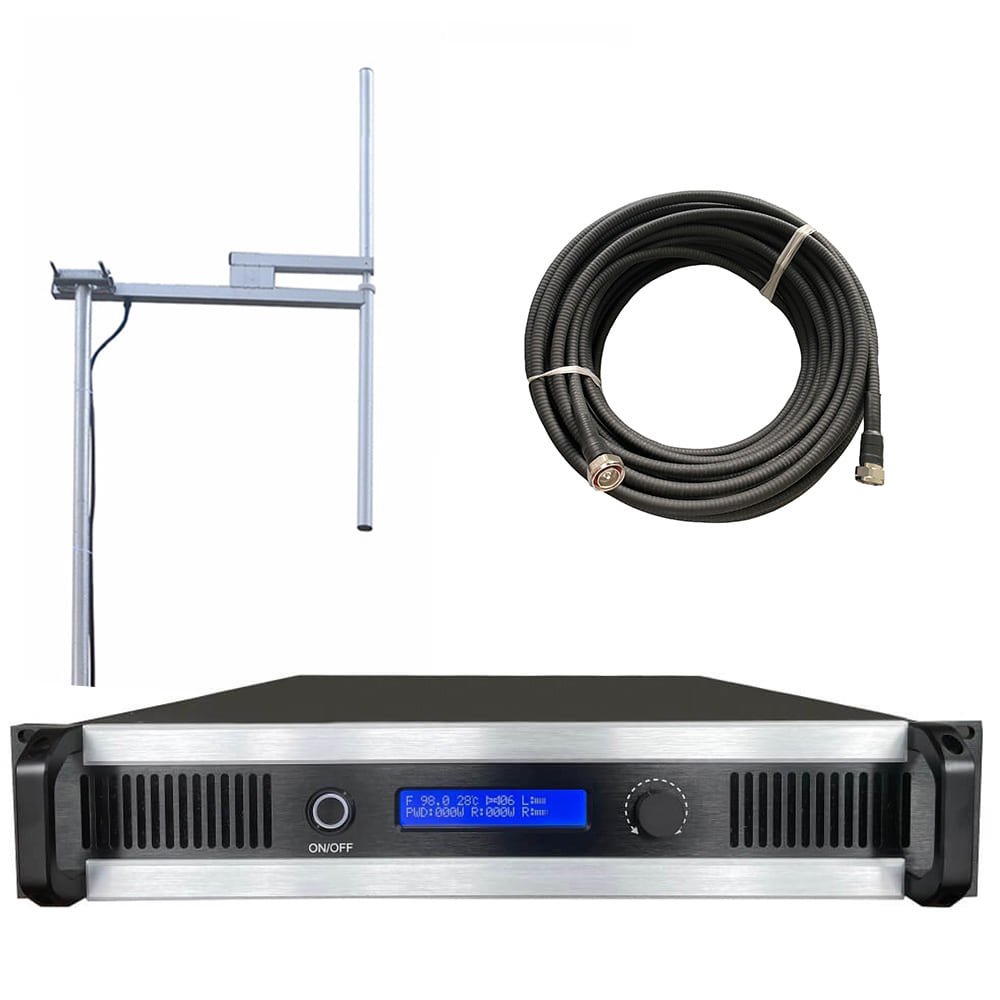
1000W FM Transmitter Basic Kit
Professional-grade FM broadcast transmitter kit with stable signal and energy-efficient design — ideal for community and regional radio stations.
I’ve sold FM transmitters online for 15 years and seen every kind of purchase situation. Some customers got amazing deals. Others paid twice what they should have or received junk that stopped working after a week.
What makes an online FM transmitter seller reliable?
You may find three sellers offering similar transmitters at different prices and don’t know which one won’t disappear with your money or send you garbage equipment. Reviews look fake and you can’t tell who’s actually legit.
Reliable FM transmitter sellers provide FCC/CE certifications, show actual business addresses and registration, offer real warranties (not just promises), have verifiable customer reviews, and respond to technical questions with detailed answers. Factory certifications and multi-year warranties separate legitimate sellers from scammers.
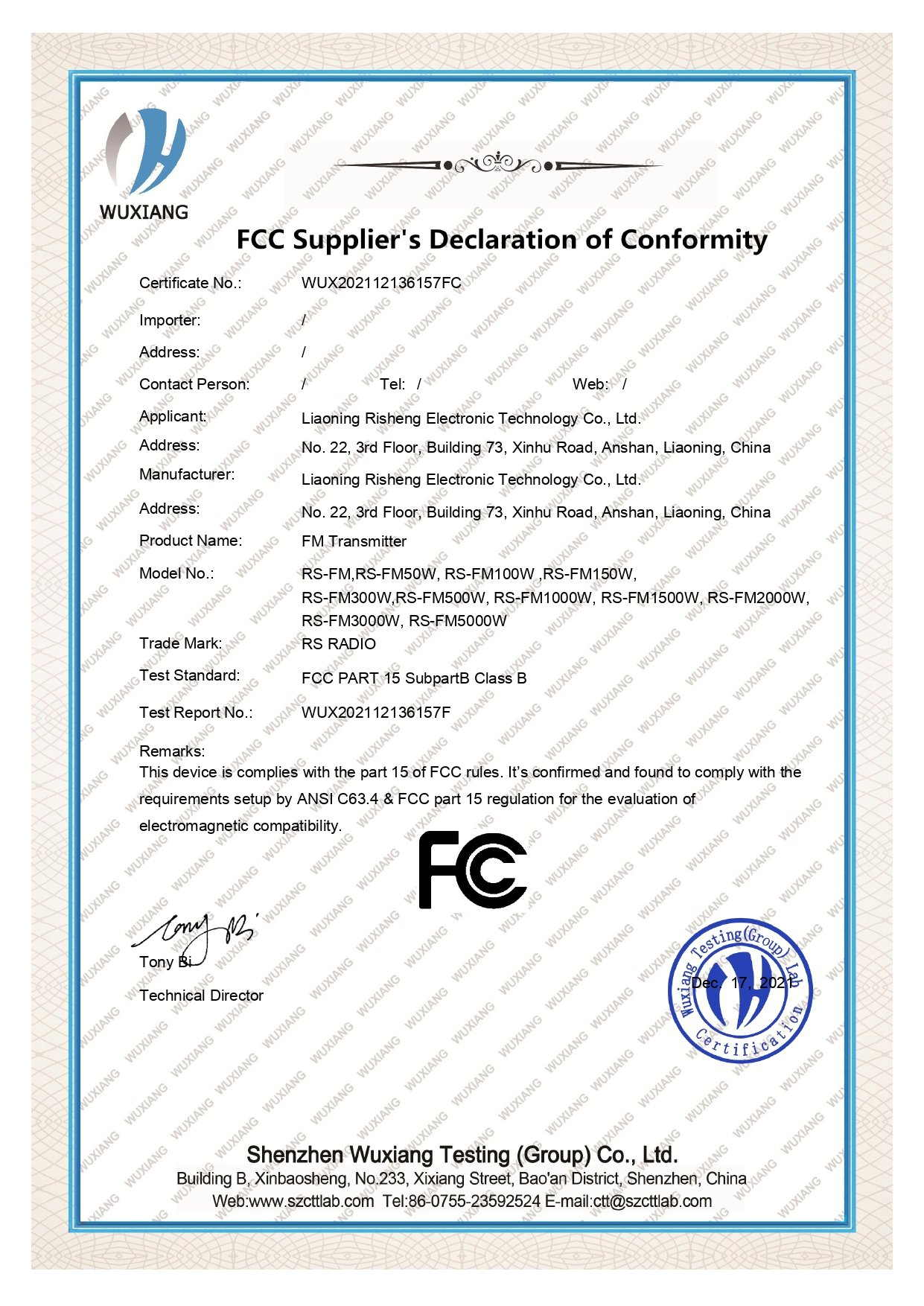
Certifications matter more than anything else when buying transmitters online. Our RS transmitters have FCC and CE certifications that you can verify through certification databases. Legitimate sellers show certification numbers and let you check them. Scammers post fake certification logos that don’t verify or make vague claims about "meeting international standards" without proof.
Real business registration separates legitimate companies from bedroom operations. RS operates as Liaoning Risheng Electronic Technology Co., Ltd with government registration you can verify. We have a physical factory address, not just a PO box or Gmail address. I’ve seen "sellers" who turned out to be one guy dropshipping from his apartment using stolen product photos.
Warranty terms reveal a lot about seller confidence. We offer 5-year warranties on all transmitters because we know they’ll last. Sketchy sellers offer 30-day or 90-day warranties – just long enough to make returns difficult. One customer told me about buying a "1000W transmitter" from a random website with a 30-day warranty that died on day 45. Seller stopped responding to emails immediately.
Customer reviews need verification. Amazon and Alibaba reviews get verified through actual purchases so they’re harder to fake. Website testimonials can be completely made up. I always tell customers to ask for direct contact with previous buyers if they want real feedback. We connect prospective customers with existing customers in their region who can share actual experiences.
Technical knowledge separates real manufacturers from resellers and scammers. Ask specific questions about the transmitter – what protection systems does it have, what’s the harmonic suppression level, how does cooling work. Real sellers answer in detail. Scammers give vague responses or don’t understand the questions. Last week someone asked me about our PLL frequency stability and I explained our ±200Hz precision across temperature ranges. A scammer would’ve just said "very stable frequency."
Response speed and quality matters. Legitimate sellers respond within 24 hours with detailed, helpful answers. Scammers either don’t respond or give copy-pasted generic responses that don’t address your actual question. We have WhatsApp, email, and website chat because we want customers reaching us easily before and after purchase.
| Reliability Factor | What to Look For | Red Flags |
|---|---|---|
| Certifications | FCC/CE numbers you can verify | Generic "certified" claims |
| Business Registration | Government-registered company | Just email address |
| Warranty | 3-5 years, clearly stated | 30-90 days or vague terms |
| Reviews | Verified purchases, detailed | Generic praise, no specifics |
| Technical Knowledge | Detailed, accurate answers | Vague or wrong information |
| Communication | Fast, helpful responses | Slow or no responses |
Price comparison helps identify problems. If everyone sells 300W transmitters for $1300-1400 but you find one for $800, that’s suspicious. Either it’s counterfeit, used equipment sold as new, or a scam where they take your money and disappear. We price competitively at $1339 for 300W but I wouldn’t trust anyone selling way below market rates.
Return and refund policies show seller commitment. Legitimate sellers accept returns for defective equipment and process refunds quickly. Sketchy sellers have "all sales final" policies or make returns nearly impossible with restocking fees and complicated procedures. We handle returns through the platform you purchased on so you have buyer protection.
Which online platforms protect buyers best?
You may wonder whether buying directly from a manufacturer saves money or exposes you to risk compared to buying through Amazon or other platforms that might cost more but offer protection if something goes wrong.
Amazon and Alibaba Trade Assurance provide strongest buyer protection with money-back guarantees and dispute resolution, while direct manufacturer purchases like RS offer 30-40% lower prices with factory warranties. Platform protection matters most for first-time buyers while direct purchases save money for experienced buyers.

300W FM Transmitter
Professional-grade FM broadcast transmitter kit with stable signal and energy-efficient design — ideal for community and regional radio stations.
Amazon buyer protection works really well for transmitters under $1000. If equipment arrives damaged or doesn’t work, you request a return and usually get refunded within a week. Amazon holds sellers accountable so most provide good service. The downside is prices run 40-60% higher than direct manufacturer pricing because sellers build in Amazon fees, shipping costs, and profit margins.
I’ve seen customers buy our 300W transmitter on Amazon for $1899 when it costs $1339 directly from RS. That $560 difference pays for a decent antenna. The Amazon premium buys you fast shipping (2-3 days vs 2-3 weeks) and easy returns, which some customers value enough to pay extra for.
Alibaba Trade Assurance works well for transmitter purchases over $1000. Your payment goes into escrow and only releases to the seller after you confirm receiving working equipment. If the seller sends junk or nothing arrives, Alibaba refunds your money. The platform charges sellers fees so prices run 15-25% higher than direct factory pricing but lower than Amazon.
AliExpress suits small items and accessories better than expensive transmitters. Buyer protection exists but disputes take longer to resolve than Amazon or Alibaba. I’ve heard mixed experiences – some customers got refunds quickly for problems while others fought for months. For a $249 15W kit the risk seems acceptable. For a $3580 2000W transmitter I’d use more secure channels.
eBay protection depends heavily on the seller. Top-rated sellers with thousands of positive reviews usually provide good service. New sellers or those with limited feedback carry more risk. eBay sides with buyers in disputes but the process can drag out. I’d only buy products on eBay from sellers with 98%+ ratings and at least 500 transactions.
Direct manufacturer purchase from RS provides no platform middleman but we ship with insurance and tracking. We handle problems directly – if equipment arrives damaged we ship replacement immediately while filing insurance claims ourselves. No platform dispute process needed. The tradeoff is you trust us instead of trusting platform protection. Our 5-year warranty and 15 years in business provide that trust for most customers.
| Platform | Buyer Protection | Price vs Direct | Shipping Speed | Best For |
|---|---|---|---|---|
| Amazon | Excellent | +40-60% higher | 2-3 days | First-time buyers, urgent needs |
| Alibaba | Very Good | +15-25% higher | 1-2 weeks | Medium/large orders |
| AliExpress | Good | +20-30% higher | 2-4 weeks | Small items, accessories |
| eBay | Varies by seller | +30-50% higher | Varies | Used equipment |
| Direct (RS) | Factory warranty | Lowest | 2-3 weeks | Experienced buyers, best value |
Platform fees explain the price differences. Amazon charges sellers 15% referral fees plus storage and fulfillment costs. Alibaba charges 3-5% transaction fees. These costs get passed to buyers through higher prices. Buying direct avoids platform fees so we can price lower while maintaining the same quality.
Payment security matters differently across platforms. Amazon and Alibaba use secure payment processing with fraud protection. Direct purchases need secure payment methods – we accept PayPal, credit cards, and bank transfers with proper invoicing. Never send Western Union or cryptocurrency to anyone for transmitter purchases – those payment methods offer zero buyer protection.
I generally recommend Amazon for customers buying their first transmitter or needing it urgently despite the price premium. The easy returns reduce risk for first-timers unsure what they need. For experienced customers or larger purchases, direct manufacturer purchase saves significant money. A customer buying a 1000W system saves $800-1200 buying direct versus through Amazon – enough for a complete antenna upgrade.
What power level should I buy for my coverage needs?
You don’t know if 100 watts will reach your whole town or if you need 500 watts, and buying too little power means people can’t hear you while buying too much wastes money you could spend on better antennas or other equipment.
Coverage needs determine power requirements: 15-50W transmitters cover 1-5km for parking lots and small areas ($249-488), 100-300W covers 7-20km for towns ($650-1339), 500-1000W covers 20-30km for cities ($1560-1890), and 1500W+ covers 25-80km for regional broadcasting ($2230-9900) at 30m antenna height on flat terrain.
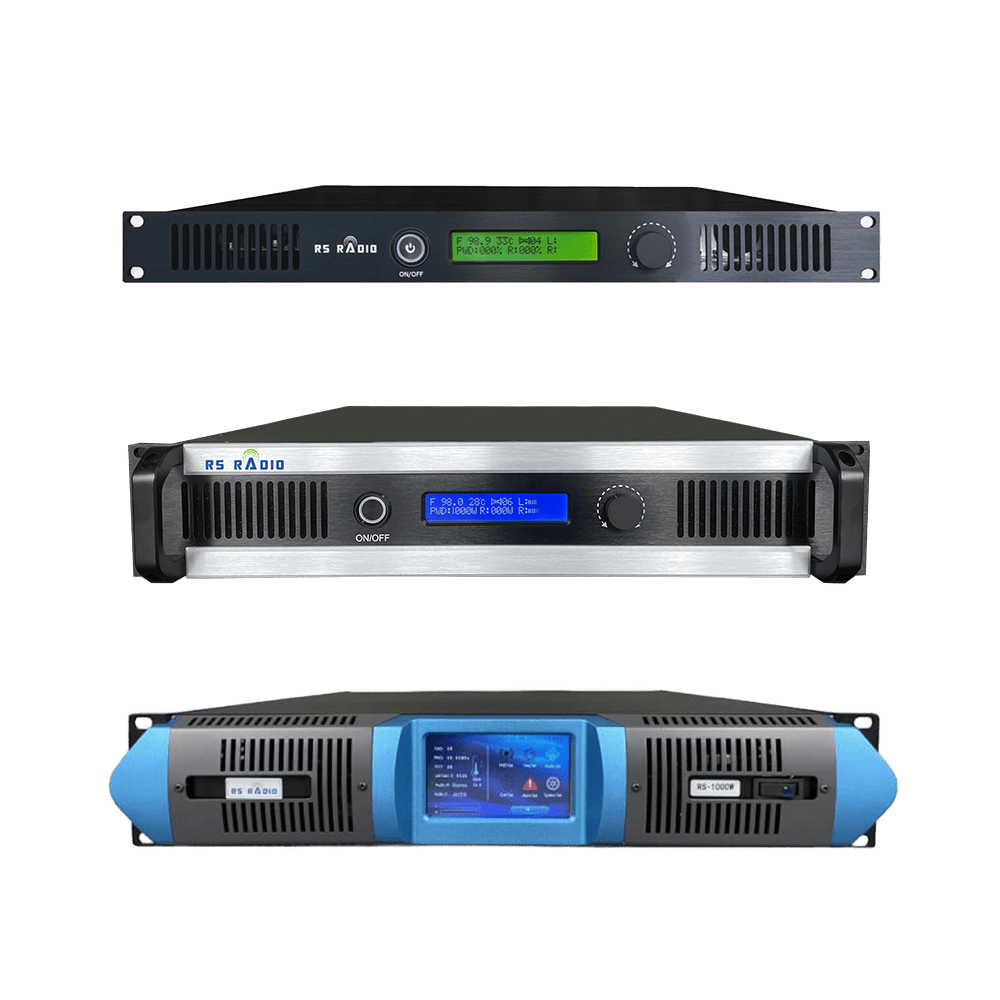
These distances come from actual measurements I’ve done with customers in different countries. Not theoretical calculations – real-world results with our transmitters at 30-meter antenna height on reasonably flat ground. Hills and buildings reduce these distances while perfectly flat farmland might extend them slightly.
The 15W complete kit at $249 covers 1-3 kilometers working great for drive-in theaters, church parking lots, or very small community areas. One customer runs a drive-in cinema in Michigan using the 15W kit reaching 380 cars spread across 2.1 kilometers. Perfect application because everyone stays within that small area and signal quality stays strong throughout.
The 50W transmitter at $488 pushes out to 3-5 kilometers covering small neighborhoods, campus areas, or small communities. A high school in the Philippines uses one to broadcast across campus and the surrounding neighborhood – about 18,000 students and residents within 4.5 kilometers. They tested extensively before launching and found clear signal everywhere they needed coverage.
Jump to 100W at $650 and you’re looking at 7-12 kilometer coverage for small town stations. I helped a community station in Ghana set up a 100W transmitter reaching 10.2 kilometers across their town and four nearby villages. About 48,000 people total in the coverage area. They did drive testing at the coverage edges and found good signal strength with standard car radios.
The 300W transmitter at $1339 covers 15-20 kilometers for small city broadcasting. A Christian station in Kenya uses 300W to reach across their city and seven surrounding communities – measured coverage of 19.1 kilometers to the furthest church receiving them clearly. The 500W level at $1560 gets you 20-25 kilometer coverage suitable for larger cities or multi-town areas.
Higher power serves serious regional broadcasters. The 1000W transmitter at $1890 reaches 25-30 kilometers for city-wide coverage. A station in Tanzania runs 1000W covering 27.5 kilometers across relatively flat terrain serving about 210,000 people. The 1500W level at $2230 stretches to 25-38 kilometers depending heavily on terrain – flat areas get maximum distance while hilly areas reduce coverage.
Professional installations use big power. The 2000W transmitter at $3580 covers 30-60 kilometers with that wide range coming from geography differences. Flat farmland reaches the longer distances while mountains cut coverage significantly. The 3000W at $6800 reaches 40-70 kilometers and the 5000W at $9900 pushes to 60-80 kilometers for provincial or multi-city coverage.
| Power | Price | Coverage Distance | Typical Use Case |
|---|---|---|---|
| 15W | $249 | 1-3 km | Drive-ins, parking lots |
| 50W | $488 | 3-5 km | Small campus, neighborhood |
| 100W | $650 | 7-12 km | Small town station |
| 300W | $1339 | 15-20 km | Small city broadcasting |
| 500W | $1560 | 20-25 km | Larger city, multi-town |
| 1000W | $1890 | 25-30 km | City-wide coverage |
| 1500W | $2230 | 25-38 km | Regional broadcasting |
| 2000W | $3580 | 30-60 km | Multi-city coverage |
Most customers either overbuy or underbuy power. A church asked me for 500W to cover their 6-kilometer area – complete waste of money when 100W would work perfectly. Another customer wanted 100W for 18-kilometer coverage – not enough power leaving dead zones at coverage edges. I had them upgrade to 300W which solved all their weak signal complaints.
Calculate your actual coverage need by measuring from your planned transmitter location to the farthest listener you need to reach. Use Google Maps to measure the distance. Add 20% margin for buildings and terrain obstacles. Use that number to pick your power level. If you need 12 kilometers, a 100W transmitter gives you that plus safety margin. Don’t pick based on what sounds impressive – pick based on measured distance requirements.
Terrain affects coverage more than power in many cases. A 300W transmitter on a hilltop covers more area than a 500W transmitter in a valley. I measured this myself with a customer in Colorado. His 500W setup in a valley reached 16 kilometers. We moved to a hill 5 kilometers away – same 500W transmitter now reaches 29 kilometers. Location beat power every time.
How do I verify product quality before buying online?
You look at transmitter listings showing identical specifications at wildly different prices and can’t figure out which ones actually work well versus which ones will break after three months of use.
Verify FM transmitter quality through FCC/CE certification documents, customer installation photos/videos, harmonic suppression specs under -60dBc, frequency stability ±500Hz or better, and verifiable warranty terms. Real quality transmitters provide detailed technical specifications while cheap units use vague marketing language.

Certification documents prove actual testing happened. Our RS transmitters have FCC certification numbers you can look up in the FCC database showing actual test results. CE certification works similarly in Europe. These certifications cost manufacturers $3000-5000 per model for testing so scammers selling junk equipment don’t bother getting them. If a seller can’t provide certification numbers you can verify, that’s a huge red flag.
Technical specifications separate quality from junk. Our transmitters specify harmonic suppression better than -65dBc which means the transmitter outputs clean signal without interference. Cheap transmitters either don’t specify harmonics or claim -40dBc which barely meets minimum legal requirements. Better harmonic suppression means less interference to other stations and cleaner sound.
Frequency stability matters for reliable broadcasting. Our transmitters maintain ±200Hz frequency accuracy across all temperatures. Cheap units drift ±1000Hz or more causing listeners to lose signal as frequency wanders. One customer told me about buying a cheap transmitter that drifted so much listeners had to keep retuning their radios every hour. He replaced it with our unit and the frequency stayed rock solid.
Customer photos and videos prove products actually exist and work. We have YouTube videos of customers installing and operating our transmitters. Real installation photos showing the equipment in actual stations. Scammers use stock photos or steal images from legitimate manufacturers. If you can’t find real customer content for a product, be suspicious.
Warranty terms reveal manufacturer confidence. We offer 5-year warranties because we know our transmitters last. The warranty covers the full transmitter except consumable parts like fans and transistors which have different failure causes. Cheap equipment comes with 90-day warranties or "1-year limited warranty" with so many exclusions it covers almost nothing.
Component quality affects longevity significantly. We use Toshiba and Mitsubishi transistors rated for continuous duty. Cheap transmitters use counterfeit or low-grade transistors that overheat and fail. Our power supplies handle voltage fluctuations in areas with unstable power. Cheap units use basic supplies that die when voltage surges.
| Quality Indicator | Quality Transmitter | Cheap Transmitter |
|---|---|---|
| Certifications | FCC/CE with verifiable numbers | None or fake logos |
| Harmonics | Better than -60dBc | -40dBc or unspecified |
| Frequency Stability | ±200-500Hz | ±1000Hz or worse |
| Warranty | 3-5 years | 90 days to 1 year |
| Customer Evidence | Photos, videos, contacts | Stock images only |
| Component Brands | Named quality brands | Generic or unspecified |
Price roughly correlates with quality but not perfectly. Our 300W transmitter costs $1339 using quality components and proper engineering. I’ve seen $600 "300W transmitters" that actually output 150W on a good day and die within 6 months. I’ve also seen $2500 transmitters that don’t perform any better than ours – you’re paying dealer markup not better quality.
Ask specific technical questions before buying. What brand transistors does it use? What type of PLL frequency control? What cooling system? How many protection circuits? Real manufacturers answer these questions in detail because they designed the product. Sellers of junk equipment give vague answers or don’t know.
Customer support quality indicates product confidence. We provide WhatsApp support connecting customers directly to engineers who can troubleshoot any problem. We create support groups for each customer including engineers who designed the transmitters. Cheap equipment sellers provide email support that takes days to respond if they respond at all.
What certifications and legal compliance should I check?
You worry about buying a transmitter that turns out to be illegal to operate in your country, getting fined by regulators, or having your station shut down because the equipment doesn’t meet legal requirements.
Check FCC certification for US operation, CE marking for European Union, and local telecommunications authority requirements for other countries. Transmitter power must comply with your license type – LPFM stations in the US limited to 100W, community stations in Canada limited to 50W, and varying limits in other countries.
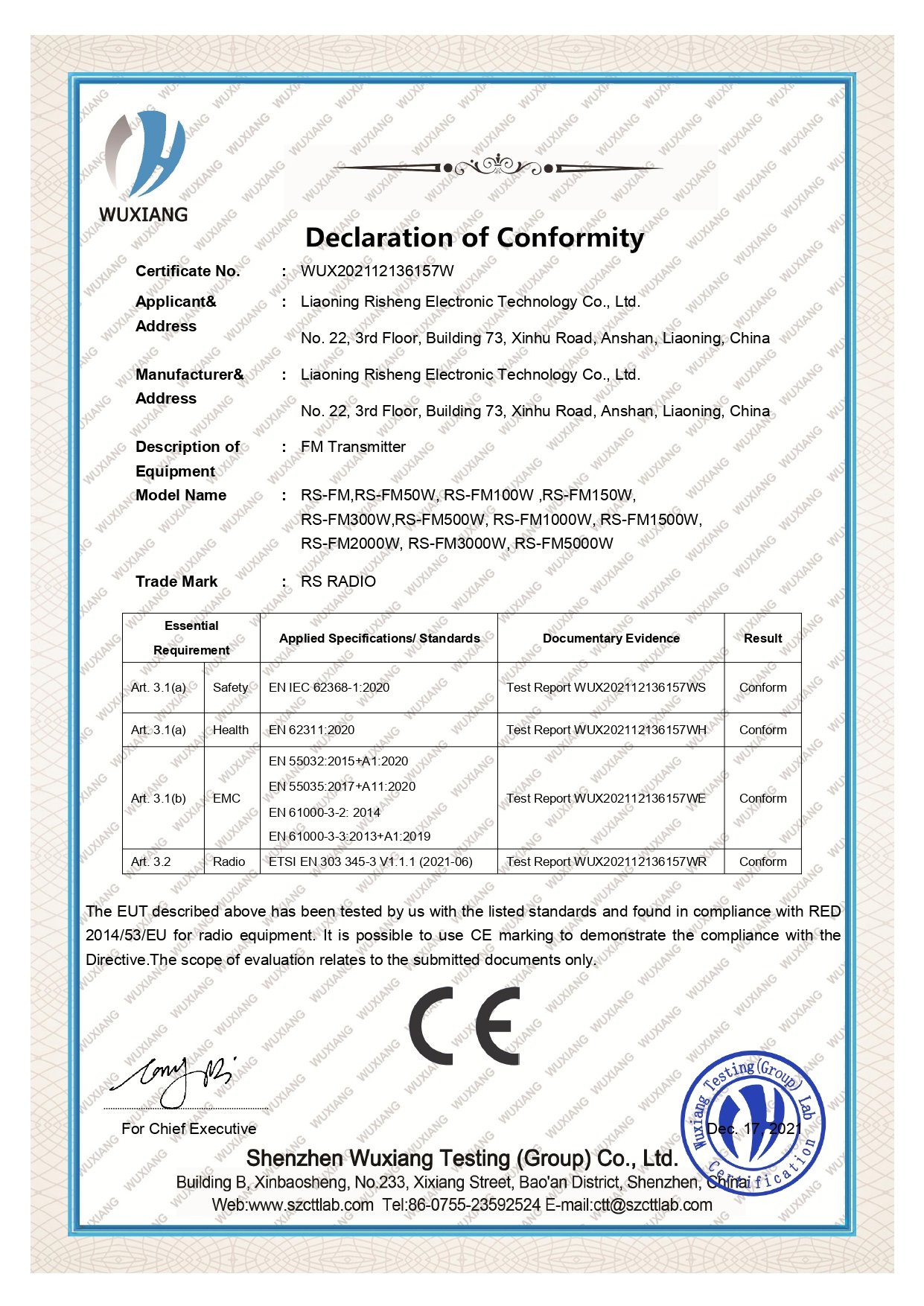
FCC certification matters for anyone broadcasting in the United States. Our RS transmitters have FCC certification which you can verify through the FCC ID database. Operating uncertified equipment in the US risks fines up to $10,000 per day plus equipment seizure. The FCC actually enforces this – I know someone who got hit with a $25,000 fine for operating an uncertified 200W transmitter.
CE marking works similarly in Europe showing compliance with European safety and electromagnetic compatibility standards. CE certification isn’t as strictly enforced as FCC but you still need it for legal operation. Importing uncertified equipment into EU countries can result in customs seizure.
Power limits vary by country and license type. US LPFM stations max out at 100 watts transmitter power. Canadian community stations limit to 50 watts. Indian community broadcasting suggests staying under 100 watts. Commercial licenses allow higher power but require different application processes and higher fees.
Our adjustable power transmitters help maintain legal compliance. The RS-FM100W adjusts from 0-100 watts in 0.1 watt steps. Set it to exactly 50 watts for Canadian compliance or exactly 100 watts for US LPFM operation. The digital display shows precise output power so you always know you’re within legal limits.
Frequency coordination matters in crowded radio markets. You can’t just pick any frequency – you need approval showing your station won’t interfere with existing broadcasters. The FCC coordinates frequencies in the US through a database search. Other countries have similar coordination processes. I’ve seen customers get excited about starting stations then realize their desired frequency is already taken.
Effective Radiated Power (ERP) differs from transmitter power and matters for legal compliance. ERP includes antenna gain. A 100W transmitter with a 4-bay antenna generates 400W ERP. Some regulations limit transmitter power while others limit ERP. Know which applies in your location. I’ve seen customers accidentally operate above legal ERP limits by using high-gain antennas without realizing the legal implications.
| Country/Region | Required Certification | Community Power Limit | Notes |
|---|---|---|---|
| United States | FCC | 100W (LPFM) | Strict enforcement |
| Canada | IC (Industry Canada) | 50W | Community stations |
| European Union | CE marking | Varies by country | Generally 100W |
| Australia | ACMA | Varies | License dependent |
| Most African countries | National telecom authority | Usually 100W | Varies widely |
Licensing requirements differ from equipment certification. Even certified equipment needs a broadcast license to operate legally. US LPFM licenses require community organization status and specific application windows. Other countries have different licensing procedures. The equipment certification just means the transmitter meets technical standards – you still need permission to broadcast.
Harmonic emission limits prevent interference to other services. Transmitters must suppress harmonics below -60dBc (60 decibels below carrier). Our transmitters achieve -65dBc or better. Cheap uncertified transmitters often have poor harmonic suppression causing interference to aircraft navigation, emergency services, and other critical systems. That’s why certification matters.
Operating illegally carries real consequences. Equipment seizure, heavy fines, and criminal charges in extreme cases. I know a customer who operated without a license thinking nobody would notice. The FCC showed up, seized his equipment, and fined him $18,000. Getting legal takes time and paperwork but costs way less than getting caught operating illegally.
Conclusion
Buy reliable FM transmitters from direct manufacturers like RS for lowest prices ($249-9900 depending on power), Amazon or Alibaba for platform protection, or authorized dealers for local support. Verify FCC/CE certifications, check warranty terms, and choose power based on measured coverage needs. Contact me at sales@rs-fm.com or WhatsApp +86 188 4203 6851 for help selecting certified equipment that meets your legal requirements and coverage goals.