What is the difference between PLL and non-PLL FM transmitters?
I get asked this question a lot by customers comparing cheap transmitters to professional units. The technology inside makes a huge difference in real-world performance.
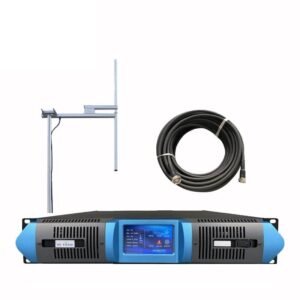
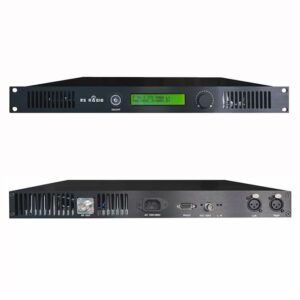
PLL (Phase-Locked Loop) transmitters use a crystal-controlled frequency synthesizer that locks to a precise reference, keeping frequency accurate within ±100Hz. Non-PLL transmitters use free-running LC oscillators that drift, sometimes by several kHz, especially with temperature changes. All RS transmitters use PLL technology for stable, accurate frequency control.
This is not just a technical detail. The difference affects your actual broadcast quality, legal compliance, and whether you interfere with other stations.
What is a PLL FM transmitter?
When I explain PLL to customers, most have never heard the term. But they care about what it does.
A PLL (Phase-Locked Loop) FM transmitter uses a crystal oscillator as a frequency reference and electronic feedback to lock the broadcast frequency to that reference. This keeps your frequency stable and accurate, typically within ±100Hz of your set frequency, regardless of temperature or component aging.
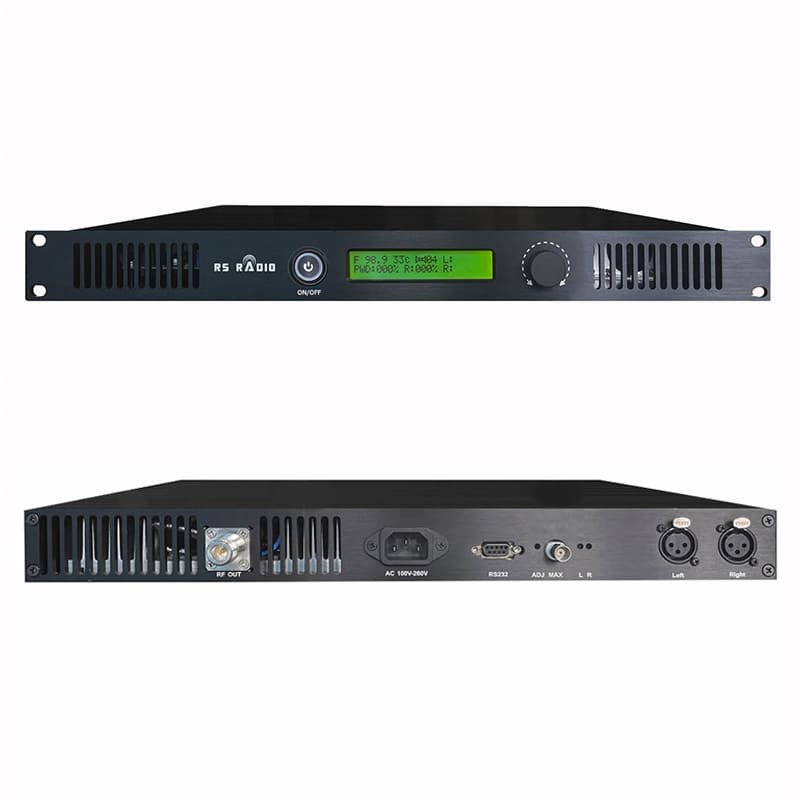
PLL is a frequency synthesis technology. Inside a PLL transmitter, a voltage-controlled oscillator (VCO) generates your RF signal. A phase detector continuously compares this signal to a stable crystal reference. If the frequency drifts even slightly, the feedback loop corrects it immediately. This happens thousands of times per second, keeping the output rock-solid stable.
All RS transmitters from 7W to 10KW use PLL technology. Our PLL systems lock to high-quality crystal oscillators, giving frequency accuracy of ±100Hz or better. This means if you set the transmitter to 100.5 MHz, it broadcasts at exactly 100.5000 MHz, not 100.503 or 100.497. The frequency stays there even when room temperature changes by 20°C or the transmitter runs for years.
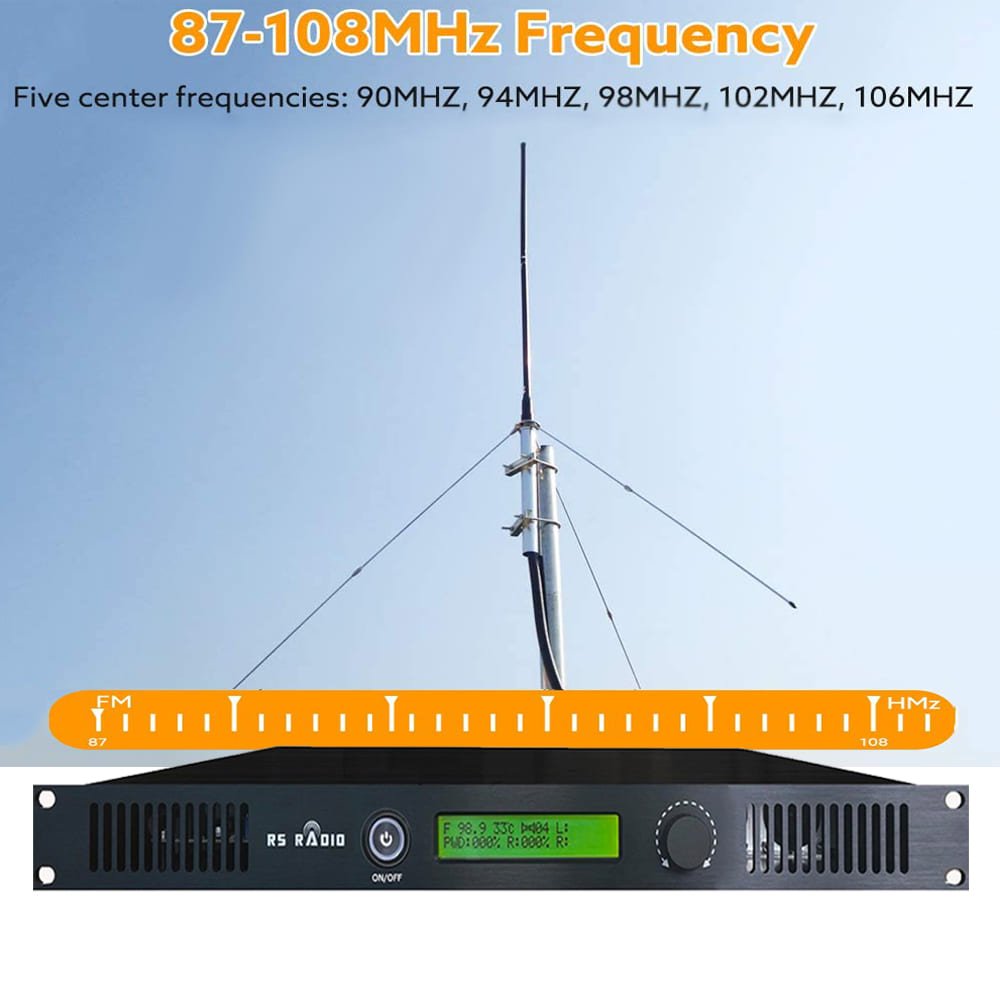
The PLL also enables precise frequency setting. RS transmitters let you set frequency in 10kHz or 100kHz steps by turning a knob or using a touchscreen. You can jump from 100.5 MHz to 100.6 MHz instantly and accurately. The transmitter knows exactly what frequency to generate because the PLL calculates and locks to that specific frequency based on the crystal reference.
A customer in Mexico runs a small station at 105.3 MHz. When they first started, they used a cheap non-PLL transmitter. Local authorities told them they were drifting into 105.4 MHz territory and interfering with another station. They switched to an RS 50W PLL transmitter. Problem solved. Their frequency stays exactly at 105.3 MHz now.
From a technical standpoint, PLL transmitters also have better phase noise performance. Phase noise is rapid, small frequency fluctuations around the carrier. Lower phase noise means cleaner audio and less interference to adjacent channels. PLL systems naturally have low phase noise because the crystal reference is extremely stable.
What is a non-PLL FM transmitter?
Non-PLL transmitters are simpler and cheaper to build. But that simplicity creates problems for actual broadcasting.
A non-PLL FM transmitter uses a free-running LC oscillator (inductor and capacitor circuit) to generate the RF carrier frequency. Without feedback control, the frequency drifts with temperature changes, component aging, and voltage fluctuations, sometimes by several kHz.
LC oscillators work by resonating an inductor and capacitor at a specific frequency. The frequency depends on the exact values of these components. The problem is that capacitance and inductance change with temperature. As the transmitter warms up, components expand slightly, capacitance shifts, and the frequency drifts. A non-PLL transmitter might start at 100.5 MHz when cold, drift to 100.52 MHz after 30 minutes, and settle at 100.53 MHz when fully warmed up.
I tested a cheap non-PLL transmitter once. I set it to approximately 100.5 MHz using a manual tuning knob. After running 2 hours, I measured the frequency again. It had drifted to 100.54 MHz. That is a 40 kHz drift, which is huge in FM broadcasting terms. Over several days, I saw drift between 100.48 and 100.55 MHz depending on room temperature.
Non-PLL transmitters also lack precise frequency setting. You usually get a tuning knob or variable capacitor that you adjust while watching a frequency counter or receiver. You can get close to your target frequency, maybe within 20-50 kHz if you are careful. But you cannot set exactly 100.5 MHz and know it will stay there.
Another issue is long-term stability. As components age over months and years, the resonant frequency of LC circuits changes. A non-PLL transmitter that you carefully adjusted to 100.5 MHz might be at 100.47 MHz six months later. You have to keep readjusting it.
Some very cheap FM transmitters, especially those sold for under $100, use non-PLL designs. They also include simple car transmitters and old DIY projects. These can work for very casual use where frequency accuracy does not matter much. But they are not suitable for serious broadcasting or anywhere that regulations exist.
A customer once asked why an $80 transmitter they found online was so cheap compared to RS prices. I explained that it was almost certainly non-PLL with poor frequency stability. For parking lot use where nobody cares about exact frequency, maybe it works. For a real station that needs to stay on frequency and comply with regulations, it does not.
Why does frequency stability matter?
Some people think a few kHz of drift is no big deal. But in the real world of FM broadcasting, it causes serious problems.
Frequency stability matters for three main reasons: regulatory compliance (broadcasting licenses specify exact frequencies), avoiding interference with adjacent stations (FM channels are spaced 200 kHz apart), and maintaining consistent signal quality for listeners.
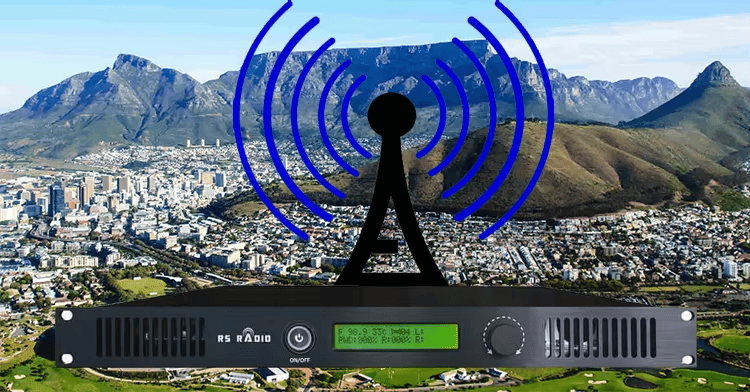
FM broadcast channels are allocated in 200 kHz steps: 88.1, 88.3, 88.5 MHz, etc. In the US, the step is 200 kHz. In some other countries, it is 100 kHz. These allocations exist to prevent stations from interfering with each other. If your station is licensed for 100.5 MHz, you are expected to broadcast at 100.5 MHz, not 100.52 or 100.48 MHz.
Regulatory authorities in most countries specify frequency tolerance. In the US, commercial FM stations must maintain frequency within ±2000 Hz (±2 kHz). LPFM and smaller stations often get ±3000 Hz (±3 kHz) tolerance. These tolerances ensure your signal stays in your allocated channel and does not bleed into adjacent channels.
A non-PLL transmitter drifting 20-50 kHz is way outside any legal tolerance. You would fail inspection and risk fines or license suspension. Even a 5 kHz drift is over tolerance in most places. PLL transmitters with ±100Hz stability easily meet any regulatory requirement.
Interference is a practical problem. If you broadcast at 100.5 MHz but drift to 100.52 MHz, you start interfering with the station at 100.7 MHz. In rural areas with widely spaced stations, you might get away with some drift. In cities with many stations, even small drift causes problems. Adjacent station operators will complain, and authorities will investigate.
I heard from a station in the Philippines that started with a non-PLL transmitter. Within weeks, the station at the next frequency over complained about interference. Measurements showed the cheap transmitter was drifting 15-20 kHz. They switched to an RS PLL transmitter, and the interference stopped immediately.
Listener experience also suffers from drift. If someone tunes their radio to 100.5 MHz to hear your station, they expect your signal to stay there. If your frequency drifts, their radio might lose lock or pick up noise. Modern digital radios with sharp filters are especially sensitive to frequency drift. A drifting signal causes audio dropouts or switching between stations.
| Issue | PLL Transmitter | Non-PLL Transmitter |
|---|---|---|
| Frequency accuracy | ±100Hz typical | ±5-50kHz typical |
| Temperature drift | Minimal | Significant |
| Long-term stability | Excellent | Poor |
| Regulatory compliance | Easy | Difficult or impossible |
| Adjacent channel interference | None | High risk |
| Professional use | Standard | Not acceptable |
What are the practical advantages of PLL transmitters?
Beyond just frequency stability, PLL technology brings several real benefits to your broadcast operation.
PLL transmitters offer set-and-forget operation (no need to constantly readjust frequency), precise digital frequency control, better audio quality from lower phase noise, easier compliance with regulations, and professional reliability. These benefits make PLL essential for serious broadcasting.
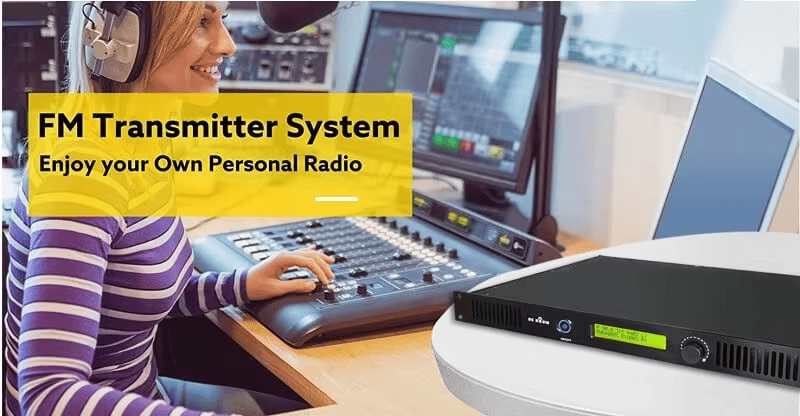
Set-and-forget operation is probably the biggest practical advantage. You set your frequency once using the front panel controls. The transmitter stays on that exact frequency forever. You do not need to monitor or readjust it. Temperature changes, day-night cycles, seasonal weather, component aging… none of it affects your frequency. This saves time and eliminates a constant worry.
Precise frequency control makes setup simple. RS transmitters let you set frequency in 10 kHz or 100 kHz steps. Want 105.3 MHz? Turn the knob to 105.3. The display shows 105.30, and that is exactly what you broadcast. No frequency counter needed, no manual tuning, no guesswork. This precision also helps when you need to change frequency for any reason. Just dial in the new number.
Better audio quality results from PLL stability and low phase noise. When your carrier frequency is rock-solid, audio modulation is cleaner. Phase noise around the carrier can create slight audio distortion or background hiss. PLL systems have much lower phase noise than free-running oscillators. Listeners hear clearer, cleaner audio.
Easier compliance with regulations is a huge benefit for licensed stations. You can document your frequency accuracy, and inspectors will see you meet requirements easily. Some authorities require periodic frequency checks. With a PLL transmitter, you know you will pass. With non-PLL, you are gambling each time.
Professional reliability matters when broadcasting is your business or mission. Churches, schools, and community stations need equipment that works consistently without constant attention. PLL transmitters deliver that reliability. You turn them on, they work, and they keep working at the correct frequency. Non-PLL transmitters require ongoing babysitting.
A customer runs a church radio service. They broadcast sermons and music during services and throughout the week. Their old non-PLL transmitter needed frequency adjustment every few weeks. Someone had to climb to the transmitter site, bring a frequency counter, and spend an hour tuning. After switching to an RS 100W PLL transmitter, they have not touched the frequency setting in over 2 years. It just works.
Why do all professional transmitters use PLL?
If you look at any broadcast transmitter from reputable manufacturers, you will find PLL technology. This is not a coincidence.
Professional broadcast transmitters use PLL because frequency stability is mandatory for regulatory compliance, interference prevention, and quality broadcasting. Non-PLL designs cannot meet professional standards. Every RS transmitter from 7W to 10KW uses PLL for this reason.
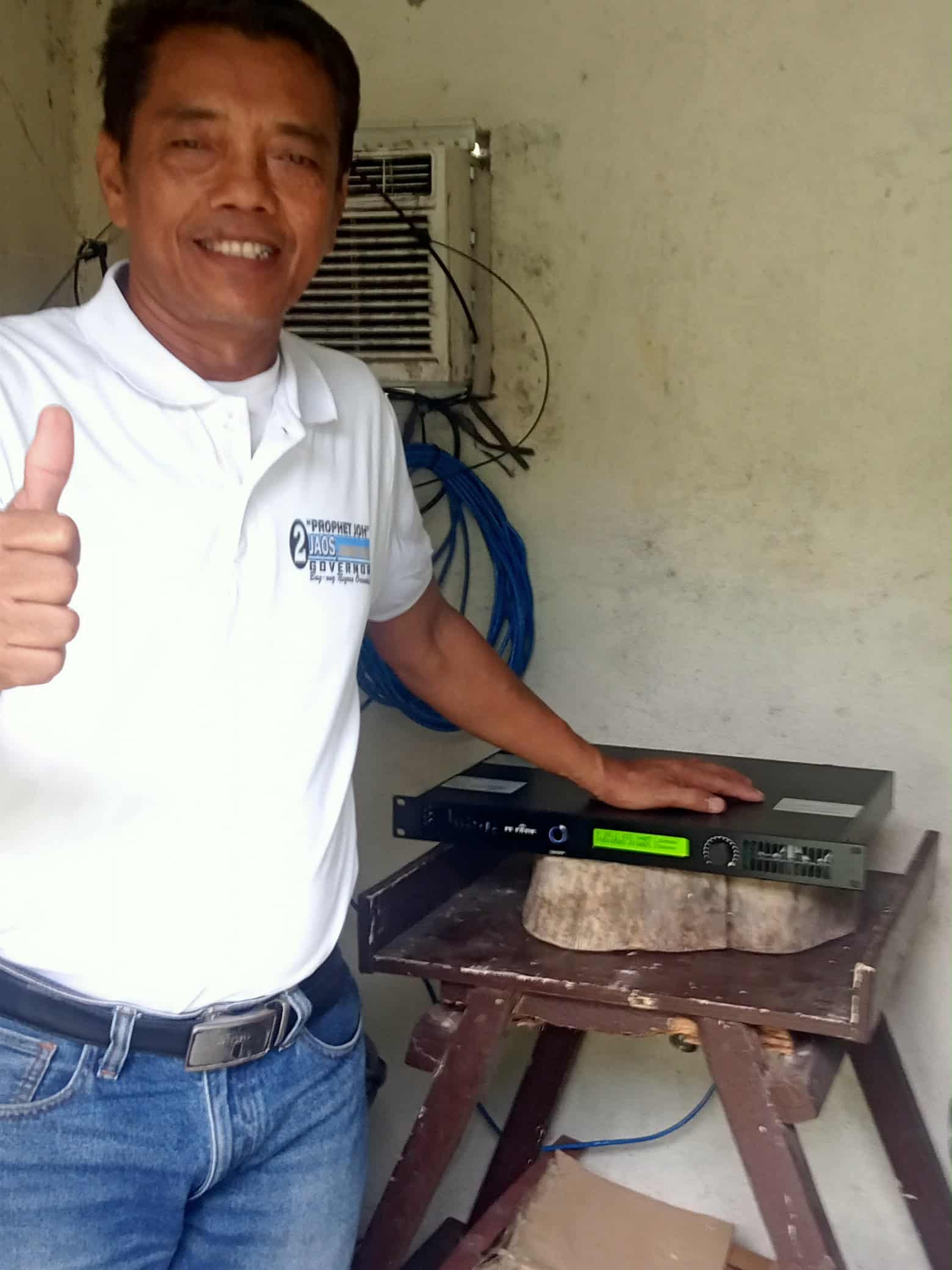
Broadcasting regulations in every country I know about specify frequency tolerance. These tolerances are tight enough that only PLL technology can reliably meet them. Non-PLL transmitters drift too much. You cannot run a licensed station with equipment that drifts 10-50 kHz when regulations allow only 2-3 kHz tolerance.
Interference prevention is another non-negotiable requirement. In any area with multiple FM stations, everyone must stay on their assigned frequency. One drifting transmitter causes problems for multiple other stations. Professional broadcasters cannot risk this. PLL ensures you stay in your channel.
Brand reputation matters to manufacturers. Companies like RS that sell to professional markets cannot afford to ship unstable equipment. If our transmitters drifted and caused interference or regulatory problems, our reputation would collapse. Using PLL is not optional for professional equipment. It is the minimum acceptable standard.
Cost has come down enough that PLL is affordable even in lower-power transmitters. Twenty years ago, PLL circuits were expensive and complex. Today, integrated PLL synthesizer chips are cheap and reliable. This lets manufacturers like RS build PLL into even our smallest 7W and 15W transmitters. There is no longer a good reason to use non-PLL designs.
At RS, we made a conscious decision years ago to use PLL in all our transmitters. Some competitors offer cheaper non-PLL options, especially in very low power units. We do not. Every RS transmitter, from the smallest to largest, includes proper PLL frequency control. This adds slightly to cost but ensures that every customer gets stable, professional-grade frequency accuracy.
When customers ask why RS transmitters cost more than some brands, part of the answer is our commitment to PLL technology across the entire product line. You pay a bit more upfront, but you get equipment that actually works for serious broadcasting, meets regulations, and does not cause problems.
Can you hear the difference between PLL and non-PLL?
Some customers wonder if the technical differences actually affect what listeners hear. The answer is yes, though not always obviously.
Most listeners cannot directly hear the difference between PLL and non-PLL transmitters under ideal conditions. But PLL transmitters provide more consistent audio quality, especially with digital radios, and avoid the signal dropouts and interference that frequency drift causes.
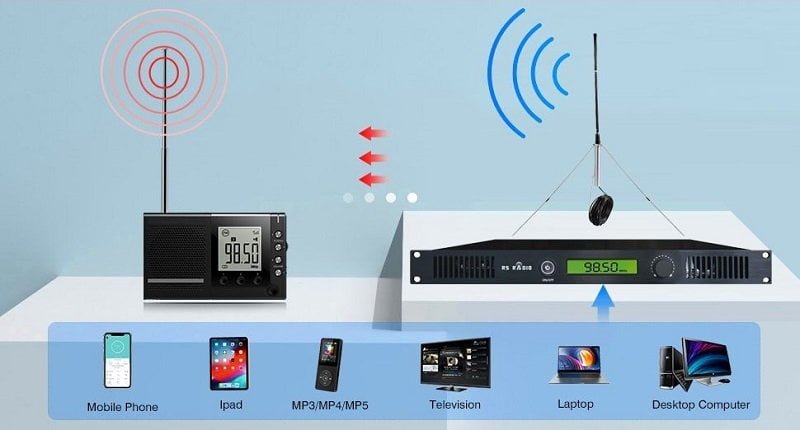
If a non-PLL transmitter happens to be at the correct frequency at the moment someone is listening, and conditions are stable, audio quality might sound fine. The problem is that the non-PLL frequency is not stable. Over time, it drifts, and that drift creates issues.
Modern car radios and digital receivers have sharp filtering. They lock onto a specific frequency with high precision. If your transmitter drifts, the radio might lose lock, causing audio to cut out or distort. Older analog radios with wider tuning are more forgiving of drift but can still have problems when drift is significant.
Phase noise affects audio subtly. High phase noise adds a slight hiss or reduces audio clarity. Most casual listeners might not notice this on cheap speakers. But on good audio systems, the difference can be audible. PLL transmitters with low phase noise deliver cleaner sound.
Adjacent channel interference from drift creates obvious audio problems. If your transmitter drifts enough to start interfering with another station, listeners near the border between the two stations hear mixing, distortion, or switching between stations. This is clearly audible and annoying.
A customer described their experience with a cheap non-PLL transmitter. Listeners would call and say the station would suddenly become noisy or disappear for a few seconds, then come back. Temperature changes during the day caused the frequency to drift enough that some digital radios lost lock. After upgrading to an RS PLL transmitter, those complaints stopped. Same audio source, same broadcast content, but stable frequency meant stable reception.
Conclusion
PLL FM transmitters use crystal-controlled frequency synthesis to maintain stable, accurate broadcast frequency within ±100Hz. Non-PLL transmitters use free-running oscillators that drift by several kHz, causing interference, regulatory problems, and reception issues. All professional broadcast equipment, including every RS transmitter, uses PLL technology because frequency stability is essential for legal, reliable broadcasting. Need help choosing the right PLL transmitter for your station? Contact us at sales@fmradiotx.com or WhatsApp +86 188 4203 6851.