What is the Best 100W FM Transmitter for Radio Stations?
Choosing the best 100W FM transmitter can be difficult because there are many options with different features, coverage performance, and setup requirements. This guide explains what truly matters so you can select the right 100W transmitter for your radio station.
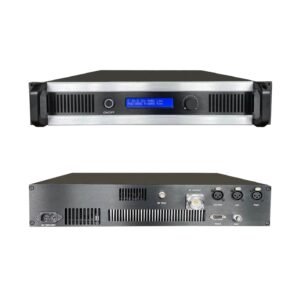
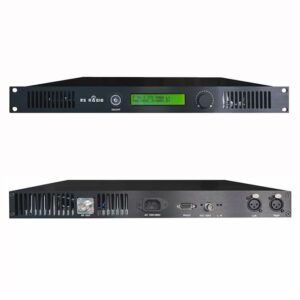
The best 100W FM transmitter for radio stations combines DSP digital audio processing for clean sound, adjustable power output from 0-100W in 0.1W steps, comprehensive protection systems preventing damage, touchscreen control interface, 5-year warranty, and coverage distance of 10-15km radius under typical conditions.
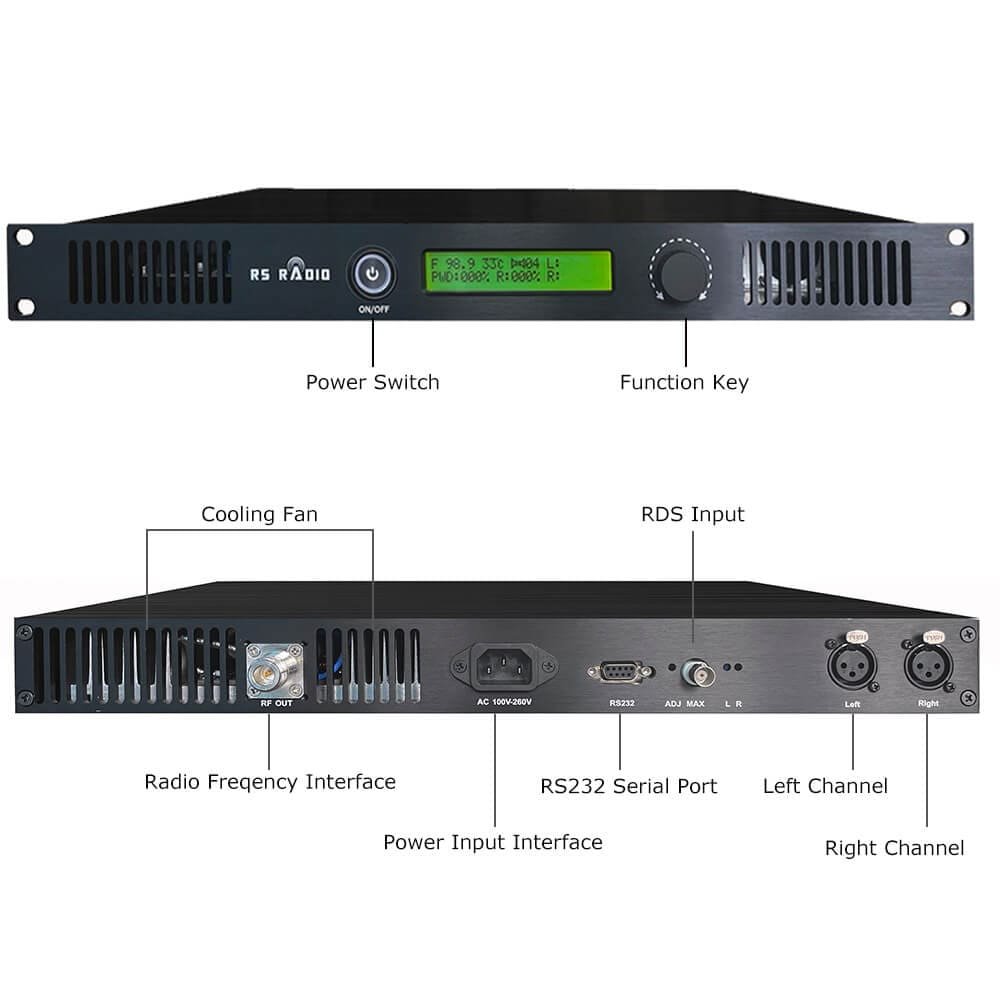
I work with community radio stations, churches, schools, and drive-in theaters that use 100W transmitters for local broadcasting. This power level provides excellent coverage for neighborhoods, campuses, and small towns without excessive cost or complexity. The RS-100W transmitter delivers professional broadcast quality suitable for serious broadcasters while remaining affordable for smaller operations.
How far can a 100 watt radio transmit?
You want to know coverage distance before purchasing equipment to ensure the transmitter reaches your entire target audience. Underestimating range leaves gaps in coverage while overestimating leads to disappointed expectations. Understanding realistic coverage distances for 100W transmitters helps you plan appropriate broadcast areas.
A 100 watt FM transmitter covers 10-15km radius under typical conditions with antenna at 20-30 meters height on flat terrain. Hilly terrain reduces coverage to 7-12km while mountains limit range to 5-10km. Urban environments with tall buildings reduce coverage by 20-30% compared to rural areas.
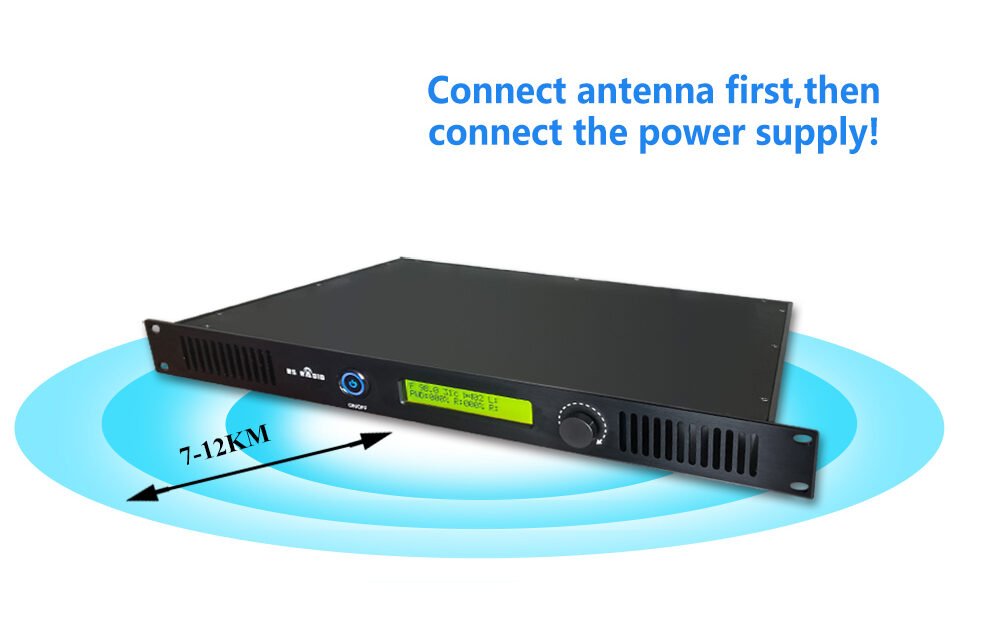
Coverage distance depends on multiple factors working together. Transmitter power provides the foundation but antenna height often matters more. A 100W transmitter with antenna at 10 meters height covers less distance than the same transmitter with antenna at 40 meters. Every 10 meters of additional antenna height extends coverage by approximately 3-5 kilometers. I always recommend installing antennas as high as possible for maximum coverage.
Terrain type dramatically affects actual coverage. Flat agricultural areas allow maximum signal propagation. The RS-100W transmitter covers 12-15 kilometer radius across flat terrain with antenna at 30 meters height. Rolling hills create shadow zones reducing coverage to 8-12 kilometers. Mountains between transmitter and receivers block signals entirely requiring higher transmitter locations or increased power to overcome obstacles.
Urban environments present unique challenges for FM signal propagation. Buildings absorb and reflect radio waves reducing effective range by 20-30% compared to rural areas. A 100W transmitter covering 15 kilometers in countryside might only reach 10-12 kilometers in dense urban areas. Position antennas above surrounding building heights whenever possible to minimize obstruction effects.
| Terrain Type | Coverage Radius | Antenna Height | Typical Application |
|---|---|---|---|
| Flat rural | 12-15km | 20-30m | Farm broadcasting, rural radio |
| Rolling hills | 8-12km | 25-35m | Small town radio, community stations |
| Mountainous | 5-10km | 30-50m | Mountain communities, valley coverage |
| Suburban | 10-13km | 20-30m | Neighborhood radio, church broadcasting |
| Urban dense | 8-10km | 25-40m | City district radio, campus stations |
Drive-in theaters represent a common application for 100W transmitters. These venues typically need coverage within 1-2 kilometer radius allowing comfortable signal reception in parking lots. A 100W transmitter provides substantial power reserve ensuring clear reception even for vehicles at the far edges of the parking area. The RS-100W serves drive-in movies, drive-in churches, and drive-in concerts effectively.
Weather conditions temporarily affect signal propagation. Rain and high humidity cause additional signal loss of 1-2dB per kilometer reducing coverage by 10-15% during storms. Temperature inversions occasionally create enhanced propagation allowing signals to reach 50-100% farther than normal but this effect is unpredictable and temporary. Plan coverage based on typical weather conditions rather than best-case scenarios.
The RS-100W features adjustable power output from 0-100W in 0.1 watt steps. This flexibility allows you to optimize coverage for your specific location. Start at lower power during testing and increase gradually until reaching desired coverage area. The transmitter displays real-time forward power, reflected power, and SWR measurements helping you optimize antenna installation for maximum range.
What is the price of FM transmitter 100W?
Understanding realistic pricing for quality 100W transmitters helps you budget appropriately and avoid purchasing inadequate equipment. Cheap transmitters under $400 use poor components and lack essential features causing frequent failures. Professional transmitters cost more initially but provide better reliability and lower maintenance costs over years of operation.
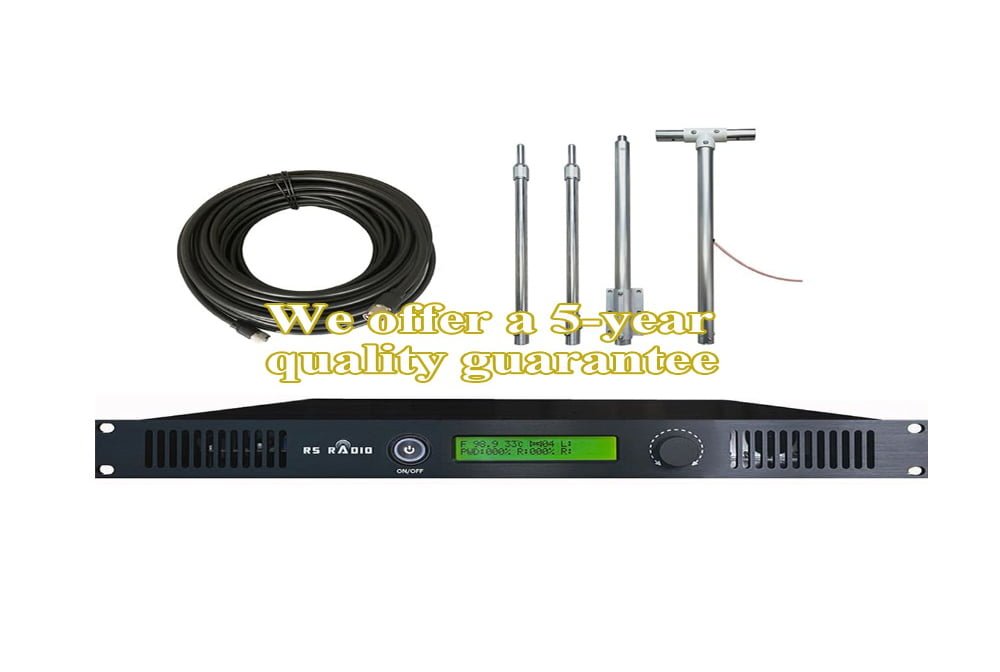
Quality 100W FM transmitters cost $600-$1200 depending on features and build quality. RS-100W professional transmitters include DSP digital processing, touchscreen control, adjustable output, comprehensive protection systems, and 5-year warranty at factory-direct pricing of approximately $700-$900 including free worldwide shipping.
Price differences reflect component quality and feature sets. Budget transmitters under $500 use generic components and basic analog audio circuits. These units produce acceptable signal strength but poor audio quality with high distortion and noise. They lack protection systems causing damage from antenna problems. I receive many calls from customers whose budget transmitters failed within 6-12 months seeking replacement with quality equipment.
Professional transmitters like RS-100W use premium components ensuring reliability. The RF amplifier incorporates NXP LDMOS transistors that withstand severe load mismatch preventing damage from antenna problems. The digital FM modulator uses DSP and DDS technology for clean audio with stereo separation reaching 60dB. These components cost more but provide professional broadcast quality and long service life.
Feature sets justify higher prices for quality transmitters. The RS-100W includes touchscreen control without mechanical buttons that fail over time. Operators adjust frequency, power, and settings by touching the screen simplifying daily operation. The transmitter provides continuously adjustable power output from 0-100W in 0.1 watt steps allowing precise power setting for any application. Budget transmitters operate at fixed power or offer only 2-3 preset levels.
| Price Range | Component Quality | Features | Expected Lifespan | Best Use |
|---|---|---|---|---|
| $300-$500 | Generic parts | Basic analog, fixed power | 1-2 years | Temporary setups, testing |
| $600-$900 | Professional components | DSP audio, adjustable power | 5-8 years | Community radio, churches |
| $900-$1200 | Premium components | Full features, touchscreen | 8-12 years | Professional stations |
Operating costs add to initial purchase price over time. Electricity consumption varies with power output. The RS-100W consumes approximately 200-300 watts from electrical supply when operating at full 100W output. This translates to $20-40 monthly electricity cost depending on local rates and operating hours. Higher efficiency means lower operating costs over the transmitter lifetime.
Warranty coverage significantly affects total ownership cost. RS provides 5-year warranty on all transmitters including 100W models. This warranty covers manufacturing defects and component failures during normal operation excluding damage from lightning, incorrect installation, or operation outside specifications. Most competitors offer only 1-2 year warranties requiring expensive extended coverage purchases.
Shipping costs affect total purchase price especially for international customers. RS offers free worldwide shipping to most countries via DHL, FedEx, or UPS with tracking numbers. Delivery typically takes 5-7 business days to North America, 7-10 days to Africa and South America, and 3-5 days to Asia. Many competitors charge $100-300 for international shipping adding significantly to equipment costs.
How to Set Up a 100W FM Transmitter for a Radio Station?
Setting up FM transmitters intimidates many station owners due to technical requirements and unfamiliar equipment. Incorrect installation causes poor coverage, audio quality problems, or equipment damage. Following systematic setup procedures ensures successful installation and optimal performance from your transmitter.
Set up a 100W FM transmitter by choosing elevated antenna location, installing antenna at maximum practical height, running quality coaxial cable to transmitter, connecting balanced audio inputs, setting frequency and power level, checking SWR below 1.5:1, and testing coverage throughout service area before launching programming.

Location selection critically affects coverage results. Choose the highest practical location for antenna installation such as building rooftops, towers, or hilltops. Every 10 meters of additional height extends coverage by 3-5 kilometers. I have customers who improved coverage by 40-50% simply by relocating antennas from 15 meters to 35 meters height without changing transmitter power.
Antenna installation requires careful attention to mounting and orientation. Mount the antenna vertically with solid mechanical support capable of withstanding wind loads. Use quality mounting hardware including U-bolts, mast clamps, and guy wires if needed. Ensure the antenna points straight up for circular coverage pattern. Tilted antennas create uneven coverage with strong signals in some directions and weak signals in others.
Cable selection dramatically affects how much power reaches the antenna. Professional low-loss cables like LDF4-50A or equivalent lose only 1-2dB per 10 meters. Budget cables lose 3-5dB per 10 meters meaning half your transmitter power disappears as heat in the cable. For a 30 meter cable run, quality cable delivers 80-85% of transmitter power to the antenna while cheap cable delivers only 50-60%. Spend money on quality cable rather than higher power transmitters.
| Installation Step | Time Required | Key Actions | Common Mistakes to Avoid |
|---|---|---|---|
| 1. Site survey | 1-2 hours | Check antenna locations, measure heights | Choosing low locations |
| 2. Antenna mounting | 2-4 hours | Install mast, mount antenna, secure | Inadequate mechanical support |
| 3. Cable installation | 2-4 hours | Run cable, install connectors, ground | Using poor quality cable |
| 4. Transmitter connection | 30-60 min | Connect audio, power, RF cable | Incorrect audio connections |
| 5. Configuration | 30-60 min | Set frequency, power, audio levels | Not checking SWR |
| 6. Testing | 2-3 hours | Drive test coverage area | Insufficient testing |
Audio connections require balanced 600Ω inputs for professional quality. The RS-100W provides left and right channel balanced audio inputs accepting signals from mixers, audio processors, or computers. Use quality balanced audio cables with proper shielding to prevent noise and interference. Connect left channel to left input and right channel to right input maintaining proper stereo imaging.
Frequency setting follows local regulations and coordination. The RS-100W adjusts from 87.5MHz to 108MHz in 10KHz steps covering the complete FM band. Choose a frequency not used by other stations in your area to avoid interference. Check frequency availability using an FM radio or spectrum analyzer before finalizing your selection. The touchscreen interface makes frequency adjustment simple by touching desired frequency on the display.
SWR checking verifies proper antenna system operation before applying full power. Connect all equipment and power on the transmitter at low power (10-20W). Check the SWR reading on the transmitter display. SWR below 1.5:1 indicates good antenna system. SWR above 2:1 indicates problems requiring correction before increasing power. High SWR causes transmitter damage and reduced coverage. Common problems include loose connectors, damaged cables, or incorrect antenna installation.
What Antenna Is Best for a 100W FM Transmitter?
Antenna selection significantly affects coverage distance and signal quality but many broadcasters purchase inadequate antennas to save money. Poor antennas waste transmitter power and create uneven coverage patterns disappointing listeners. Understanding antenna types, gain characteristics, and installation requirements helps you select optimal antennas for your 100W transmitter.
The best antenna for 100W FM transmitters is a dipole antenna for basic coverage costing $80-150, 1/2 wave dipole for improved performance costing $120-200, or circular polarized antenna for professional quality costing $250-400. Choose antennas rated for 100W+ power handling with 50Ω impedance and 7/16 DIN female connectors.
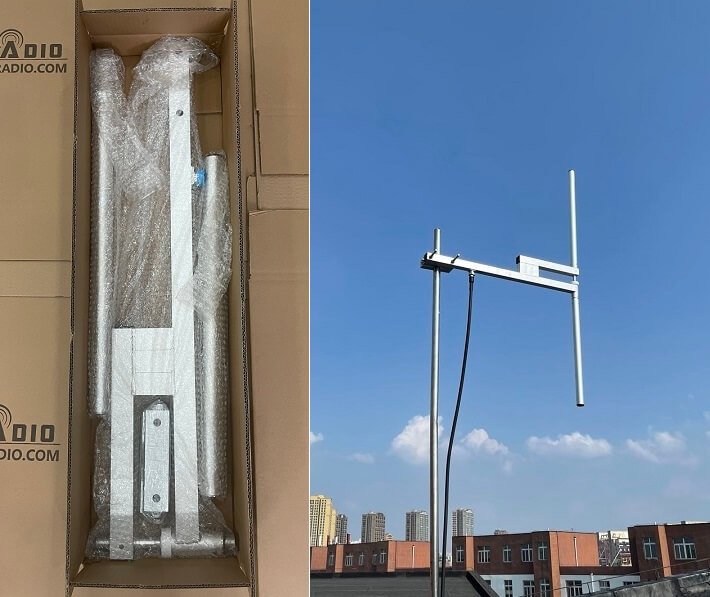
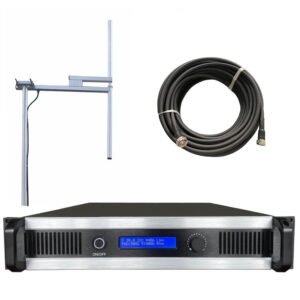
Dipole antennas represent the most economical choice for 100W transmitters. These simple antennas cost $80-150 and provide basic circular coverage pattern. Dipoles offer 0-2dBd gain meaning they don’t amplify signals but distribute power evenly in all directions. They work well for applications needing uniform coverage such as drive-in theaters, parking lot broadcasting, and small community stations. The RS antenna packages include quality dipole antennas matched to transmitter power levels.
Half-wave dipole antennas offer improved performance over basic dipoles. These antennas cost $120-200 and provide 2-3dBd gain concentrating signal toward the horizon. This gain extends coverage distance by 20-30% compared to basic dipoles. Half-wave dipoles suit community radio stations, churches broadcasting to neighborhoods, and campus radio applications where maximum horizontal coverage matters most.
Circular polarized antennas provide professional broadcast quality. These antennas cost $250-400 but deliver superior performance justifying the investment for serious broadcasters. Circular polarization improves reception quality in vehicles and portable radios compared to vertically polarized signals. Many professional stations use circular polarized antennas achieving better listener satisfaction and fewer reception complaints.
| Antenna Type | Cost | Power Gain | Coverage Pattern | Best Applications |
|---|---|---|---|---|
| Basic dipole | $80-$150 | 0-1dBd | Circular omnidirectional | Drive-in theaters, parking lots |
| 1/2 wave dipole | $120-$200 | 2-3dBd | Circular with horizontal focus | Community radio, churches |
| Circular polarized | $250-$400 | 2-4dBd | Circular with CP advantage | Professional stations, city radio |
| Directional panel | $300-$500 | 6-10dBd | Directional beam | Specific coverage areas |
Power handling capability matters for antenna longevity. Antennas rated for 100W continuous power handle the RS-100W transmitter safely with adequate margin. Never use antennas rated below your transmitter power as they overheat causing failure. I recommend choosing antennas rated for 150W or higher when using 100W transmitters providing safety margin and better reliability.
Connector type affects installation simplicity and reliability. Professional FM antennas use 7/16 DIN female connectors (also called L29 connectors) providing excellent electrical performance and weather resistance. These connectors handle high power reliably and seal against moisture preventing cable damage. The RS-100W transmitter includes 7/16 DIN male connector on the RF output matching professional antenna connectors directly.
Installation height multiplies antenna effectiveness. A basic dipole antenna at 40 meters height outperforms an expensive circular polarized antenna at 15 meters height. Invest in quality antenna mounting and installation rather than buying the most expensive antenna for low mounting. I always recommend maximizing antenna height before spending extra money on high-gain antennas.
Conclusion
Choose 100W FM transmitters providing DSP digital processing, adjustable power output, protection systems, and 5-year warranty. Install at elevated locations using quality antennas and cables for 10-15km coverage serving community radio stations, churches, schools, and drive-in theaters effectively.