What equipment do I need for a FM Radio Station?
You may want to start an FM radio station but feel overwhelmed by equipment choices and technical requirements. Buying wrong equipment wastes money and delays your launch while you wait for replacements. Understanding the essential equipment and their functions helps you build a complete working station efficiently.
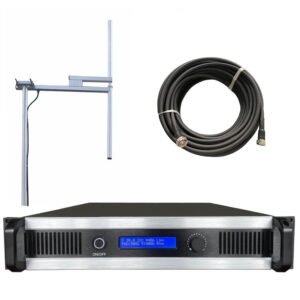
To start an FM radio station you need three essential components: FM transmitter, antenna, and coaxial cable for the transmitter site, plus audio mixer, microphone, headphones, and audio source for the studio. A basic station costs $500-$2000 while professional stations require $5000-$50000 depending on coverage needs.
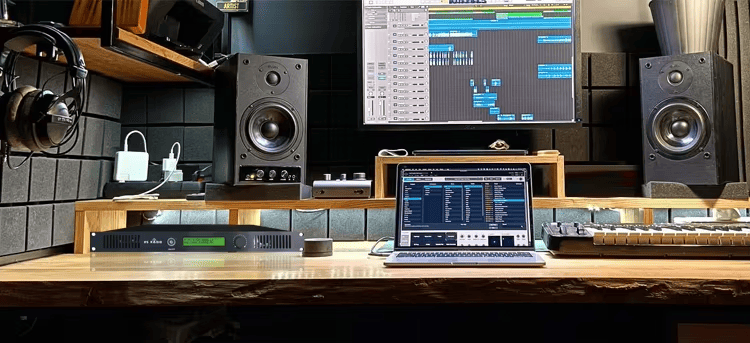
I have helped over 500 customers build FM stations during my years at RS. Most beginners worry they need expensive professional equipment immediately but discover that starting small and upgrading gradually works better financially and operationally. The equipment you need depends on your broadcast goals, coverage area, and budget constraints.
How much does it cost to have an FM radio station?
Starting an FM radio station requires financial investment but many people don’t know realistic budget ranges. Overestimating costs prevents you from starting while underestimating leads to incomplete purchases and frustration. Understanding cost breakdowns for different station types helps you plan appropriate budgets.
FM radio station costs range from $500-$2000 for basic community stations covering 1-10km, $2000-$4000 for professional local stations covering 10-30km, $4000-$6500 for city stations covering 30-60km, and $6500-$500000 for regional broadcasters covering 60km+ with multiple studios and backup systems.
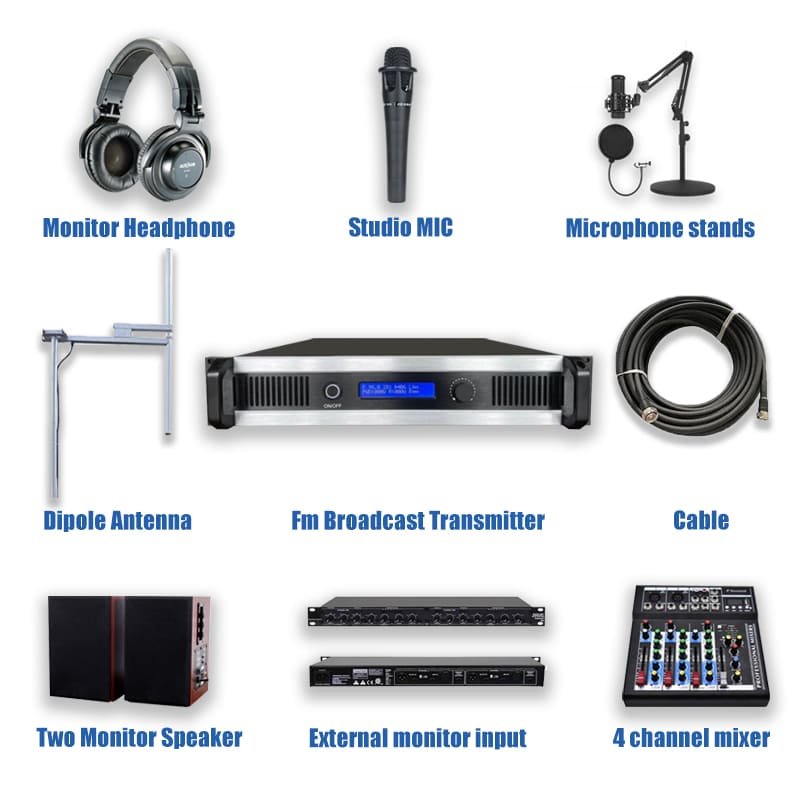
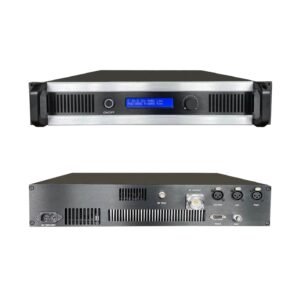
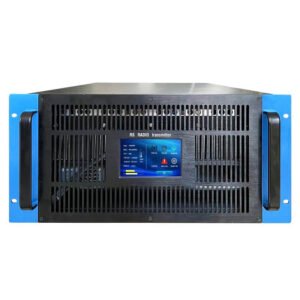
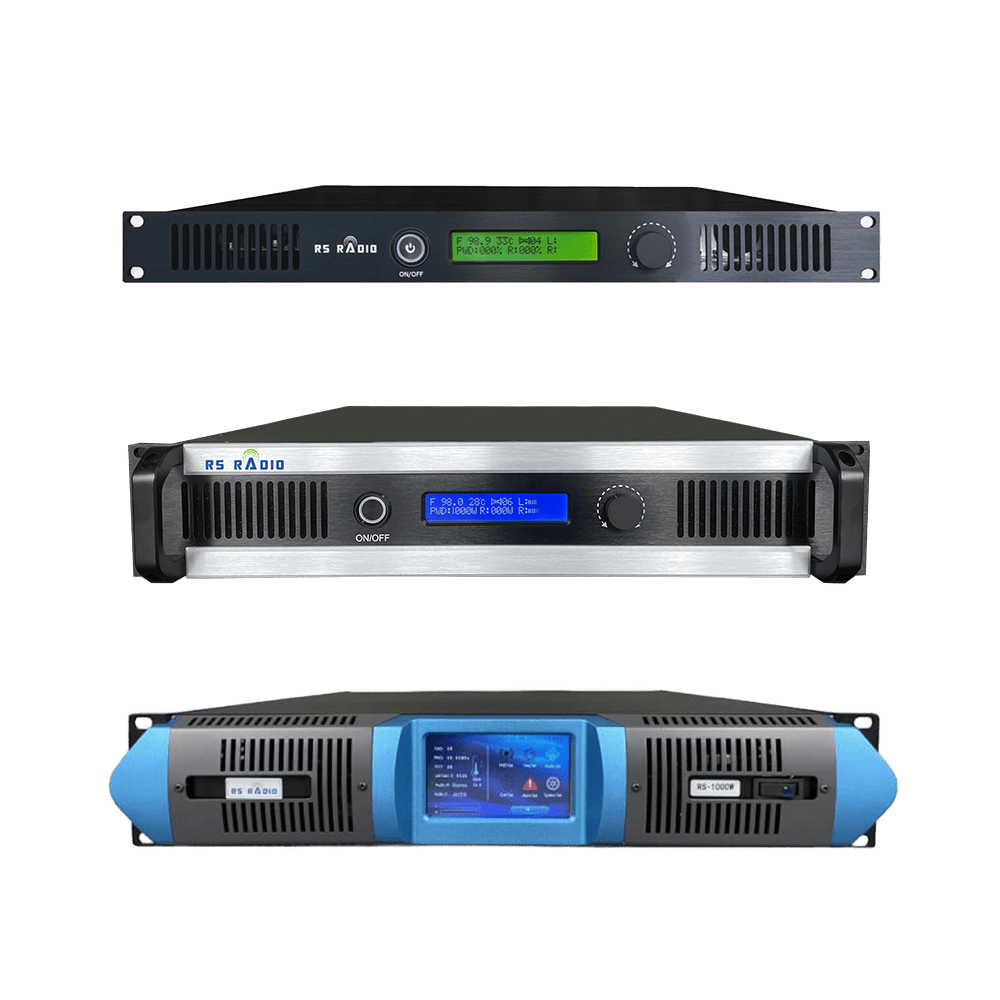
The transmitter represents the largest single equipment expense. Small stations use 7W-50W transmitters costing $70-$600. The RS-7W compact transmitter costs only $70 and covers parking lots and small venues. Medium stations need 100W-500W transmitters ranging $600-$2000. Our RS-300W touchscreen transmitter costs $1500 and serves churches, schools, and community stations effectively. Large stations require 1000W-2000W transmitters costing $2000-$4000. The RS-1000W and RS-2000W professional transmitters provide city-wide coverage with advanced features.
Antenna costs depend on power level and desired coverage pattern. Basic dipole antennas cost $50 for low power transmitters. Professional antennas for high power transmitters cost $80-3500. Circular polarized antennas provide better reception quality but cost $300-1000. All RS transmitters include antenna recommendations and we offer complete antenna packages matched to each transmitter model.
Studio equipment adds to total costs. A basic studio needs 4-channel audio mixer, microphone, headphones, and computer for audio playback. Professional studios use broadcast mixers, multiple microphones, audio processors, and dedicated broadcast computers with automation software.
| Station Type | Coverage | Transmitter Cost |
|---|---|---|
| Basic community | 1-3km | $100-$600 |
| Local station | 5-15km | $600-$1500 |
| City station | 20-40km | $1500-$4000 |
| Regional broadcaster | 50km+ | $4000-$15000 |
Cable and connector costs vary with installation complexity. Coaxial cable costs $1.5-130 per meter depending on quality. These items seem small but using poor quality cables wastes transmitter power and reduces coverage significantly.
Operating costs continue after initial equipment purchase. Electricity consumption depends on transmitter power. The RS-1000W consumes about 1000 watts costing $70 monthly. Large transmitters like RS-2000W consume 2000 watts costing $140 monthly depending on local electricity rates. According to customer feedback, our transmitters are among the most energy-efficient in the industry.
Licensing and permit costs vary by country. Some countries allow low power FM stations without licenses. Others require frequency coordination, application fees, and annual renewal charges ranging $100-5000. Check local regulations before purchasing equipment to avoid legal problems. RS provides equipment complying with FCC and CE standards for international use.
What is the best FM transmitter for a radio station?
Choosing the best FM transmitter confuses many station owners because dozens of brands offer similar specifications. The wrong transmitter fails frequently, produces poor audio quality, or lacks coverage to reach your audience. Selecting transmitters based on power needs, audio quality, reliability, and support ensures successful broadcasting.
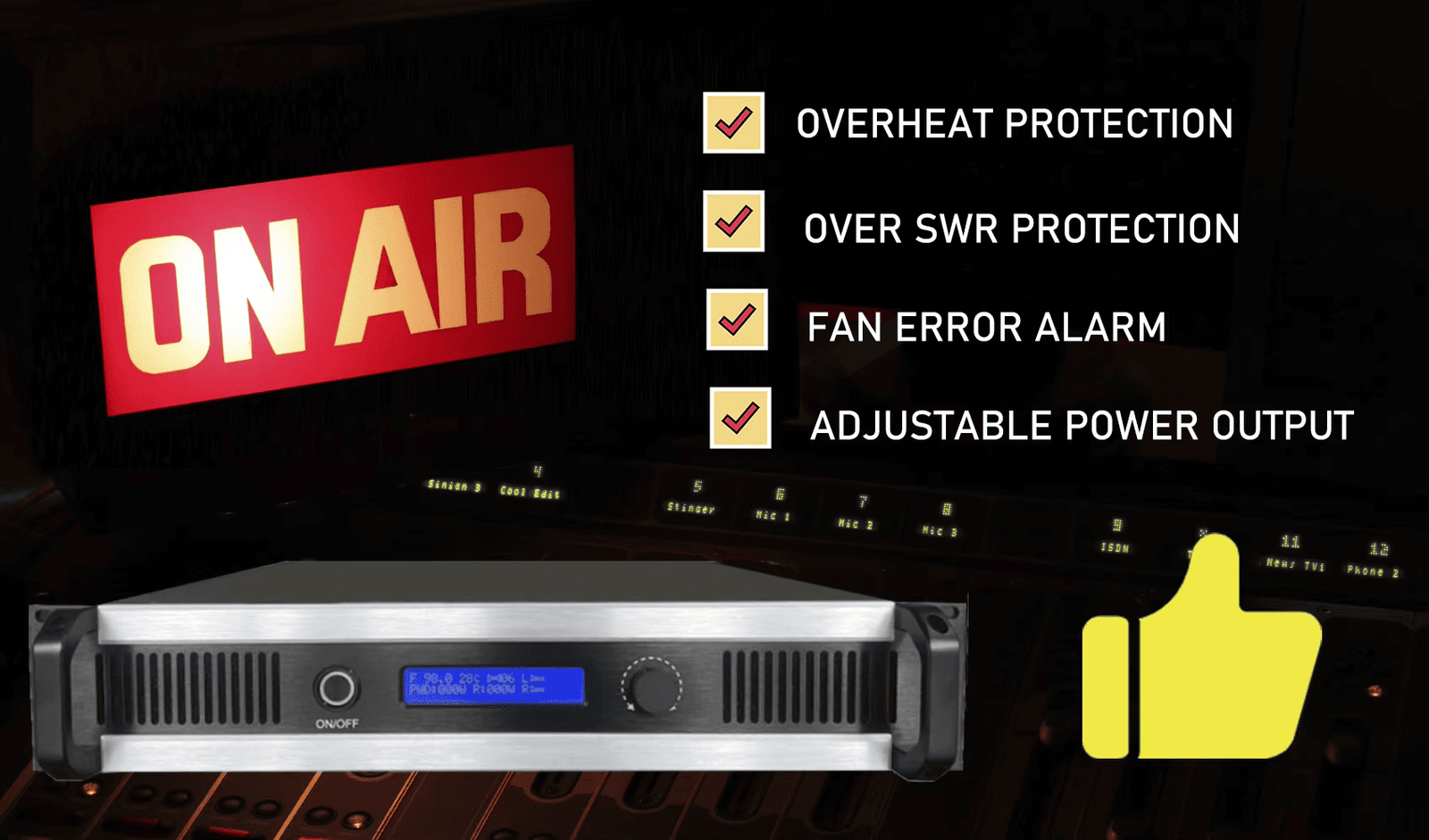
The best FM transmitter for radio stations combines appropriate power output for coverage needs, DSP digital audio processing for clean sound, adjustable power output for flexibility, comprehensive protection systems preventing damage, touchscreen control interface, and 5-year warranty with technical support. RS transmitters meet all these criteria.
Power output determines coverage distance and represents the primary transmitter specification. Churches and schools broadcasting to parking lots and nearby neighborhoods need 7W-100W transmitters. The RS-50W transmitter covers 3-5 kilometer radius suitable for most community applications. Community radio stations serving towns need 300W-1000W transmitters. Our RS-300W touchscreen model provides 15-20 kilometer coverage ideal for small cities. Professional broadcasters serving entire cities need 1000W-2000W units. The RS-1000W and RS-2000W professional transmitters deliver city-wide coverage with adjustable power output.
Audio processing technology separates professional transmitters from consumer equipment. Basic transmitters use analog audio circuits introducing noise and distortion. Professional transmitters implement DSP digital FM modulator modules using DSP and DDS technology. The RS transmitters execute all-digital processing including digital filtering, pre-emphasis, pilot frequency generation, stereo coding, and FM modulating. This produces significantly cleaner audio with stereo separation reaching 60dB and distortion below 0.05%.
Reliability determines whether your station stays on air continuously or suffers frequent outages. Quality transmitters use professional components and comprehensive protection systems. The RS transmitters use NXP LDMOS transistor BLF188XR in the RF amplifier section. This premium component withstands severe load mismatch of more than 65:1 VSWR at 5dB compression point. When antenna problems occur, the transmitter protects itself automatically instead of failing. Budget transmitters use cheaper components that fail when antennas develop problems.
| Transmitter Feature | Budget Models | RS Professional Models |
|---|---|---|
| Audio Processing | Analog circuits | DSP + DDS digital |
| Power Adjustment | Fixed or 2-3 levels | Continuous 0.1W steps |
| Protection Systems | Basic thermal only | SWR, thermal, fan monitoring |
| Component Quality | Generic parts | NXP LDMOS transistors |
| Control Interface | LED/LCD with buttons | Touchscreen without buttons |
| Warranty | 1 year typical | 5 years standard |
Control interfaces affect daily operation ease. Modern professional transmitters eliminate mechanical buttons that fail over time. The RS-300W, RS-1000W, and RS-2000W feature intuitive touchscreen displays. Operators adjust frequency, power, and settings by touching the screen. This simplifies operation and improves reliability compared to designs requiring multiple button presses.
Technical support availability matters when problems occur. RS creates WhatsApp service groups connecting customers with our engineers. When transmitters stop working, engineers guide customers through diagnosis and repair step-by-step with photos and videos. This support continues throughout the 5-year warranty period. Many manufacturers offer minimal support or charge high fees for technical assistance.
The best transmitter matches your specific application. Small stations benefit from compact units like RS-7W or RS-15W costing under $300. Medium stations need RS-50W to RS-300W models providing better audio quality and more features. Large stations require RS-1000W or RS-2000W professional units with full adjustability and protection systems. All RS transmitters include the same digital audio processing ensuring professional broadcast quality regardless of power level.
How to start an FM radio station?
Starting an FM radio station seems complicated with regulatory requirements, equipment selection, and technical installation challenges. Many potential broadcasters give up before beginning because the process appears overwhelming. Following a systematic approach simplifies station launch and avoids costly mistakes.
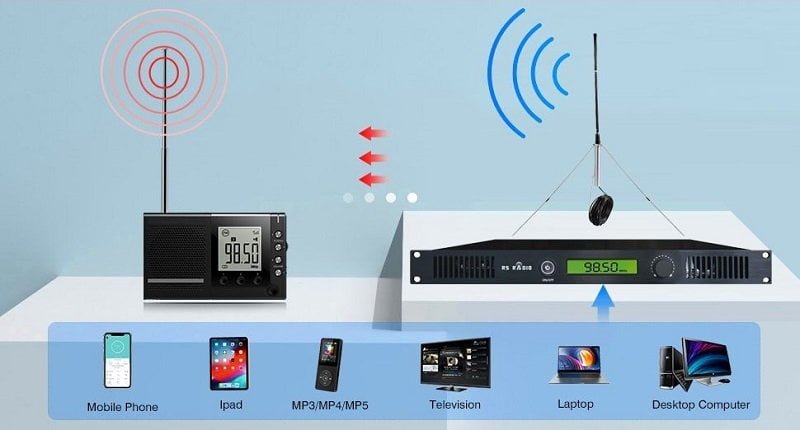
Start an FM radio station by obtaining frequency license1 or using unlicensed low power, purchasing transmitter/antenna/cable, setting up studio with mixer/microphone/audio source, installing transmitter at elevated location, connecting equipment, testing coverage, and launching programming. Complete process takes 2-8 weeks depending on licensing requirements.
Frequency licensing represents the first critical step. Check local regulations for FM broadcasting rules. Some countries allow low power FM stations under 100W without licenses for religious, educational, or community purposes. Others require formal applications and frequency coordination. The United States allows LPFM stations for qualified organizations. Many developing countries have simpler licensing processes. Research requirements before purchasing equipment to ensure legal operation.
Equipment selection follows licensing determination. For parking lot coverage at churches or schools, purchase RS-7W or RS-15W transmitter, dipole antenna, and 30 meters coaxial cable. For neighborhood coverage, select RS-50W or RS-100W transmitter, professional antenna, and 30 meters cable. For city coverage, choose RS-300W to RS-2000W transmitter, Dipole polarized antenna, and low-loss cable.
Studio setup requires audio mixer, microphones, headphones, and audio source. Basic studios use small 4-channel mixers connecting microphone, computer, and phone. Add audio processor for automatic level control and sound enhancement. Professional studios invest in broadcast mixers, multiple microphones, and dedicated broadcast computers.
| Station Launch Phase | Timeline | Key Actions |
|---|---|---|
| 1. Planning & Licensing | 1-4 weeks | Research regulations, apply for license |
| 2. Equipment Purchase | 1-2 weeks | Order transmitter, antenna, studio gear |
| 3. Site Preparation | 1-2 weeks | Install antenna tower/mount, run cables |
| 4. Equipment Installation | 1-3 days | Connect transmitter, test signal |
| 5. Testing & Optimization | 3-7 days | Adjust coverage, verify audio quality |
| 6. Launch & Promote | Ongoing | Start programming, build audience |
Installation location dramatically affects coverage. Mount antennas as high as possible on buildings, towers, or hills. Every 10 meters of additional height extends coverage by 3-5 kilometers. Secure transmitter in weather-protected location near antenna to minimize cable length. Run cables away from electrical lines to prevent interference. Ground equipment properly using copper ground rods.
Connection and testing ensures everything works properly before launch. Connect audio source to transmitter audio inputs using appropriate cables. Connect transmitter RF output to coaxial cable using quality connectors. Connect cable to antenna verifying proper connection. Power on transmitter, set frequency, and adjust power output. Use FM radio to test reception at various distances from transmitter. Walk or drive around checking signal strength and audio quality.
Programming development attracts and retains listeners. Start with simple format playing music from computer. Add talk segments, news, and community announcements as you gain experience. Consistency matters more than perfection initially. Broadcast regular hours so listeners know when to tune in. Promote your station through social media, flyers, and community events. Build audience gradually through quality content and reliable operation.
What power FM transmitter do I need for my coverage area?
Selecting appropriate transmitter power confuses station owners because coverage depends on multiple factors beyond just watts. Buying too little power creates coverage gaps while excessive power wastes money. Understanding the relationship between power, antenna height, terrain, and coverage distance ensures optimal transmitter selection.
FM transmitter power requirements are: 7W-15W for 0.5-2km coverage (parking lots), 50W-100W for 5-10km coverage (neighborhoods), 300W-500W for 15-25km coverage (small cities), 1000W for 25-30km coverage (cities), 2000W for 30-60km coverage (regions). Antenna height and terrain significantly affect actual results.
Coverage distance calculations combine transmitter power and antenna height. The formula involves line-of-sight distance, signal strength, and receiver sensitivity. Practical experience shows that doubling transmitter power increases coverage distance by approximately 40%. Doubling antenna height increases distance by 40-50%. This means antenna height often matters more than transmitter power for extending coverage.
Churches represent my largest customer category and provide excellent coverage examples. A church with 50-car parking lot needs RS-7W transmitter for reliable coverage. A church serving neighborhood within 3 kilometers needs RS-15W or RS-50W transmitter mounted on building roof. A church broadcasting to entire town of 20000 people needs RS-300W transmitter with antenna at 20-30 meters height. A church running city-wide ministry covering 50000 people needs RS-1000W transmitter with professional antenna installation.
Terrain type dramatically changes coverage patterns. Flat terrain allows maximum coverage distance. I have customers using RS-300W transmitters covering 25-30 kilometers across flat agricultural areas. Hills reduce coverage by creating shadow zones. The same RS-300W transmitter covers only 15-20 kilometers in hilly terrain. Mountains between transmitter and listeners block signals entirely requiring higher transmitter locations or increased power.
| Coverage Goal | Flat Terrain Power | Hilly Terrain Power | Mountainous Terrain Power |
|---|---|---|---|
| 1-2km radius | 7W-15W | 15W-50W | 50W-100W |
| 5-10km radius | 50W-100W | 100W-300W | 300W-500W |
| 15-25km radius | 300W-500W | 500W-1000W | 1000W-2000W |
| 25-30km radius | 1000W | 1000W-2000W | 2000W-5000W |
| 30-60km radius | 2000W | 2000W-5000W | 5000W-10000W |
Urban environments require more power than rural areas for equivalent coverage. Buildings absorb and reflect FM signals reducing effective range. Dense downtown areas need 50-100% more power than suburban areas. The RS-1000W transmitter covers 30-40 kilometer radius in rural areas but only 20-30 kilometers in cities. Position antennas above building heights whenever possible to minimize obstruction effects.
Adjustable power output provides flexibility for changing needs. All RS transmitters feature continuously adjustable output. The RS-300W adjusts from 0-300W in 0.1W steps. Start operation at lower power during testing and initial audience building. Increase power gradually as programming improves and audience grows. This approach minimizes interference with nearby stations while your format develops.
The RS transmitters include real-time SWR monitoring and power measurement. The display shows forward power, reflected power, and SWR ratio continuously. This information helps optimize antenna installation and identify problems before they cause damage. High SWR indicates antenna problems requiring correction. Most transmitter failures result from antenna issues rather than transmitter defects making this monitoring critically important.
Conclusion
Start FM radio stations by obtaining licenses, purchasing appropriate transmitter/antenna/cable/studio equipment, installing at elevated locations, and launching programming. Match transmitter power to coverage needs considering terrain and antenna height for optimal results.
-
Understanding frequency licenses is crucial for legally operating an FM station. Explore this link to learn about the requirements and process. ↩