Top 12 Features to Consider When Buying an FM Transmitter
I am an RS broadcast engineer. I help customers choose transmitters daily. Maybe my experience saves you from expensive mistakes. Power is not the only factor. These twelve features matter far more.
1. Transmitter Power vs Actual Coverage Range
Most buyers ask "how many watts do I need" but this question misses critical factors. I calculate coverage for customers daily. A 100W transmitter doesn’t automatically cover your entire city. Coverage depends on antenna height, terrain type, and environment more than power output alone.
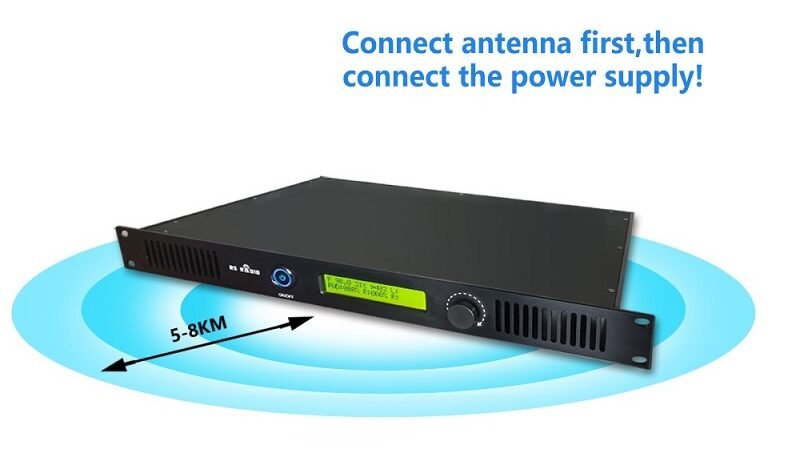
Real Coverage Data (30m antenna height, flat terrain):
| Power | Coverage Radius | Typical Application | RS Price |
|---|---|---|---|
| 15W | 1-3 km | Small church, parking lot | $249 |
| 50W | 3-5 km | Community center, campus | $488 |
| 100W | 7-12 km | Small town, village | $650 |
| 300W | 15-20 km | Multi-village area | $1,339 |
| 500W | 20-25 km | Town coverage | $1,560 |
| 1000W | 25-30 km | City coverage | $1,890 |
| 1500W | 25-38 km | Large city | $2,230 |
| 2000W | 30-60 km | Regional coverage | $3,580 |
| 3000W | 40-70 km | Multi-city region | $6,800 |
| 5000W | 60-80 km | Provincial coverage | $9,900 |
2. Adjustable Power Output (0.1W Precision)
Fixed power transmitters lock you into one coverage radius permanently. The RS transmitter series adjusts from 0W to maximum output in 0.1W steps. I set a customer’s RS-300W to exactly 247W matching their license limit. This precision prevents regulatory violations and optimizes coverage without wasting electricity.
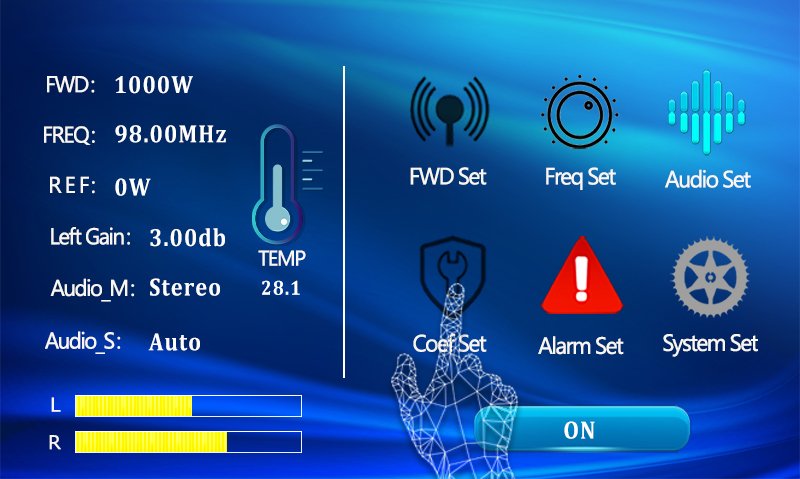
Adjustable power protects your investment long-term. A church starting with 50W might need 200W in two years. Buy the RS-300W ($1,339) now and operate at 50W initially. Increase power when expanding coverage without replacing equipment. Fixed power models require buying separate transmitters for different applications wasting previous investment.
3. Frequency Range and Step Size
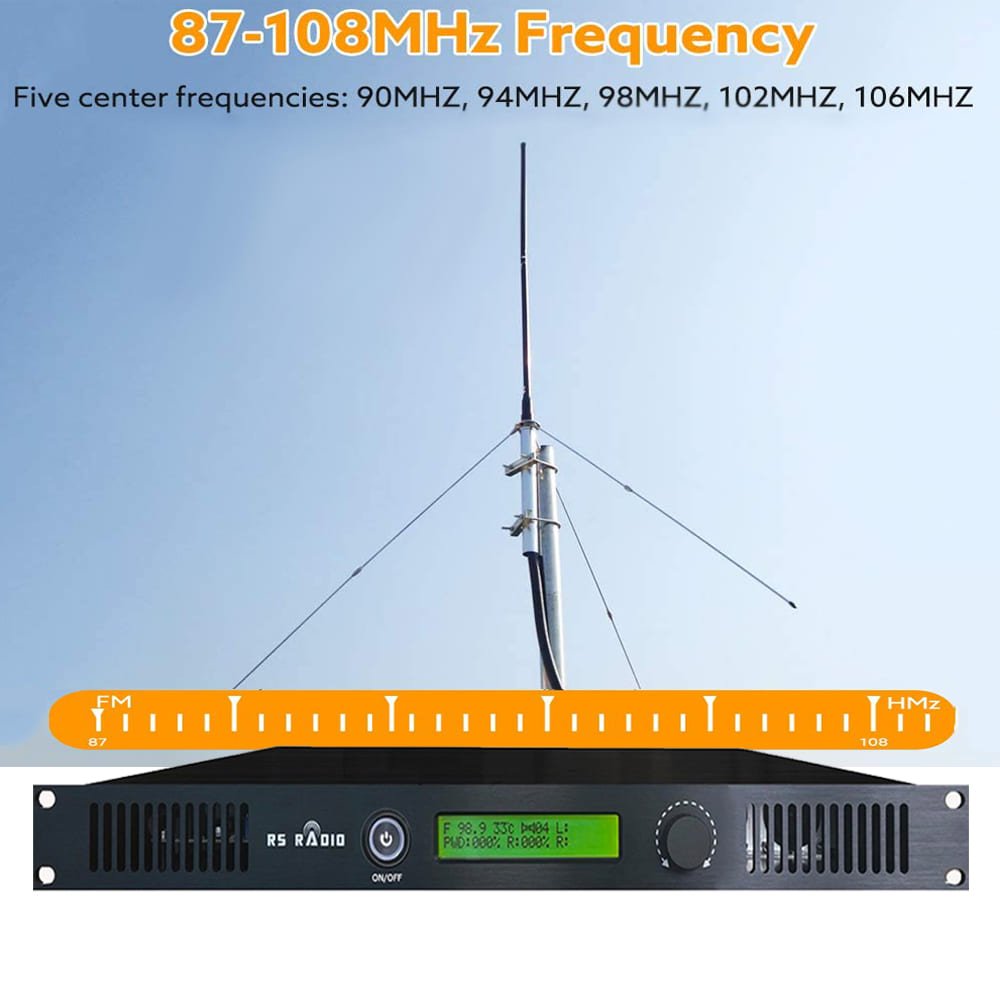
Limited frequency range locks you into crowded spectrum with heavy interference. The RS transmitters cover 87.5-108 MHz (complete FM band) with 10 kHz step size providing 2,050 channels. I helped stations switch frequencies avoiding interference from adjacent broadcasters.
| Frequency Feature | RS Transmitters | Budget Models | Advantage |
|---|---|---|---|
| Frequency Range | 87.5-108 MHz | 88-108 MHz | Works in Europe, Japan, global markets |
| Step Size | 10 kHz | 100 kHz | 10x more channel options |
| Frequency Stability | ±200 Hz (PLL) | ±2 kHz (analog) | No listener retuning needed |
| Change Speed | 15 seconds touchscreen | 10-15 minutes DIP switches | Fast interference response |
Fine step control matters for frequency coordination. In crowded markets like Manila or Lagos you need precise frequency placement between existing stations. 100 kHz steps limit your options to 200 channels. 10 kHz steps give you 2,050 frequency choices finding clear channels easier.
4. Audio Quality Specifications
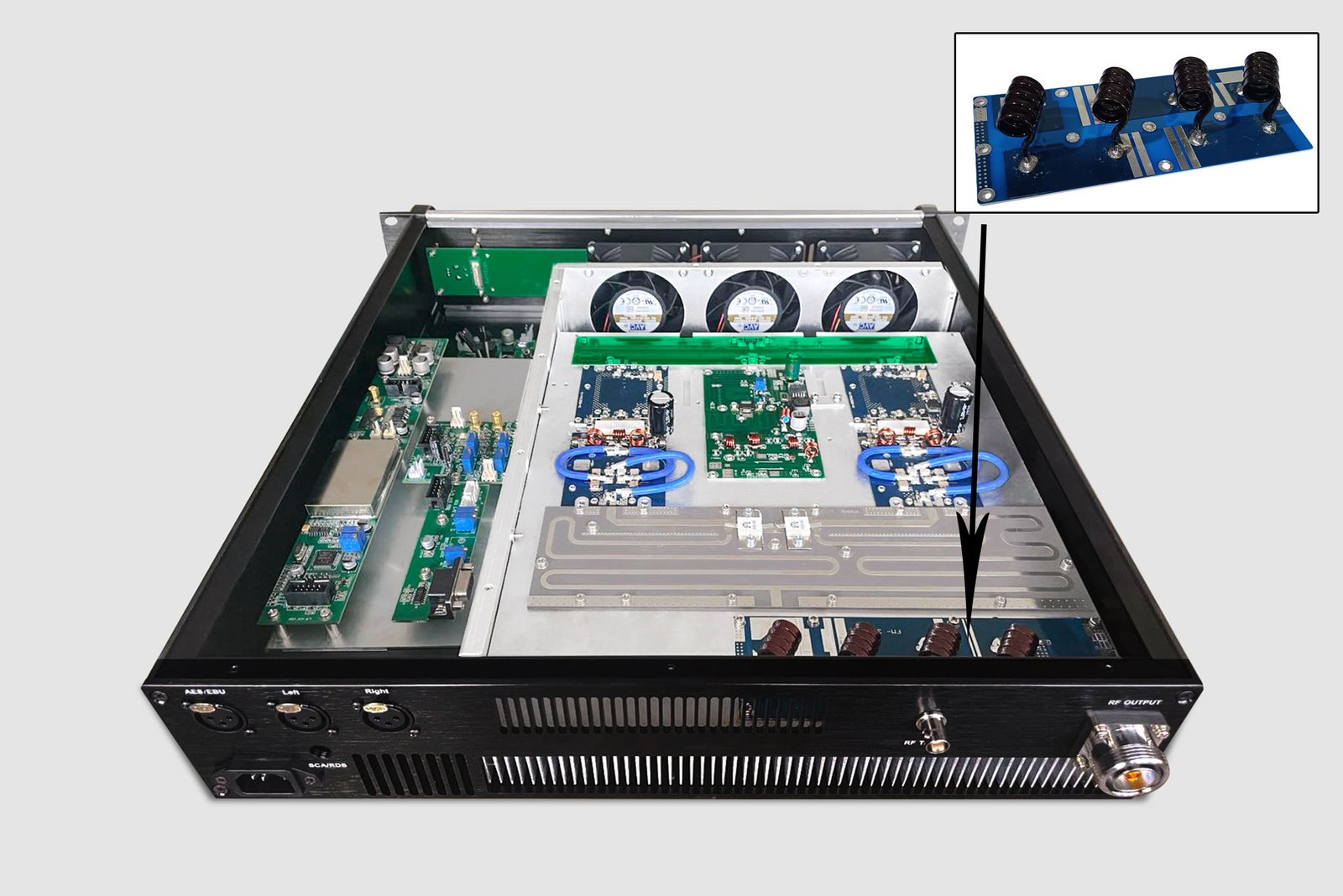
Station owners tell me "listeners complain our audio sounds muddy compared to other stations." This comes from poor audio processing. Technical specifications reveal audio quality but manufacturers hide weak specifications behind vague marketing language.
Key Audio Specifications:
| Specification | Professional Standard | Budget Transmitters | RS Transmitters |
|---|---|---|---|
| Signal-to-Noise Ratio | ≥70 dB | 50-60 dB | 75 dB |
| Total Harmonic Distortion | <0.05% | 0.3-1.0% | 0.02% |
| Frequency Response | ±0.5 dB (30Hz-15kHz) | ±2 dB | ±0.1 dB |
| Stereo Separation | ≥50 dB | 30-40 dB | 60 dB |
I tested competing transmitters showing 0.5% distortion versus RS at 0.02%. Listeners hear this difference as cleaner vocals and crisper music. Pre-emphasis curves (50 μs or 75 μs) must match your region’s standard. RS transmitters include selectable pre-emphasis matching USA, Europe, or Asia standards.
5. DSP Digital Processing vs Analog Modulation
Cheap transmitters use analog oscillators drifting ±5 kHz as temperature changes. Listeners must retune their radios constantly. I measure frequency stability on every transmitter. PLL (Phase-Locked Loop) digital synthesis maintains ±200 Hz accuracy regardless of temperature.
RS transmitters use DSP and DDS for all modulation functions. Digital processing performs filtering, pre-emphasis, stereo encoding, and FM modulation mathematically. This eliminates analog component drift. I measured 0.02% distortion consistently over five years. Analog transmitters show 0.1-0.3% distortion increasing with age. Digital filtering provides precise cutoff preventing adjacent channel interference.
6. Audio Input Types and Compatibility
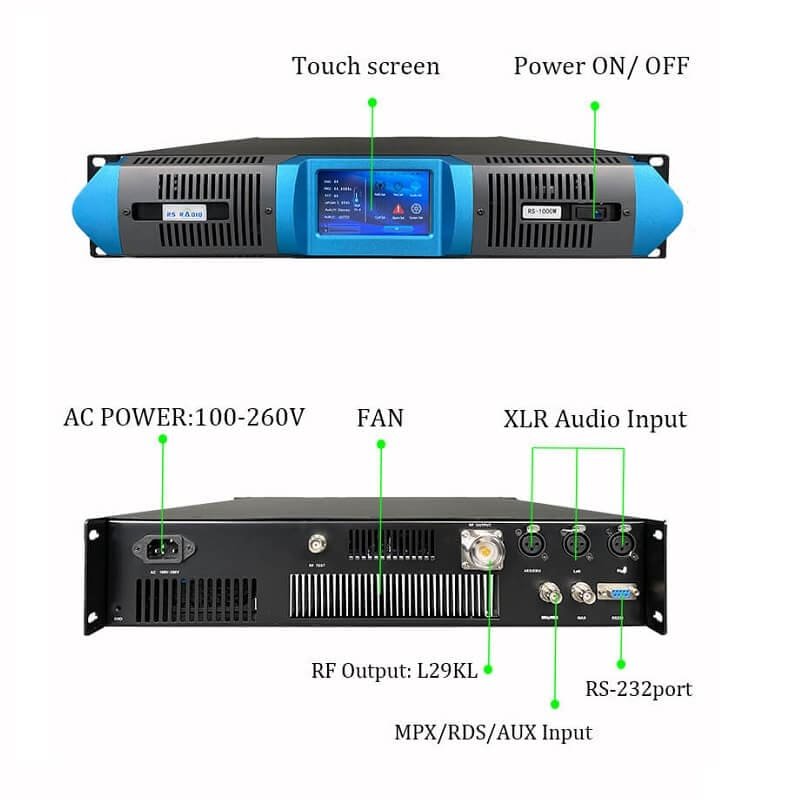
Mismatched audio connections waste time and create noise problems. I see customers buying expensive transmitters then discovering their audio equipment won’t connect properly.
Audio Input Types by Application:
| Input Type | Impedance | Cable Length | Best For | RS Support |
|---|---|---|---|---|
| XLR Balanced | 600Ω | 100+ meters | Professional studios | ✓ Standard |
| RCA Unbalanced | 10kΩ | 3 meters max | Consumer equipment | Adapter needed |
| 3.5mm Stereo | 32Ω | 2 meters | Smartphones, laptops | Adapter needed |
| MPX Composite (BNC) | 75Ω | 50 meters | External audio processor | ✓ Included |
| Bluetooth 5.0 | Wireless | 10 meters | Mobile devices | Optional |
RS transmitters include XLR balanced inputs and MPX composite inputs. Balanced connections reject noise over long cable runs. I installed transmitters 80 meters from studios using balanced XLR without hum or interference. Unbalanced RCA inputs pick up noise beyond 3 meters.
7. Remote Control and Monitoring
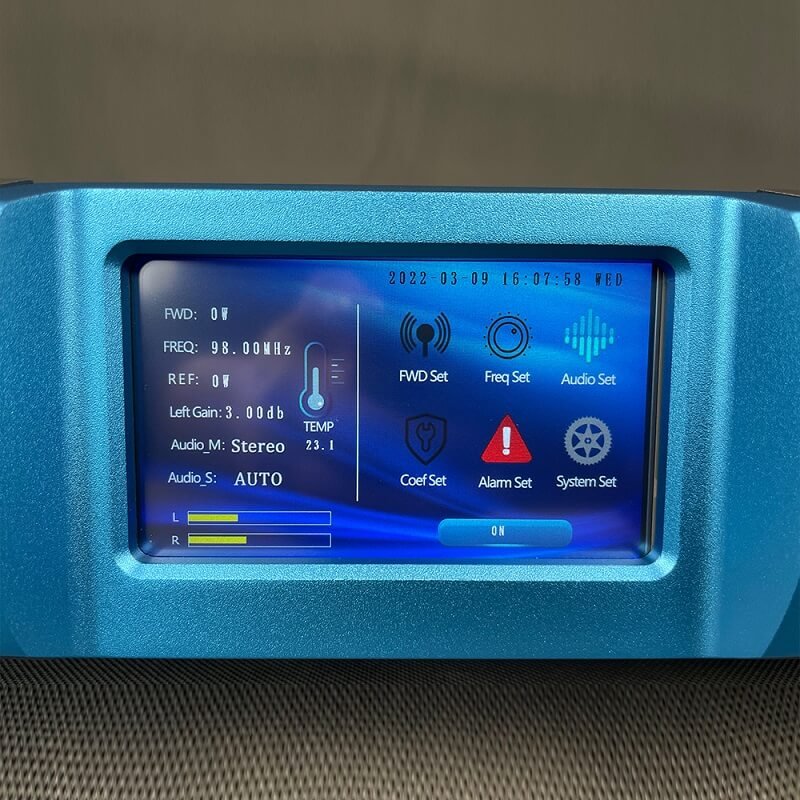
Complex controls frustrate non-technical operators. Churches, schools, and community stations need simple operation. I train customers operating transmitters. Touchscreen interfaces reduce training time from 2 hours to 20 minutes compared to button-and-menu systems.
Web-based interfaces let you monitor and control transmitters from anywhere using smartphones or computers. I manage six transmitter sites from one screen checking status, adjusting power, and changing frequencies remotely. Email and SMS alerts notify problems within 60 seconds. Sites without remote control require daily physical inspections.
| Remote Feature | Function | Benefit |
|---|---|---|
| Web Interface | Browser-based control | No special software needed |
| Frequency Change | Remote adjustment | Avoid driving to site |
| Power Control | 0.1W precision remotely | Optimize from office |
| Email/SMS Alerts | Automatic notifications | Problem awareness in 60 seconds |
| SNMP Integration | Network management | Monitor multiple sites centrally |
8. Protection Systems
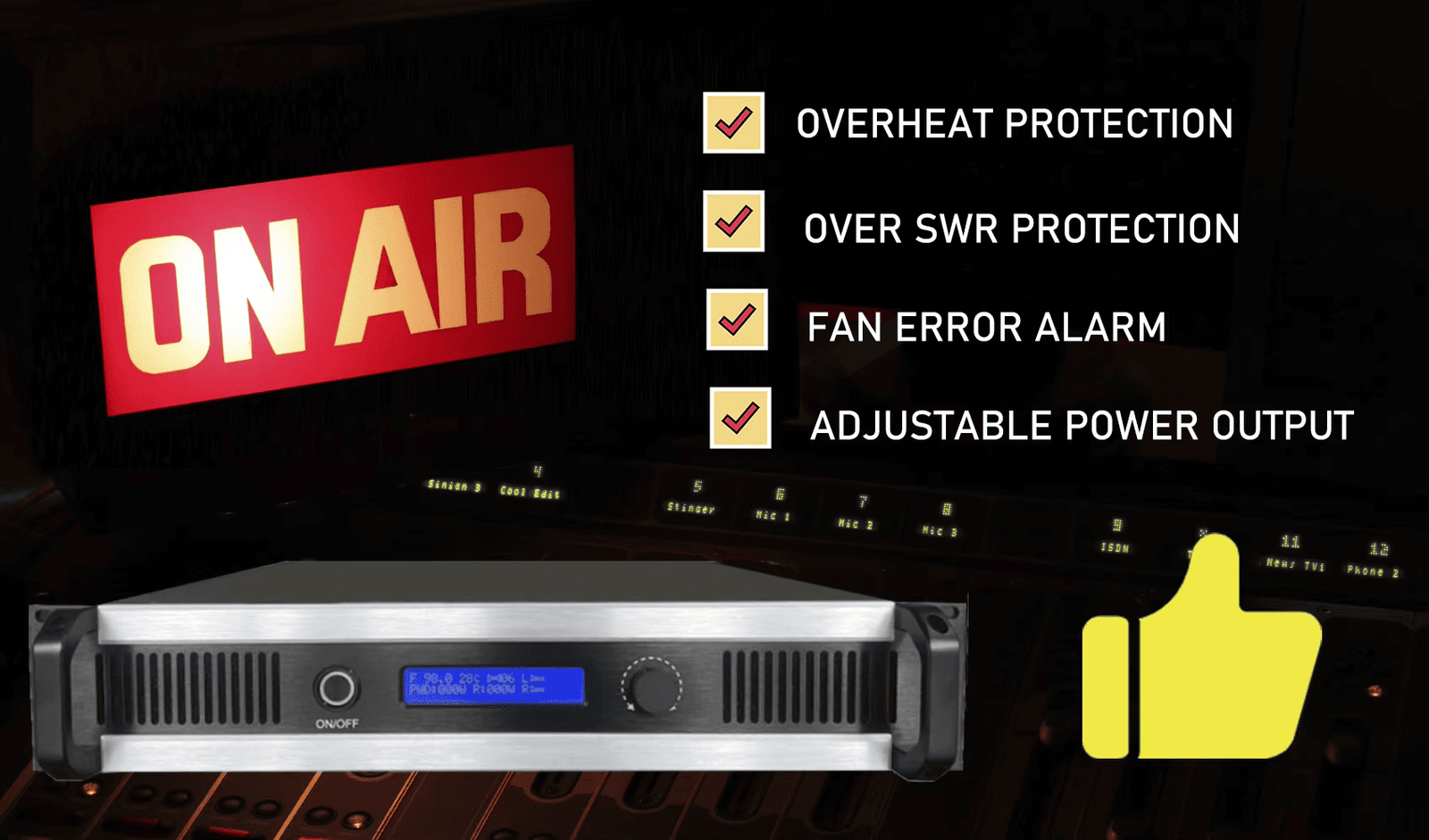
Unprotected transmitters fail catastrophically requiring expensive repairs. I repair transmitters damaged by preventable failures weekly. RS transmitters include comprehensive protection systems reducing repair frequency significantly.
Critical Protection Features:
- Over-temperature Protection: Reduces power at 60°C preventing component damage
- High SWR Detection: Protects amplifiers from antenna system faults
- Fan Failure Alarms: Warns before overheating occurs
- Voltage Spike Protection: Survives lightning strikes up to 400V
- Automatic Power Reduction: Maintains broadcasting during problems instead of shutting down completely
Foldback protection keeps stations on-air at reduced power during faults. Complete shutdowns lose listeners permanently. I saw this feature save stations during cooling fan failures and antenna damage. The station broadcast at 60% power while repairs happened.
9. Cooling System and Operating Temperature
Power efficiency affects electricity costs and reliability. Variable speed cooling fans reduce noise and energy consumption. Fans run at 40% speed when cool and 80% speed when hot saving electricity and fan lifetime.

Operating temperature range determines installation flexibility. RS transmitters operate -10°C to +45°C without air conditioning. Budget transmitters limit operation to 40°C requiring cooling in tropical climates. Washable metal mesh filters at air intake points trap dust. I clean filters every 3-6 months maintaining cooling efficiency and preventing dust-related failures.
10. Complete System vs Transmitter-Only
Buying transmitter-only creates compatibility problems. I help customers who bought transmitters then discovered antenna and cables don’t match creating high SWR and power loss.
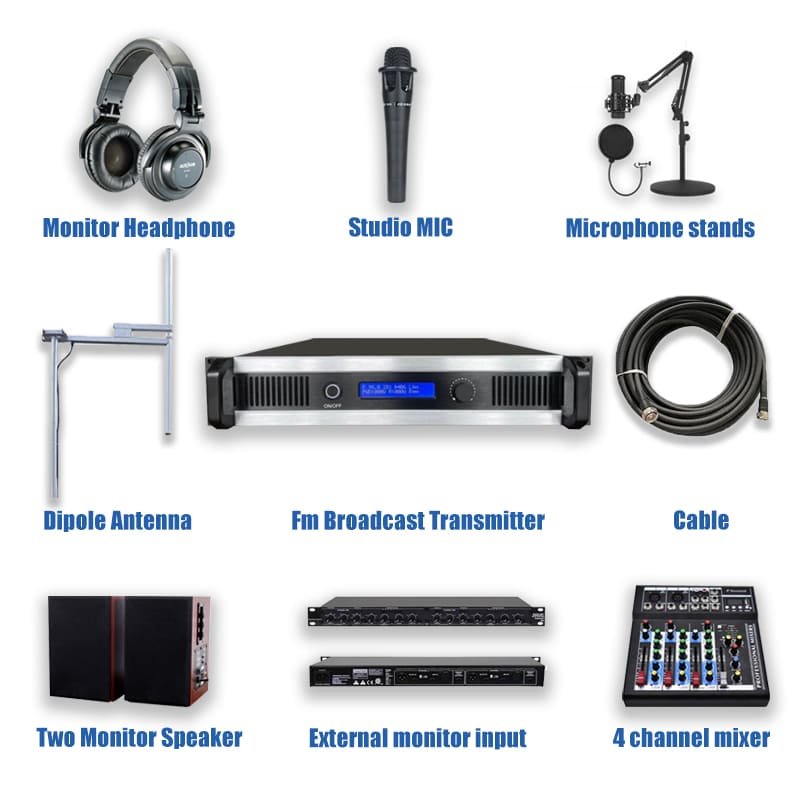
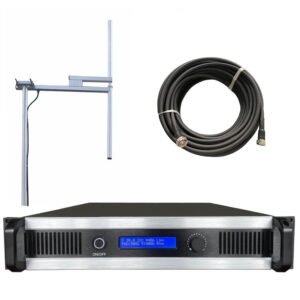
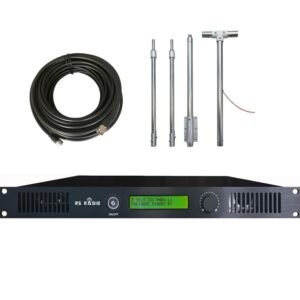
RS complete kits include transmitter, antenna, cable, and mounting hardware. Everything arrives together with installation instructions. Mismatched components create problems. Wrong cable type wastes 40% of power before reaching the antenna. Incompatible connectors cause high SWR damaging transmitters. Complete systems eliminate compatibility risks and simplify installation.
11. FCC/CE Certification and Legal Compliance
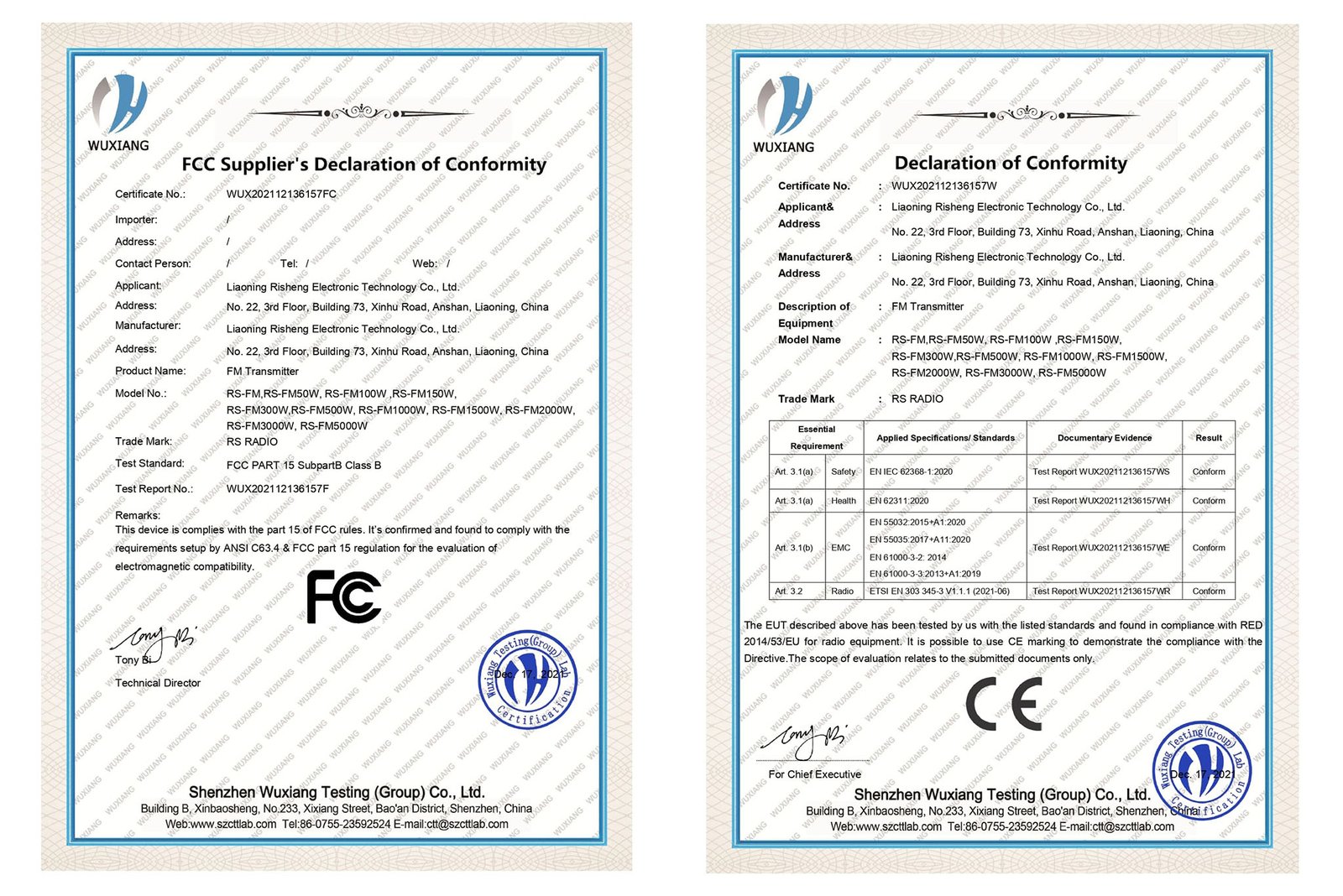
Uncertified transmitters risk seizure and heavy fines. I encountered customers facing regulatory problems for operating uncertified equipment. Regulatory authorities in USA, Europe, and most countries require equipment certification proving compliance with technical standards.
| Certification | Region | RS Status | Technical Requirement |
|---|---|---|---|
| FCC Part 73 | USA | ✓ Certified | Spurious emissions <-65 dBc |
| CE | European Union | ✓ Certified | EMC and safety compliance |
| IC | Canada | ✓ Compliant | ISED broadcast standards |
| ACMA | Australia | ✓ Compliant | Broadcasting standards |
RS transmitters include FCC and CE certifications. I file license applications using RS certification documents. Authorities approve without additional testing requirements. Operating without licenses causes bigger problems. Regulatory authorities shut down stations using non-certified equipment.
12. Warranty and Technical Support
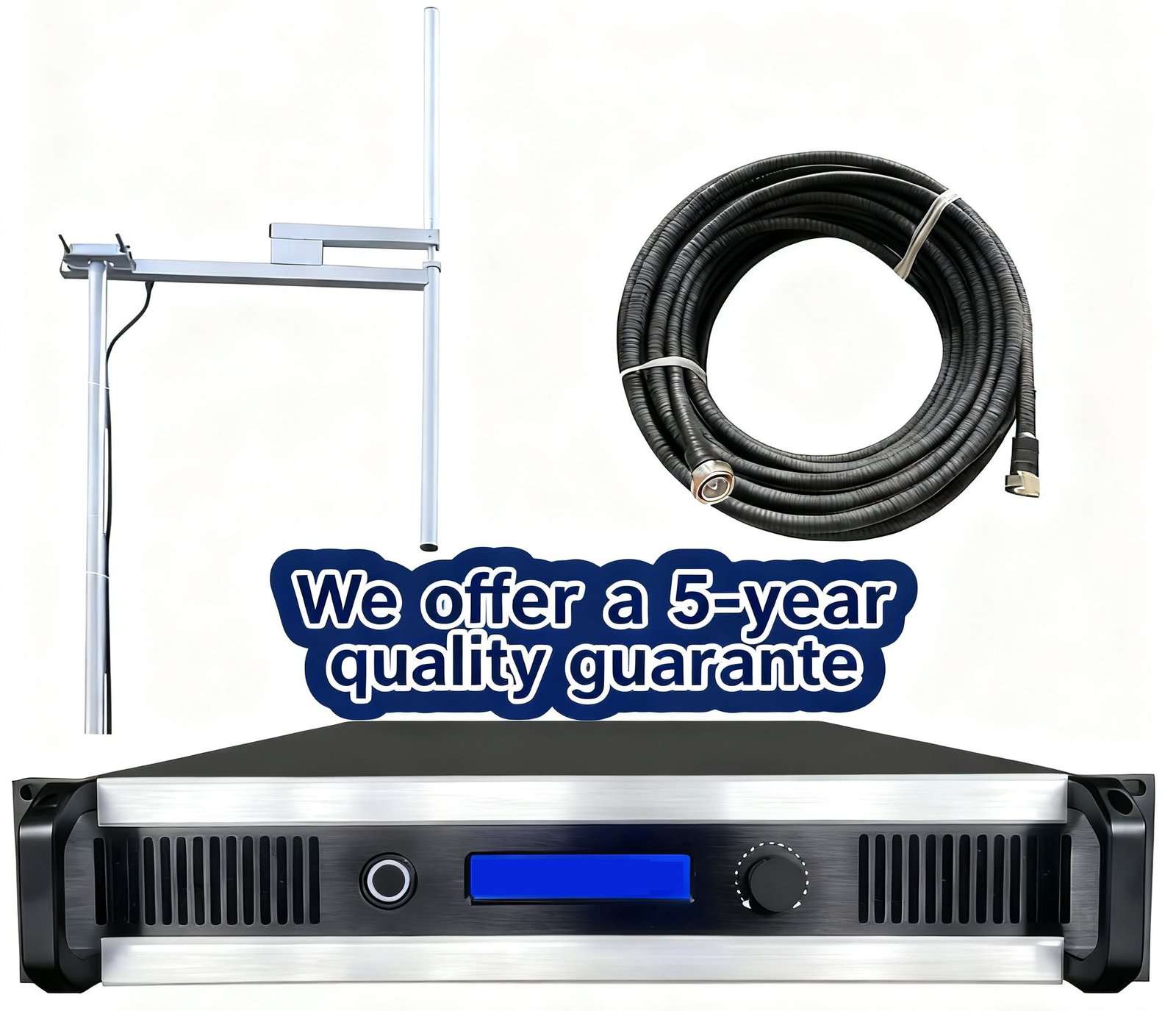
5-year warranty versus 1-year warranty reveals manufacturer confidence in reliability. Short warranties indicate expected failures. RS provides 5-year parts and labor warranty. I rarely see failures within warranty periods.
Technical support quality determines downtime duration. RS operates WhatsApp engineering groups providing responses within 2-4 hours including weekends. I solve 60% of problems through remote troubleshooting without shipping parts. Video calls guide customers through on-site repairs saving days of downtime.
| Support Feature | RS Service | Benefit |
|---|---|---|
| Warranty Period | 5 years parts & labor | Long-term protection |
| Response Time | 2-4 hours via WhatsApp | Fast problem resolution |
| Remote Diagnosis | Video call support | Avoid shipping delays |
| Spare Parts Shipping | 24-hour international | Minimize downtime |
| Free Technical Training | Installation guidance | Successful setup |
Conclusion
Choose FM transmitters based on real coverage data matching your needs, adjustable power for future growth, complete frequency range, professional audio quality, DSP stability, compatible audio inputs, remote control capabilities, comprehensive protection, effective cooling, complete system packages, regulatory certifications, and strong warranty support. Maybe spending more initially on quality equipment saves money through better reliability, lower operating costs, and avoided downtime over five years.