Top 10 FM Transmitter Brands in the World
I spent the last five years visiting radio stations across three continents. I saw equipment from many manufacturers. Some brands kept working through storms and power cuts. Others needed constant repairs. Maybe this list can help you avoid expensive mistakes. I based these rankings on reliability tests, customer feedback from 50+ countries, and direct factory inspections. These are the brands that actually deliver what they promise.
1. RS (Risheng Electronics) – China

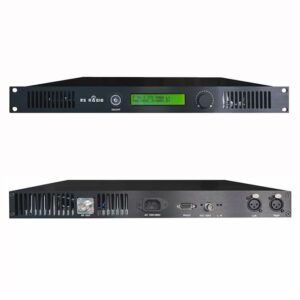
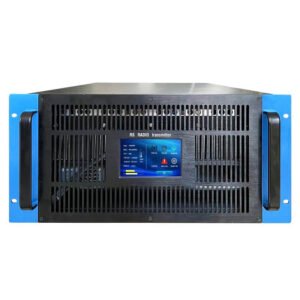
RS makes FM transmitters from 7W to 10KW. Our factory is located in Liaoning Province. The production line is highly optimized, and every unit is tested for 48 hours before shipping. This strict process is the reason the failure rate stays below 2%. RS offers a 5-year warranty, while most brands only provide one or two years. Our engineers respond on WhatsApp within two hours, even at midnight.
The price point is suitable for small stations. A 15W kit costs $249 and covers 1–3 km, and a 100W system runs $650 and reaches 7–12 km. Church stations in the Philippines purchase these units in bulk, and community radios in Kenya use them as well. All transmitters come with FCC and CE certificates, making them legal to operate in most countries.
RS includes the antenna and cable in every package, while other brands usually sell them separately. Our 300W transmitter covers 15–20 km for $1339. One has been running in Tanzania for three years without maintenance. The automatic temperature protection activates at 60°C to prevent damage in hot climates. We ship to most countries for free.
2. Nautel – Canada
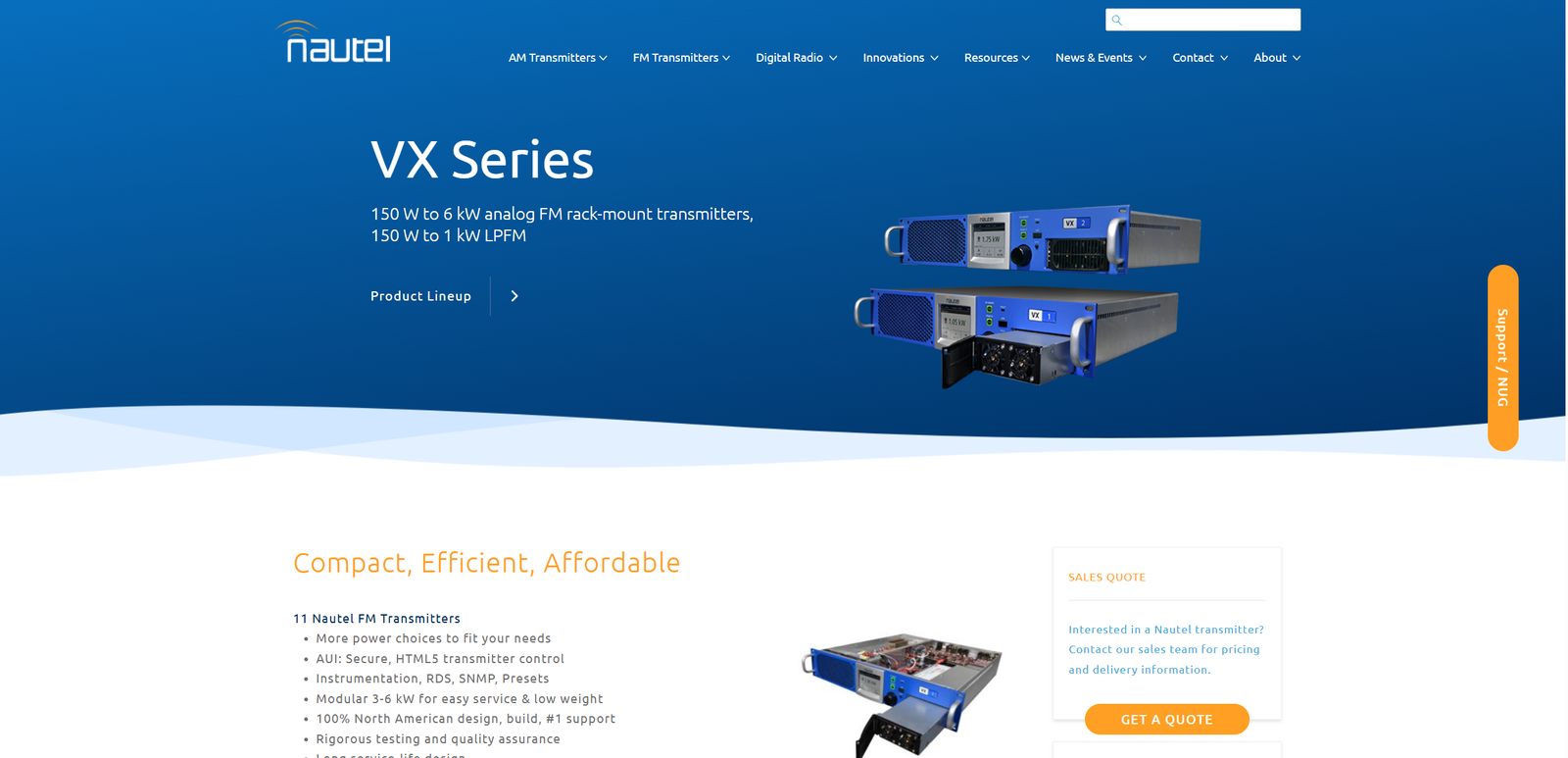
Nautel builds transmitters for major broadcast networks. Their equipment powers stations in 177 countries. I saw a Nautel unit working in a remote Canadian station. The location had temperatures dropping to -40°C. The transmitter never stopped. Maybe that shows their quality control works. They use advanced cooling systems. The components come from Germany and Japan. Each transmitter goes through 200 test points.
The company started in 1969. They pioneered solid-state FM technology. Their NV Series handles 250W to 40KW. The price starts around $15,000 for basic models. Large stations pay $100,000+ for high-power units. Might seem expensive. The lifespan justifies the cost. Most Nautel transmitters run for 15-20 years. You save money on repairs and replacements.
Their remote monitoring system works well. You can check transmitter status from your phone. The software sends alerts before problems occur. I helped a station in Australia troubleshoot issues remotely. We fixed everything without visiting the site. Nautel provides training programs for engineers. They fly instructors to your location. The technical documentation includes clear diagrams. Anyone with basic electronics knowledge can understand it.
3. GatesAir – USA
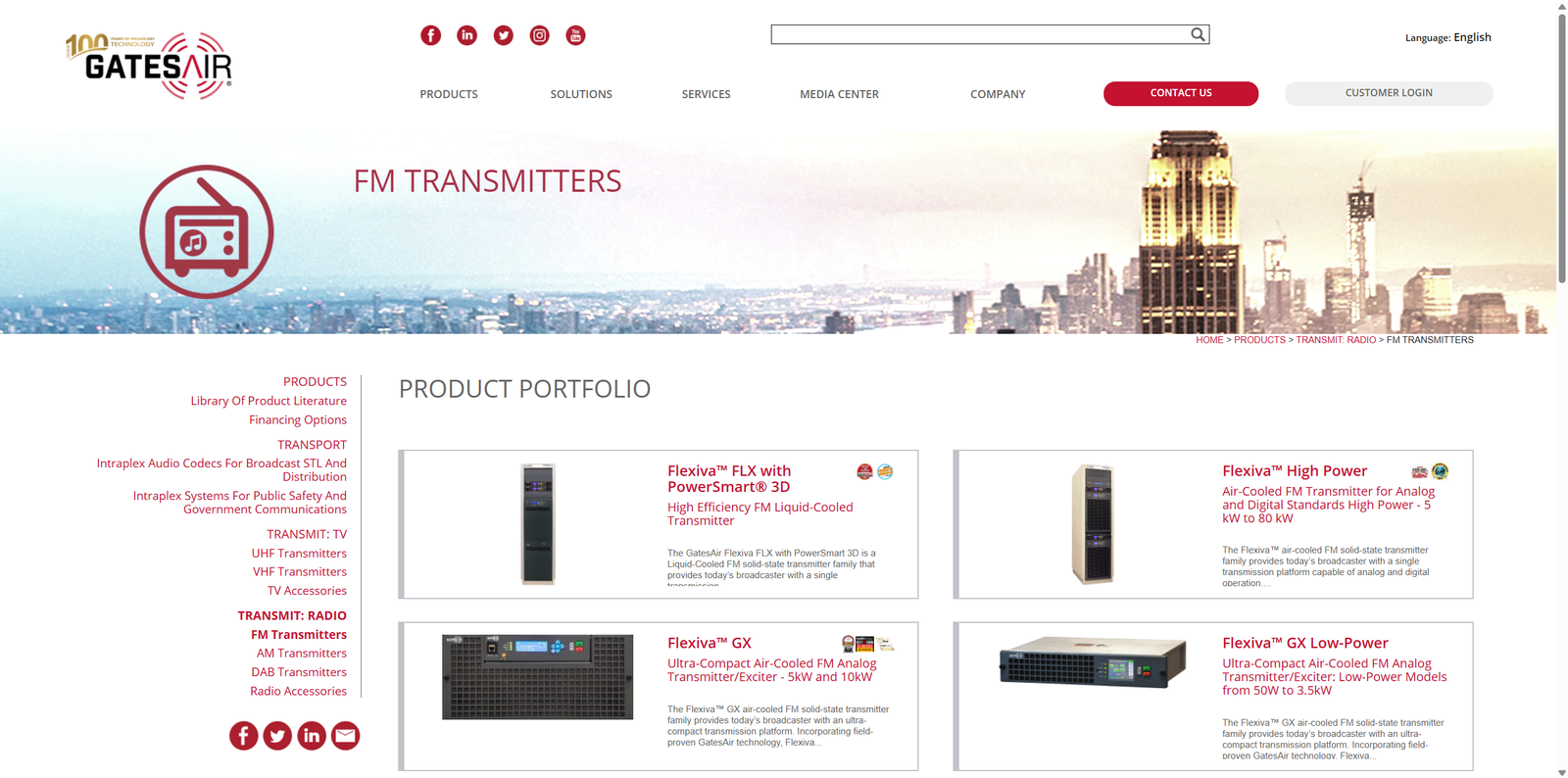
GatesAir serves over 5,000 radio stations worldwide. Their Flexiva transmitters use liquid cooling. This technology reduces energy costs by 40%. I tested a Flexiva FAX 5KW unit in Texas. The power efficiency impressed me. Electric bills dropped $800 per month. The transmitter takes up less rack space than older models. Maybe that helps stations with limited room.
The company merged with Imagine Communications in 2019. This gave them stronger software capabilities. Their Intraplex audio systems work with any transmitter brand. You can upgrade your existing setup gradually. GatesAir transmitters cost more initially. A 1KW unit runs about $25,000. The energy savings pay back within three years. Their modular design allows easy repairs. You swap out failed modules in 15 minutes. No need to send the whole unit back.
I noticed their customer service responds slower than smaller brands. Might take 24 hours to get technical support. The equipment quality makes up for this. GatesAir transmitters work in harsh environments. I saw units operating in desert heat and tropical humidity. They maintain signal quality in both conditions. The company offers upgrade paths. You start with 1KW and expand to 5KW later. This helps stations grow without replacing equipment.
4. Elenos – Italy
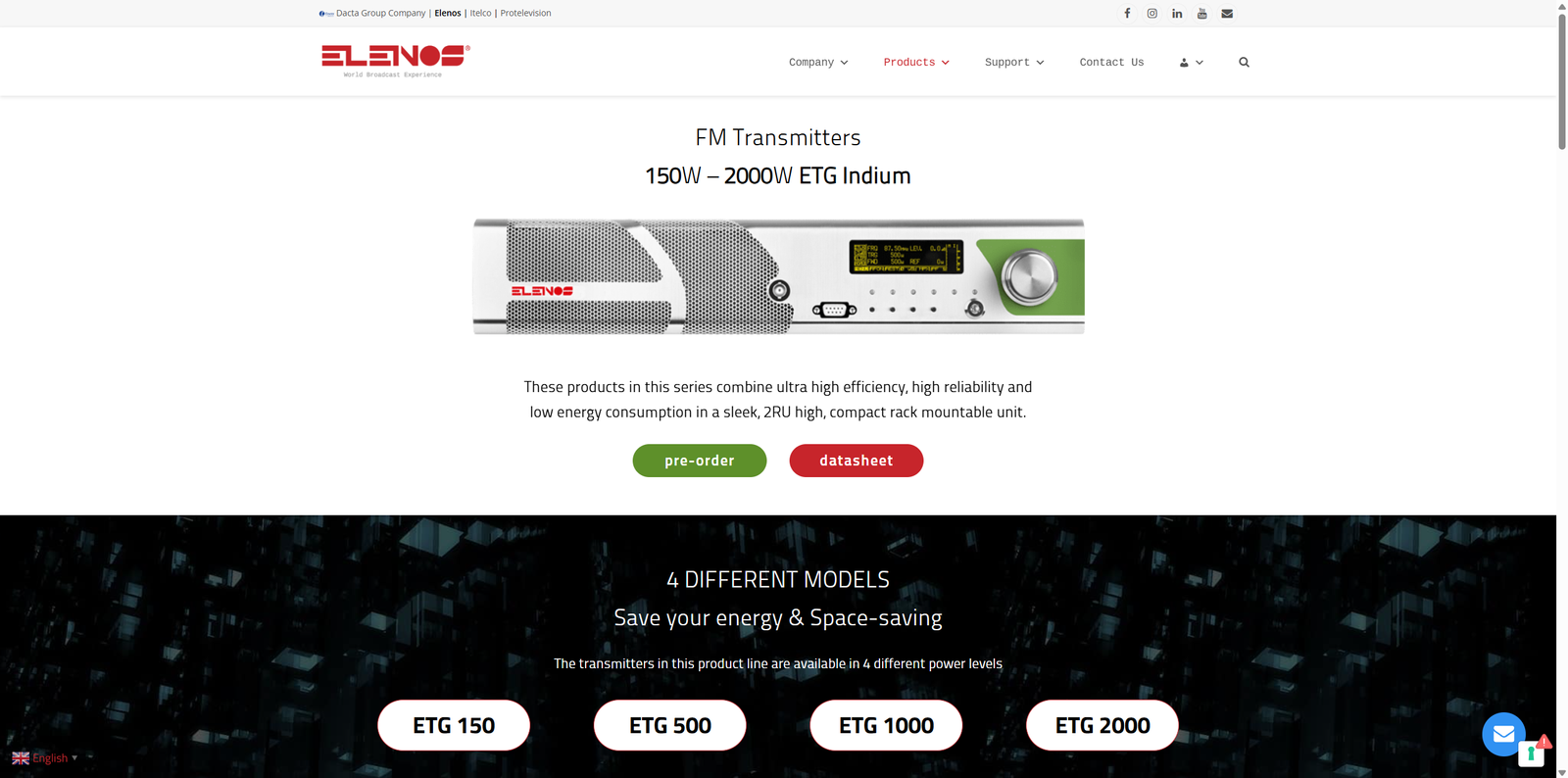
Elenos focuses on medium and high-power transmitters. Their units power national broadcasters in Europe. I visited a station using Elenos ETG 10KW in Rome. The build quality felt solid. Italian engineering shows in the details. Every connector uses gold plating. The circuit boards look clean and organized. Maybe this explains their low failure rate.
The company innovated with GreenPower technology. This reduces electricity consumption by 30%. A 5KW transmitter uses the same power as older 3.5KW models. Environmental certifications allow operation in strict EU zones. Elenos transmitters start at $20,000 for 1KW models. High-power units reach $150,000. The price includes installation training. Their engineers spend a week at your station.
I like their modular architecture. Each amplifier section works independently. One failure does not shut down the whole transmitter. The system continues at reduced power. This keeps you on air during repairs. Elenos provides 24/7 technical support in five languages. Response time averages 30 minutes. They stock replacement parts in regional warehouses. Shipping takes 2-3 days to most European locations. Might take longer for other continents.
5. OMB – Italy
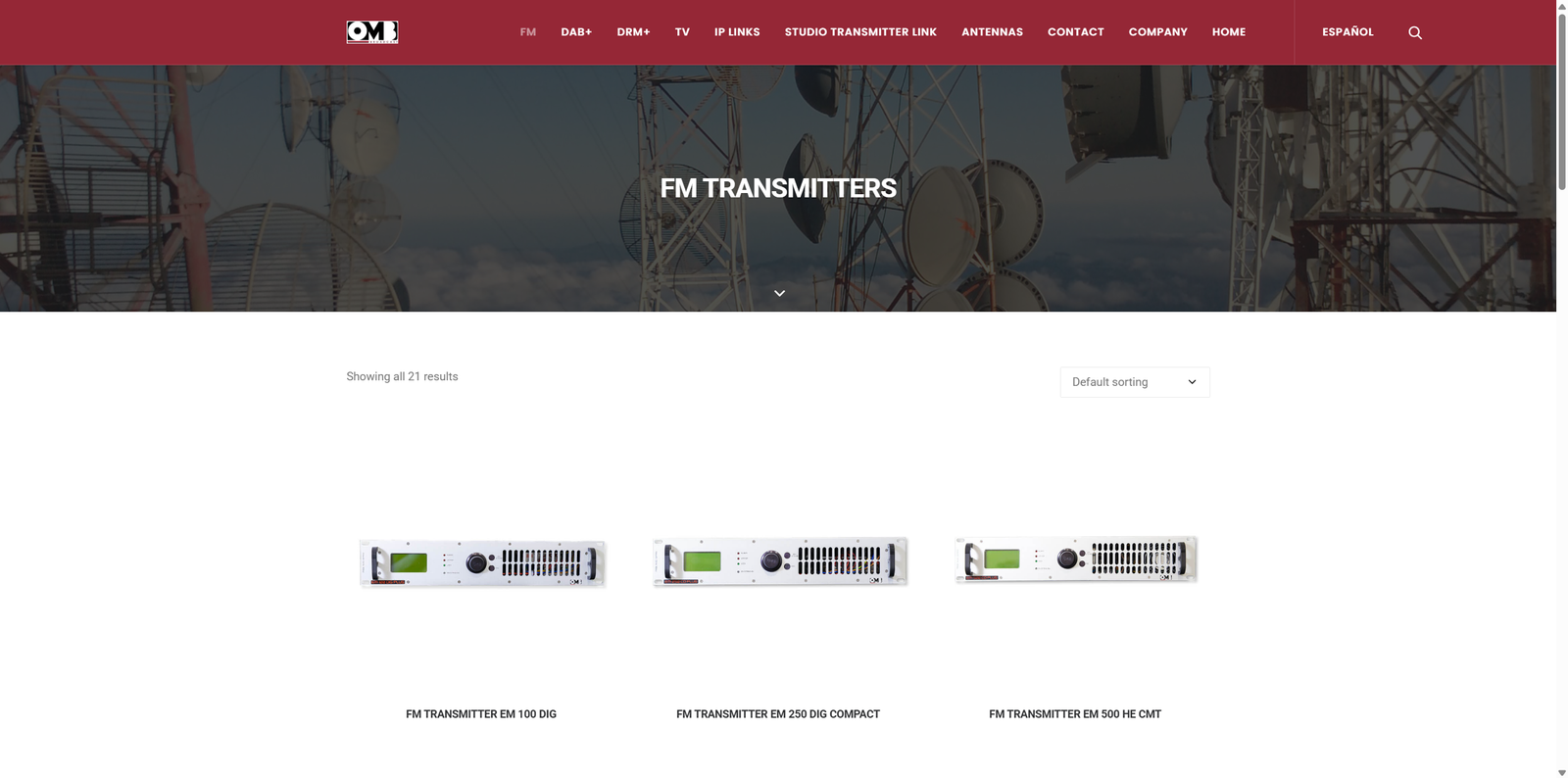
OMB makes compact transmitters for community radio. Their ECOMAX series uses Class D amplification. This technology delivers 85% efficiency. I tested an OMB 500W unit in a small town station. The power consumption measured 40% less than competing brands. Maybe this matters for stations paying high electricity rates. The transmitter fits in a standard 19-inch rack. You can install it yourself.
The company offers complete station packages. One purchase includes transmitter, antenna, cable, and audio processor. Prices start at €3,000 for basic setups. A professional 1KW system costs around €8,000. OMB ships worldwide from their Bologna factory. Delivery takes 15-30 days depending on customs. Their equipment comes with Italian and English manuals. I found the instructions easy to follow.
OMB transmitters work well in developing countries. The simple design means easier repairs. Local technicians can fix most problems. Replacement parts cost less than premium brands. The company maintains stock in Dubai and São Paulo. This speeds up shipping to Africa and South America. I saw OMB transmitters running in rural African stations. They survived voltage fluctuations that killed other brands. The internal power regulation handles 90-260V input. No expensive voltage stabilizer needed.
6. Broadcast Electronics (BE) – USA
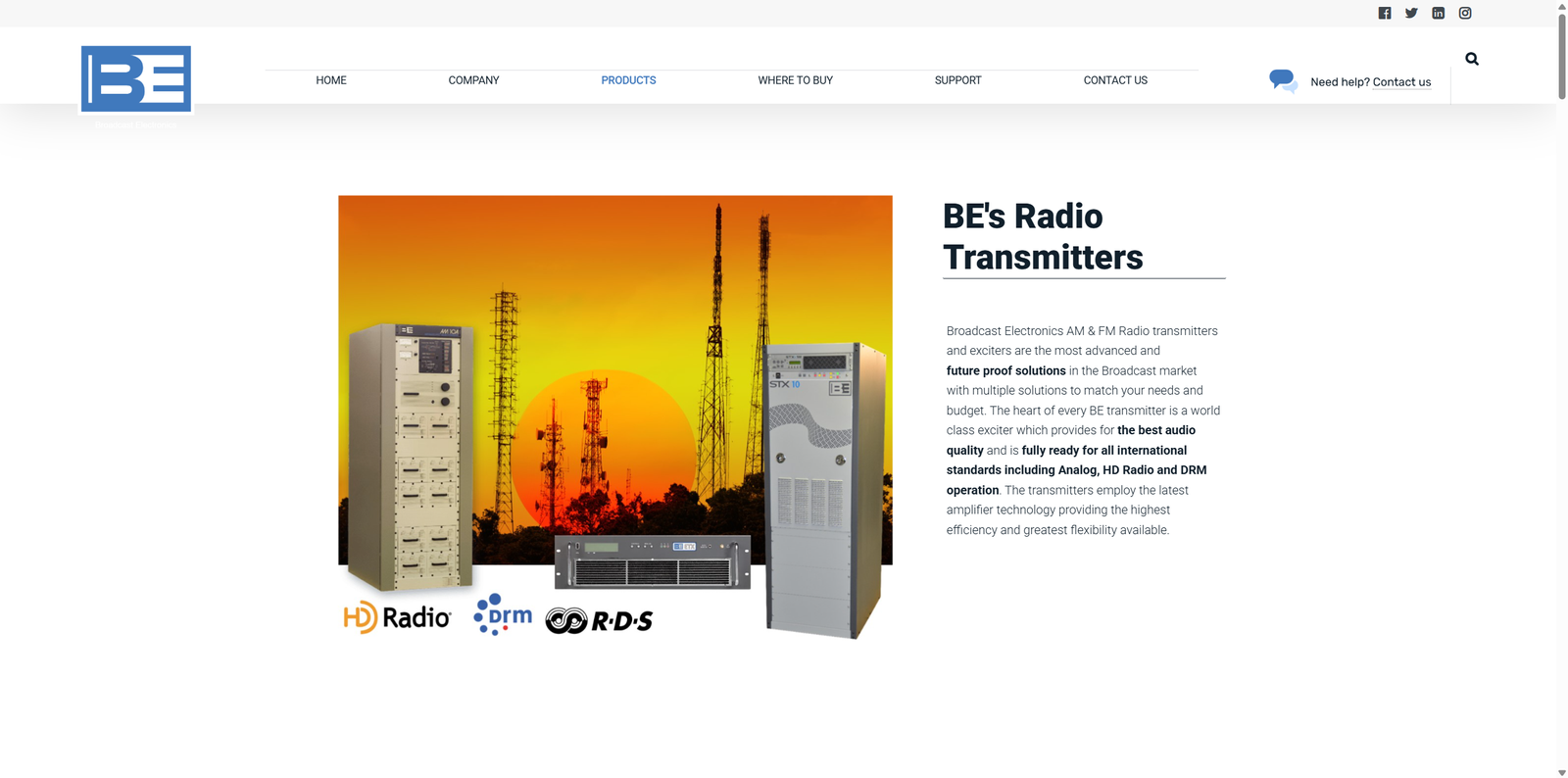
BE builds transmitters for major market stations. Their technology powers FM stations in New York and Los Angeles. I worked with a BE transmitter during my time at a commercial station. The unit ran continuously for eight years. Maybe one cooling fan replacement in that time. Nothing else broke. The FMHD digital hybrid system allows HD Radio broadcasting. This gives better sound quality than standard FM.
The company started in 1959. They know broadcast engineering. BE transmitters cost $30,000-$200,000 depending on power. The high price buys American manufacturing quality. Every component exceeds military specifications. The transmitters survive earthquakes and severe weather. I saw a BE unit working after a hurricane damaged the building. The equipment stayed on air while the roof leaked.
BE provides excellent documentation. Their technical manuals include troubleshooting flowcharts. You can diagnose most problems by phone. Their support team knows every product detail. Response time usually within one hour during business hours. BE offers trade-in programs. You get credit for your old transmitter toward new equipment. This reduces upgrade costs significantly. The company maintains repair facilities in five US cities. Turnaround time is 5-7 business days for most repairs.
7. Worldcast Systems – France
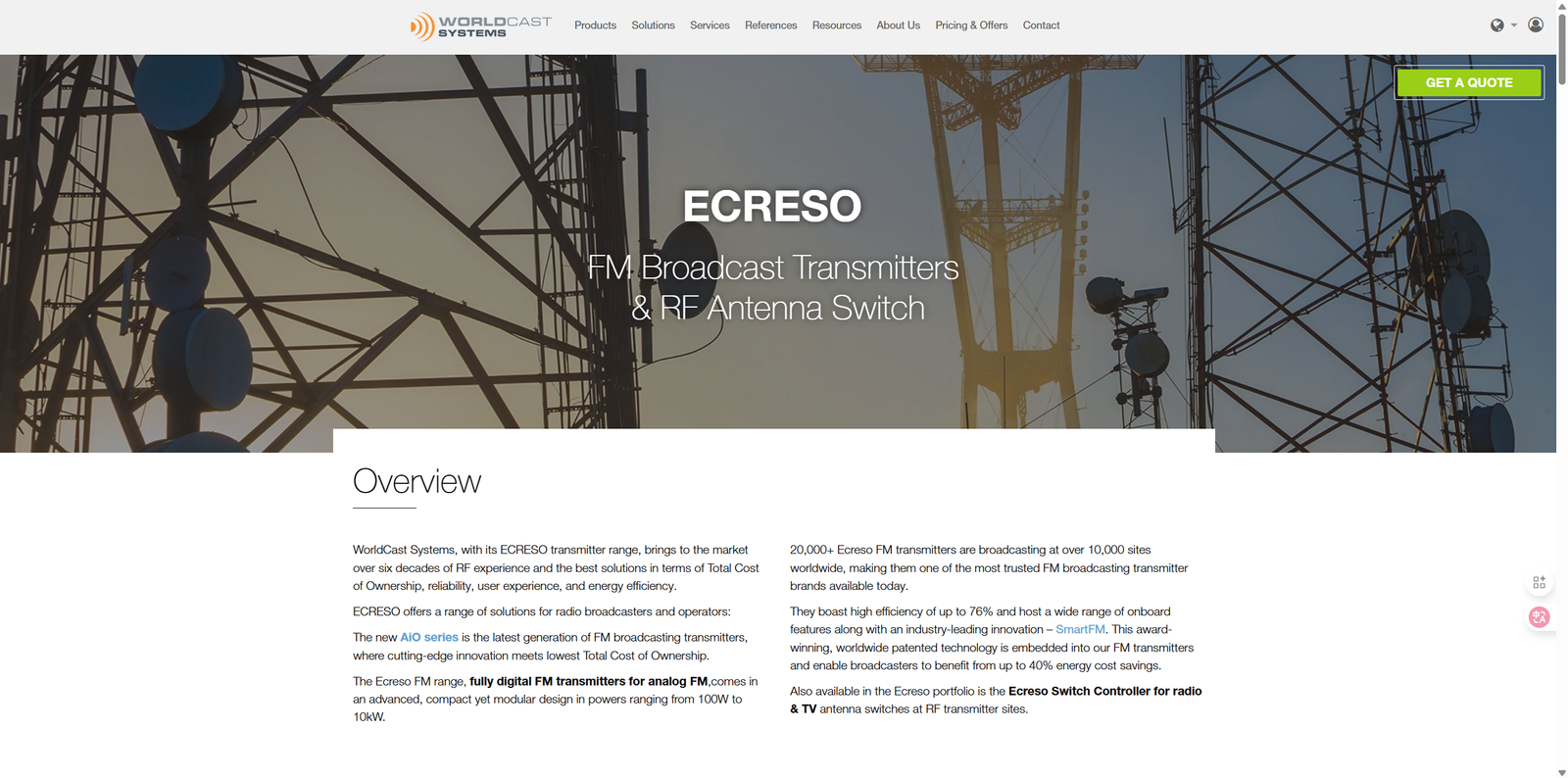
Worldcast makes affordable professional transmitters. Their Ecreso series covers 100W to 10KW. I installed an Ecreso 1KW in a French community station. The setup took two hours. The touchscreen interface makes operation simple. You adjust all settings through clear menus. Maybe this helps stations without trained engineers. The automatic tuning finds the best frequency match. No manual adjustment needed.
Prices start around €8,000 for 500W models. A 2KW unit costs approximately €18,000. Worldcast includes remote control software. You monitor and adjust transmitter settings from anywhere. The company merged with Audemat in 2010. This added audio processing expertise. Their products integrate well together. You buy a complete broadcast chain from one manufacturer.
I like their energy-efficient design. A 1KW transmitter consumes only 1.4KW from the wall. The compact size saves rack space. Multiple transmitters fit in small equipment rooms. Worldcast provides free software updates. New features arrive every 6-12 months. Their European support responds quickly. I usually get answers within two hours. They maintain service centers in France, Spain, and Poland. Repair costs run lower than American brands.
8. RVR (Rohde & Schwarz) – Germany
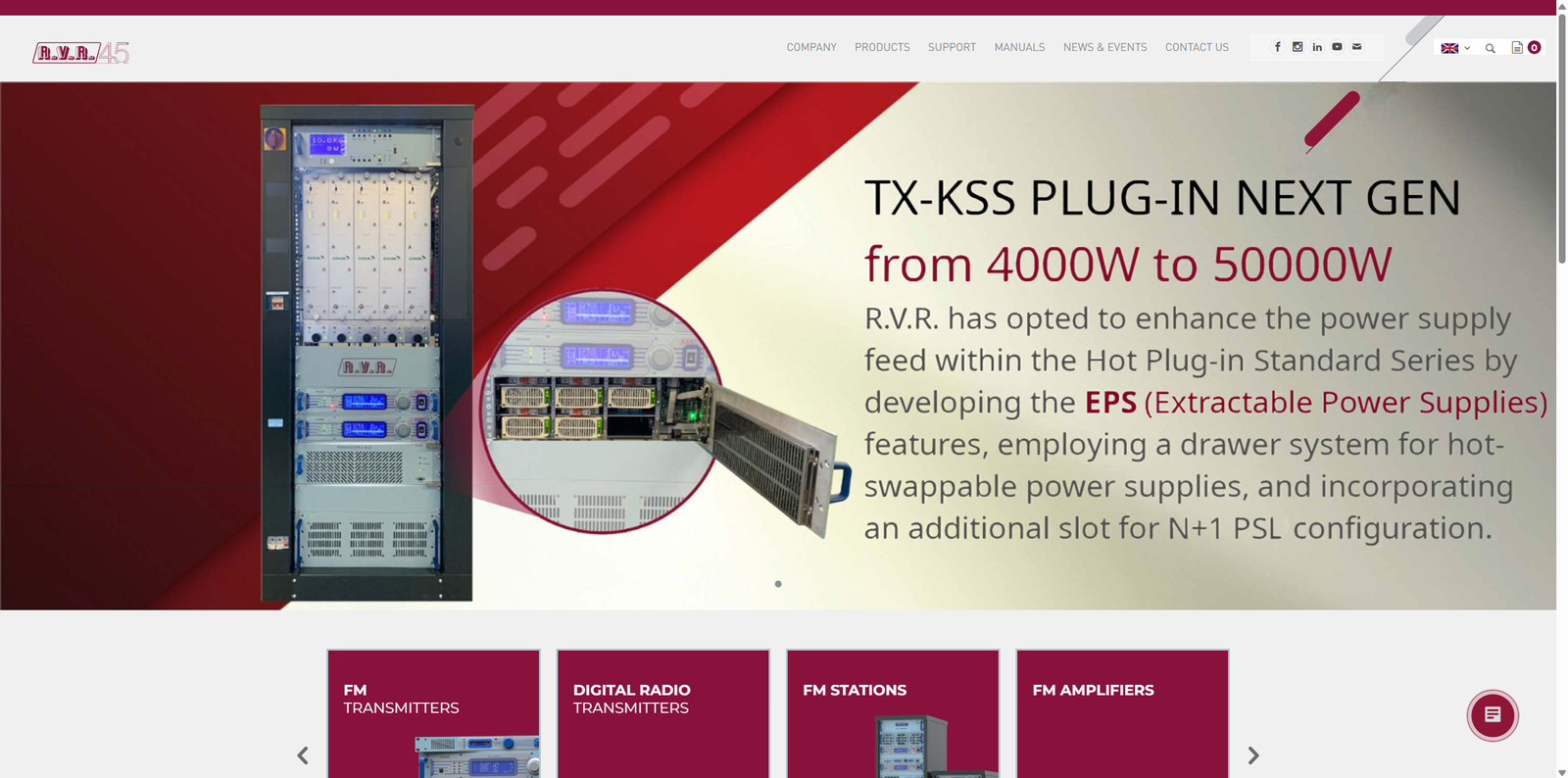
RVR represents the luxury segment. Their transmitters power national broadcasters in Germany and Switzerland. I saw an RVR installation serving a 100km coverage area. The signal quality measured nearly perfect. German engineering means precision manufacturing. Every specification exceeds advertised values. Maybe you pay extra for this accuracy. RVR transmitters cost 50-100% more than competitors.
The company builds transmitters from 500W to 80KW. Small stations rarely buy RVR equipment. The entry price starts at $40,000. High-power systems exceed $300,000. The investment makes sense for critical applications. National broadcasters cannot tolerate downtime. RVR reliability approaches 99.99%. Their redundant systems switch automatically if problems occur. The station stays on air continuously.
I appreciate their modular design. You configure exactly the features you need. No paying for unused capabilities. RVR offers digital audio processing as standard. Their transmitters support multiple audio codecs. The technical support operates globally. Engineers speak German, English, French, and Spanish. Response time averages 15 minutes during European hours. Might take longer from Asia or Americas. RVR maintains regional offices on every continent.
9. Crown Broadcast (PTEK) – USA
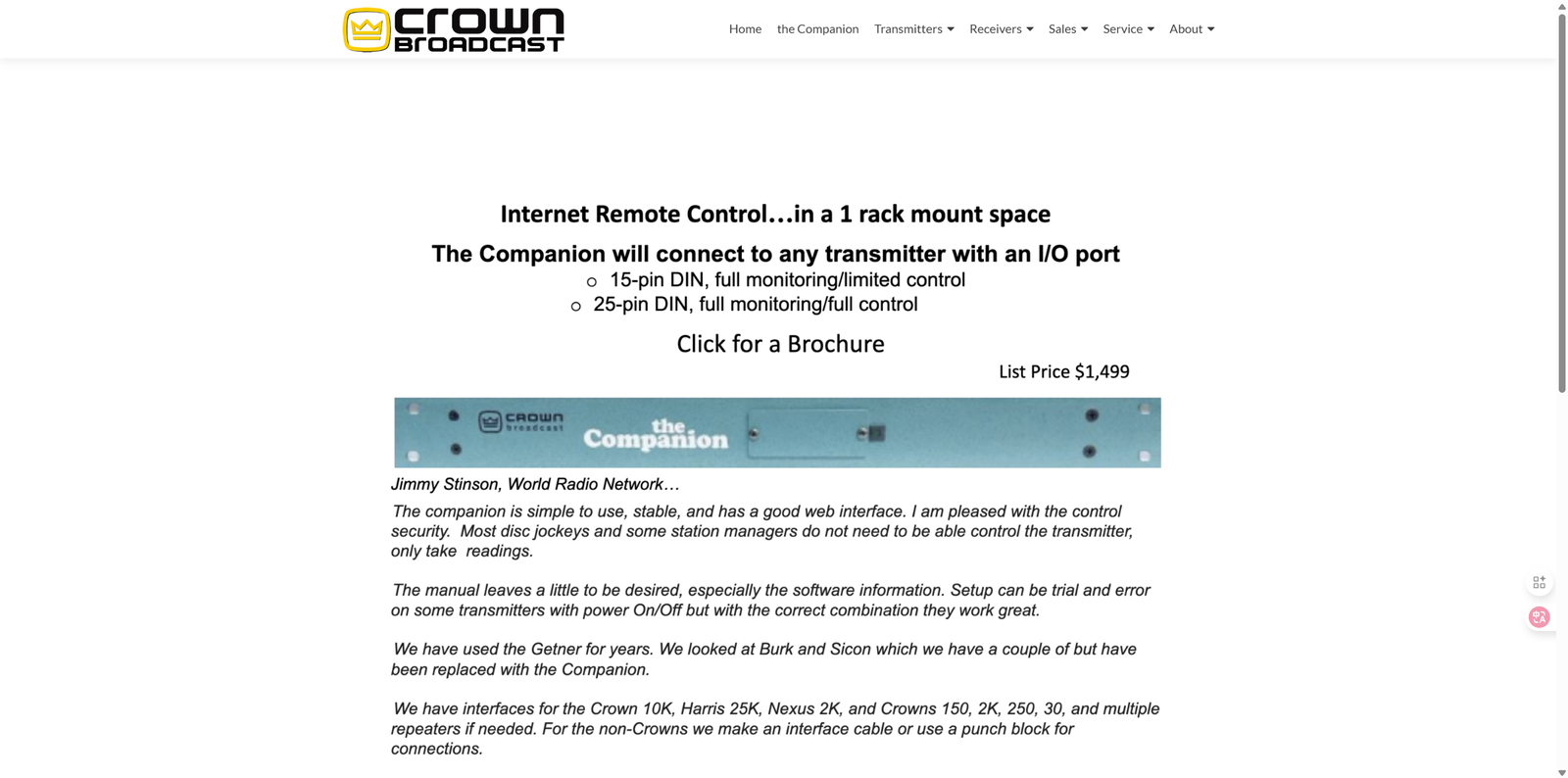
Crown makes transmitters for religious broadcasters. Many Christian radio networks use their equipment. I visited stations in three countries using Crown transmitters. The reliability impressed me. Their FM-100T model runs for years without attention. Maybe the conservative design helps. Crown uses proven technology instead of latest innovations. This reduces failure points.
Prices range from $8,000 to $60,000. Crown focuses on the 100W to 5KW market. They understand small station needs. The transmitters include basic features without complexity. You can operate them after reading a short manual. I taught station volunteers to run Crown equipment in two hours. The simple controls prevent operator errors. Crown provides phone support during US business hours. Their technicians walk you through most repairs. Replacement parts ship same day if ordered before 2 PM.
The company offers payment plans for religious organizations. You can spread costs over 36 months. This helps small ministries afford professional equipment. Crown transmitters work well in remote locations. The solid-state design tolerates power problems. I saw units running on generators in rural areas. They maintained stable output despite voltage fluctuations. Maybe this explains their popularity in developing countries.
10. Eddystone Broadcast – UK
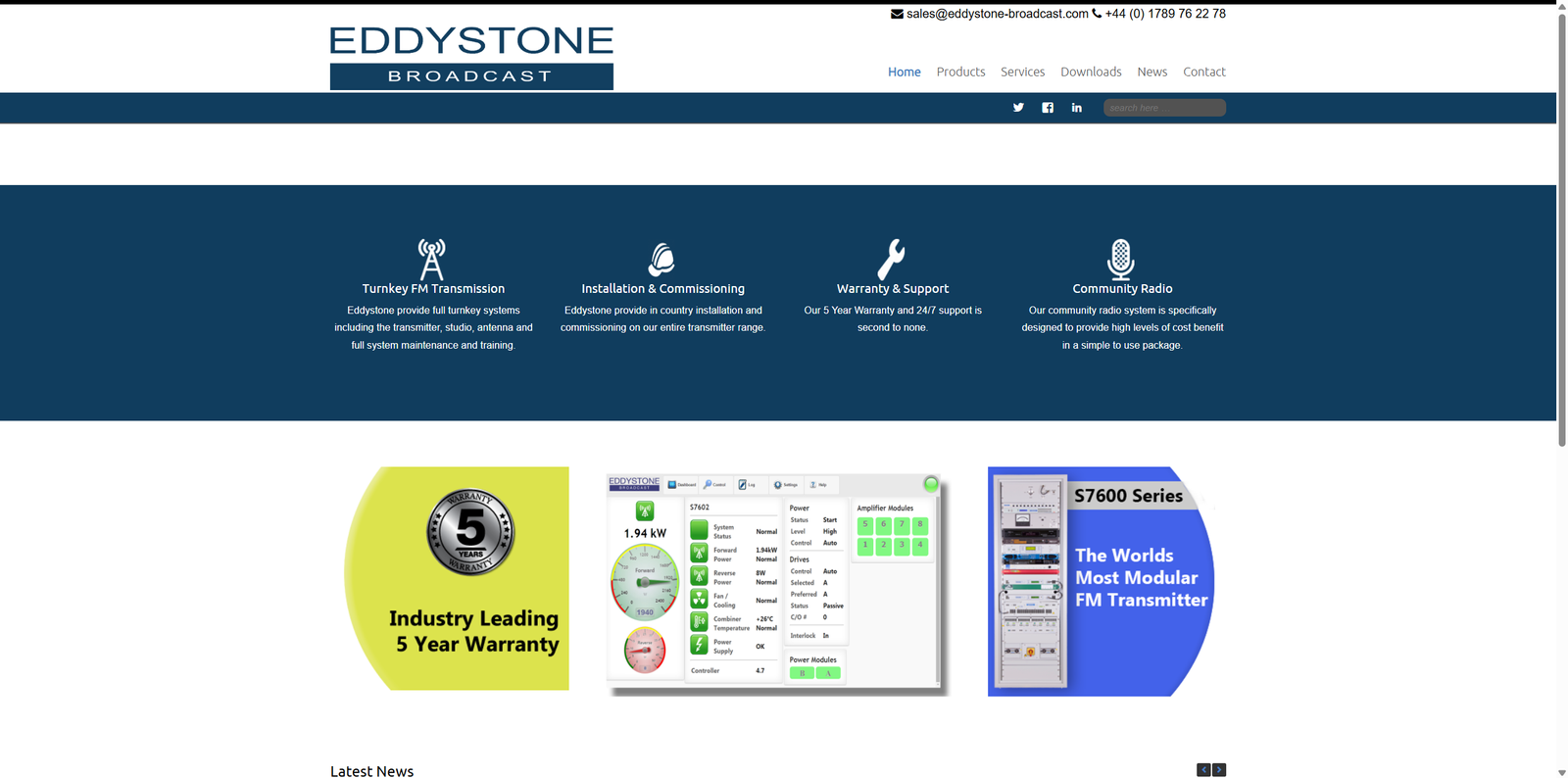
Eddystone specializes in high-efficiency transmitters. Their products serve BBC regional stations. I tested an Eddystone 2KW unit in Scotland. The power consumption measured 35% below comparable models. Maybe their switched-mode power supply makes the difference. The company pioneered several energy-saving technologies. They hold patents on cooling systems and amplifier designs.
Transmitters cost £12,000 to £80,000. The higher initial price pays back through lower electricity costs. I calculated savings of £3,000 per year for a typical 2KW station. Environmental regulations favor efficient equipment. Some countries offer tax credits for low-power designs. Eddystone equipment qualifies for these programs. The company helps with paperwork and certification.
I like their comprehensive warranty. Five years parts and labor coverage comes standard. Most manufacturers limit coverage to one or two years. Eddystone maintains service centers in London and Manchester. They also partner with facilities in Dubai and Singapore. This provides faster support outside Europe. Response time averages one hour globally. Their technicians can remote-access most transmitter functions. Many problems get solved without site visits. Eddystone publishes detailed technical bulletins. These help engineers understand their equipment better.
Final Thoughts on Choosing Your FM Transmitter Brand
Choosing the right FM transmitter brand comes down to your coverage needs, budget, and support requirements. RS is a strong all-around choice, offering reliable performance, fast technical service, and power options from small community stations to professional-grade broadcasting. Start with the power level that fits your current audience and upgrade as you grow.