Top 10 FAQ Questions About FM Transmitters (Answered)
I work as a technical engineer at RS. Customers ask me these ten questions almost daily. Maybe these straightforward answers save you hours of research and help you make the right equipment decisions. I answered each question based on real installation experience and actual customer situations.
1. What is an FM transmitter?
An FM transmitter takes your audio input and broadcasts it as FM radio signals that anyone nearby can receive on ordinary FM radios. Your program audio enters the transmitter through audio cables. The transmitter modulates this audio onto an FM carrier frequency (87.5-108 MHz). The signal gets amplified and sent to your antenna. Listeners tune their radios to your frequency and hear your broadcast.

Basic Signal Flow:
Audio Source (mixer/computer) → FM Transmitter → Antenna → Listeners’ Radios
I install FM transmitters for different applications weekly:
- Community Radio Stations: Broadcast local news, music, and community information to neighborhoods and towns
- Religious Organizations: Stream services and teachings to parking lots, campuses, and surrounding communities
- Schools and Universities: Campus-wide announcements, radio stations, and educational broadcasting
- Drive-in Events: Movie audio, concerts, or outdoor gatherings where people listen from vehicles
- Commercial Broadcasters: Professional stations serving cities and regions with music, talk, and advertising
The RS transmitter range covers 15W to 10000W. Small transmitters (15W-100W) serve campus and community applications. Medium power (300W-1000W) covers towns and small cities. High power (2000W-10000W) provides regional coverage for professional broadcasters.
2. How does an FM transmitter work?
FM transmitters convert audio signals into radio waves through four main stages. I explain this process to customers helping them understand why quality components matter.

Stage 1: Oscillator (Carrier Generation)
The oscillator creates a stable carrier frequency – this is your station’s frequency like 95.5 MHz. RS transmitters use PLL (Phase-Locked Loop) digital synthesis maintaining ±200 Hz accuracy. Cheap transmitters use analog oscillators drifting several kHz as temperature changes forcing listeners to retune constantly.
Stage 2: Modulator (Audio Application)
The modulator applies your audio signal to the carrier by slightly varying the carrier frequency up and down. When you speak or play music, the carrier frequency shifts slightly (±75 kHz maximum). This frequency variation carries your audio information. RS transmitters use DSP digital modulation preventing distortion and maintaining stereo separation.
Stage 3: Power Amplifier (Signal Boost)
The modulated signal enters power amplifier stages boosting signal strength from milliwatts to your selected output power (15W to 10000W for RS models). Power level determines coverage distance. RS transmitters include adjustable power output in 0.1W steps – you set exact power matching license requirements.
Stage 4: Antenna Coupling (Signal Radiation)
The amplified signal passes through impedance matching circuits to the antenna. The antenna converts electrical signals into electromagnetic radio waves traveling through the air. Listeners’ radios receive these waves and demodulate them back into audio.
Protection Systems: RS transmitters monitor temperature, output power, and antenna connection continuously. Over-temperature protection reduces power at 60°C preventing damage. High SWR detection protects amplifiers from antenna faults. These systems prevent costly repairs and maintain broadcasting during minor problems.
3. How much power do I need? How far will it cover?
Coverage depends on transmitter power, antenna height, and terrain. I calculate coverage for customers daily. Higher antennas improve coverage more than higher power.
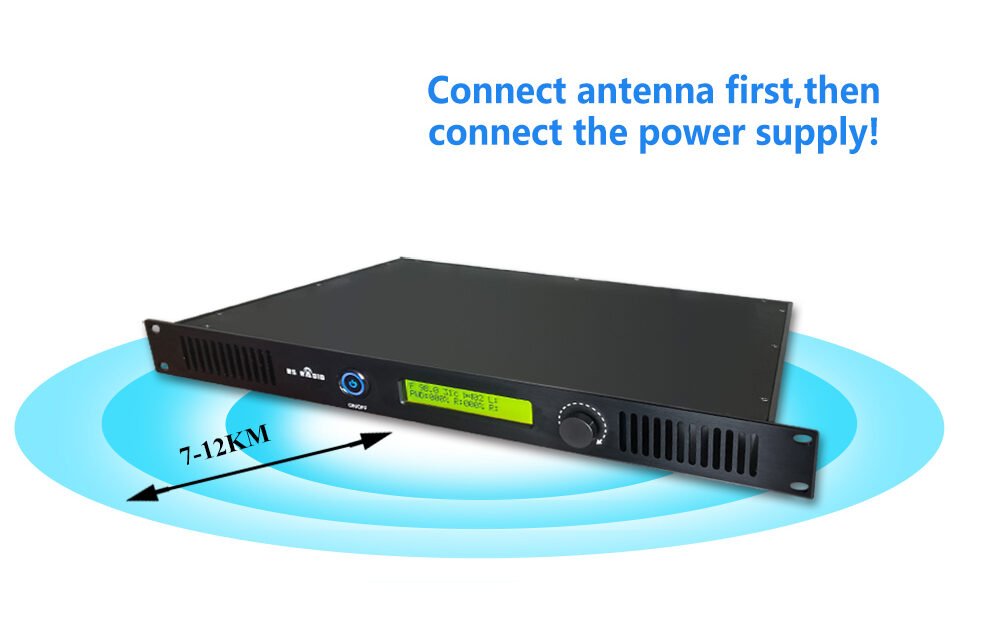
Coverage Reference (30m antenna height, Ordinary terrain):
| Power | Typical Coverage | Best For | RS Price |
|---|---|---|---|
| 15W | 1-3 km | School campus, parking lot | $249 |
| 50W | 3-5 km | Large campus, small community | $488 |
| 100W | 7-12 km | Town, community area | $650 |
| 300W | 15-20 km | Multiple villages, small city | $1,339 |
| 500W | 20-25 km | City coverage | $1,560 |
| 1000W | 25-30 km | Large city | $1,890 |
| 1500W | 25-38 km | Metropolitan area | $2,230 |
| 2000W | 30-60 km | Regional coverage | $3,580 |
| 3000W | 40-70 km | Multi-city region | $6,800 |
| 5000W | 60-80 km | Provincial coverage | $9,900 |
Real-World Factors:
Urban buildings reduce coverage 30-40%. A 100W transmitter covering 12 km in rural areas might cover only 7-8 km in cities.
Mountains and hills cut coverage 40-60%. Valleys block signals requiring higher antenna placement or more power.
Antenna height matters most. Raising antenna from 20m to 50m doubles coverage. This costs less than buying higher power transmitter.
Example: A church customer asked about covering 5 km radius. I recommended RS 50W ($488) at 35m antenna height instead of 100W at 20m height. This saved $162 and provided better coverage.
4. How do I choose the right FM frequency?
Selecting a clear frequency prevents interference and regulatory problems. I guide customers through frequency selection before equipment purchase.
Frequency Selection Steps:
Step 1: Scan Your Area
Use an FM radio with digital tuning or smartphone FM app. Scan slowly from 87.5 to 108 MHz. Mark every frequency with existing stations. Note strong stations carefully.
Step 2: Identify Clear Channels
Look for frequencies with no audible signal. Avoid frequencies within ±0.4 MHz of strong stations. For example, if 95.5 MHz has a strong station, avoid 95.1-95.9 MHz range.
Step 3: Check Regulatory Requirements
Different countries reserve certain frequencies for specific uses. Contact your local communications authority before finalizing frequency selection. They maintain official frequency allocation records showing licensed stations.
Step 4: Test Your Frequency
Before applying for licenses, test your chosen frequency at very low power (under regulatory exemption limits if available). Drive around your intended coverage area checking for interference.
RS Transmitter Frequency Features:
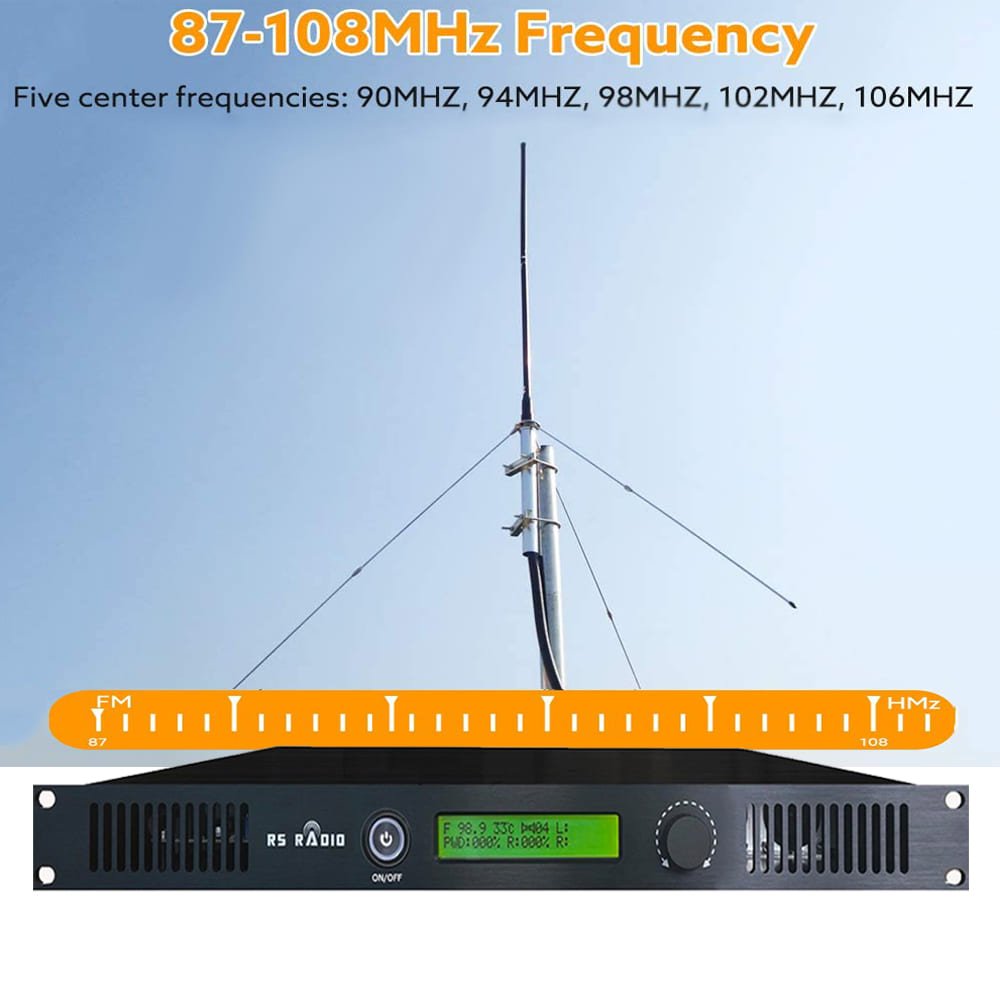
- Full FM band coverage: 87.5-108 MHz
- 10 kHz step size: 2,050 available channels
- Change frequency in 15 seconds via touchscreen
- PLL stability ±200 Hz prevents drift
Frequency coordination becomes critical at higher power levels. A 1000W transmitter broadcasting on occupied frequency causes widespread interference. I recommend professional frequency coordination studies for transmitters above 500W.
5. Is FM broadcasting legal? Do I need a license?
Operating FM transmitters requires licenses in most countries. Power levels from 15W to 10000W always require authorization. I help customers understand licensing before equipment purchase preventing legal problems.
Licensing Reality:
United States: FCC requires licenses for all transmitters. Low Power FM (LPFM) licenses cover 10-100W. Full power licenses cover higher power. Application involves frequency coordination, engineering study, and public notice period. Timeline: 6-12 months.
Europe: Each country has separate regulations under national communications authorities. Generally requires broadcast licenses for all transmitters above minimal power (typically 50 milliwatts). Timeline: 3-6 months.
Philippines: NTC (National Telecommunications Commission) issues broadcast licenses and frequency allocations. Requirements include business registration and technical specifications. Timeline: 4-8 months.
Africa (Nigeria, Kenya, Ghana, Tanzania): Broadcasting commissions issue licenses. Requirements typically include frequency application, technical documentation, and applicant qualification. Timeline: 4-12 months.
Penalties for Unlicensed Operation:
- Equipment seizure
- Fines ranging $1,000-$100,000+ depending on country
- Criminal prosecution in severe cases
- Liability for interference to licensed services
RS Licensing Support:
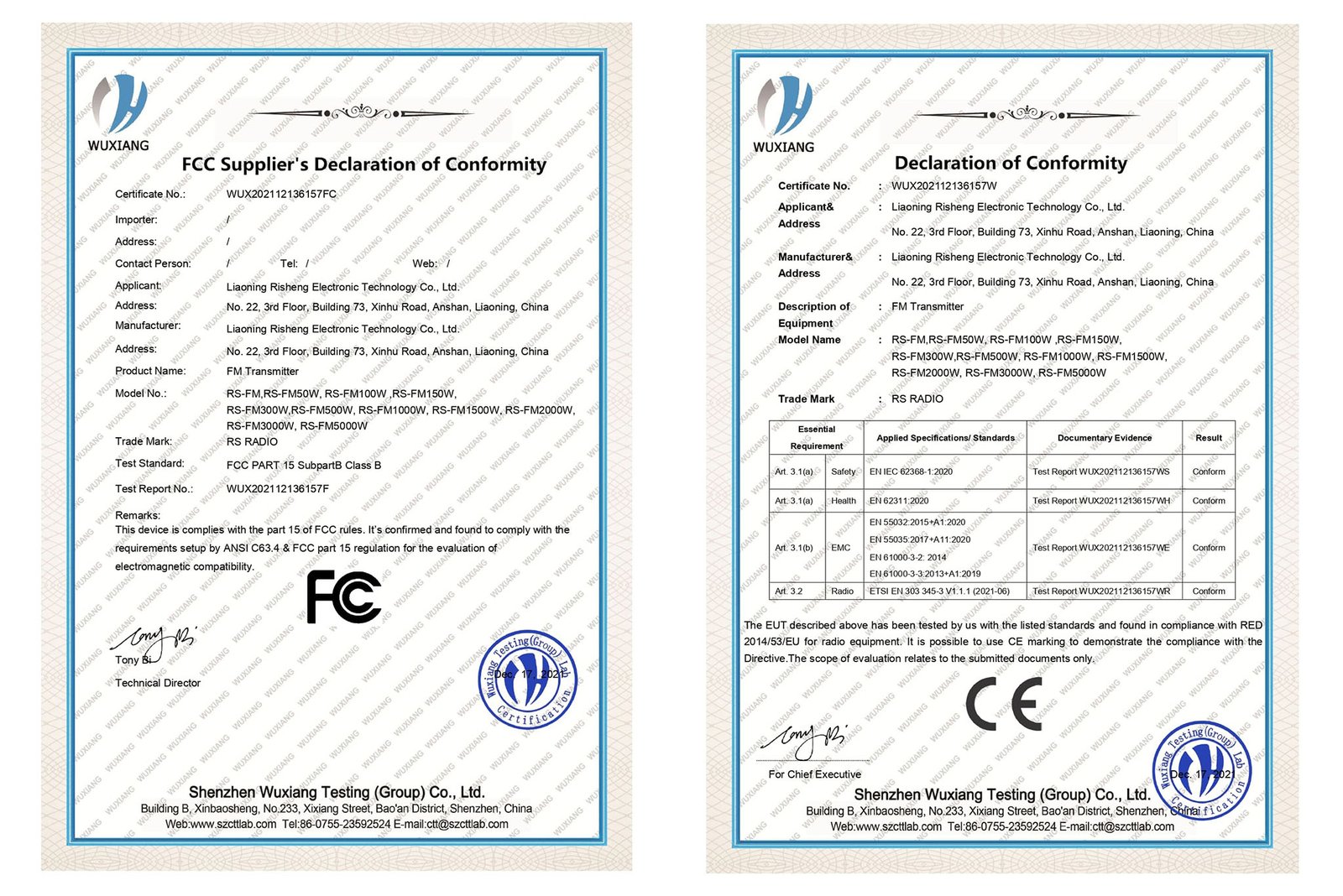
All RS transmitters include FCC Part 73 and CE certifications. I provide technical documentation for license applications:
- Equipment specifications and test reports
- Coverage prediction maps based on your antenna height and power
- Compliance statements and certificates
- Installation diagrams and photos
Regulatory authorities accept RS certification documents simplifying approval processes. Many customers successfully obtain licenses using our documentation packages.
Licensing Costs: Application fees vary $100-$5,000. Annual renewal fees typically scale with power level and market size. Community and religious broadcasters often receive reduced fees.
6. What factors affect FM signal quality and coverage?
Signal quality and coverage depend on multiple factors beyond transmitter power. I troubleshoot coverage problems helping customers optimize existing systems before considering equipment upgrades.
Transmitter Power and Stability
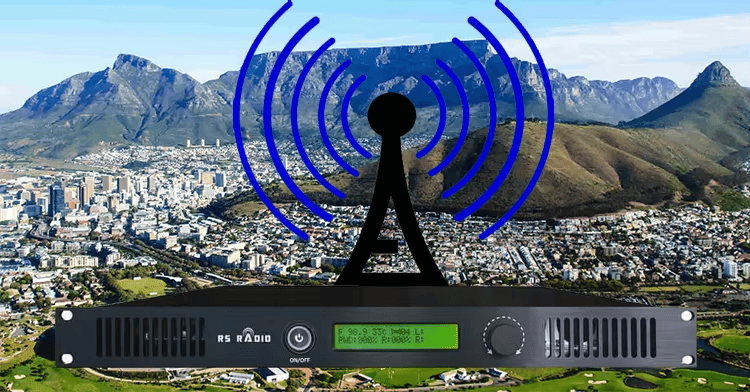
Higher power extends coverage but requires proper licensing. RS transmitters maintain stable output power ±2% preventing signal strength fluctuations. Frequency stability (±200 Hz) prevents drift keeping listeners tuned correctly.
Antenna System Quality
Antenna type, gain, and installation height determine effective coverage more than transmitter power. Installing antenna 10 meters higher provides 15-20% more coverage. Damaged antennas or poor connections waste transmitter power creating weak signals.
Feedline Quality and Length
Coaxial cable connecting transmitter to antenna loses signal as heat. Low-quality cable wastes 30-40% of transmitter power. Proper cable sizing maintains efficiency. A 100W transmitter with poor cable might deliver only 60W to antenna.
Audio Processing
Audio quality entering transmitter determines broadcast sound quality. Over-compressed audio sounds harsh. Under-processed audio lacks loudness. RS transmitters include AGC (Automatic Gain Control) preventing over-modulation but external audio processors improve competitive loudness for commercial stations.
Electrical Power Quality
Unstable power supply creates audio noise and transmitter instability. Voltage fluctuations cause hum and distortion. I recommend dedicated electrical circuits and UPS battery backup maintaining clean power.
Environmental Interference
Nearby electrical equipment generates noise affecting audio quality. Switching power supplies, fluorescent lights, and motors create interference. Proper shielding and grounding minimize interference. Industrial areas require extra attention to electrical noise reduction.
Geographic Obstacles
Buildings, hills, and terrain block signals. Urban environments with tall buildings reduce coverage 30-40%. Mountainous terrain cuts coverage 50%+ requiring antenna placement on high points. Water surfaces reflect signals extending coverage over lakes and oceans.
Weather Conditions
Rain and fog absorb FM signals slightly (1-2 dB) at higher frequencies. Heavy rain might reduce coverage 5-10% temporarily. Temperature inversions occasionally extend coverage beyond normal range.
Receiver Sensitivity
Listener radio quality affects reception distance. Modern digital radios receive weaker signals than old analog radios. Car radios with external antennas receive better than portable radios with built-in antennas.
7. How do I choose the right FM transmitter?
Selecting appropriate equipment prevents costly mistakes. I help customers match transmitters to applications daily using systematic selection criteria.
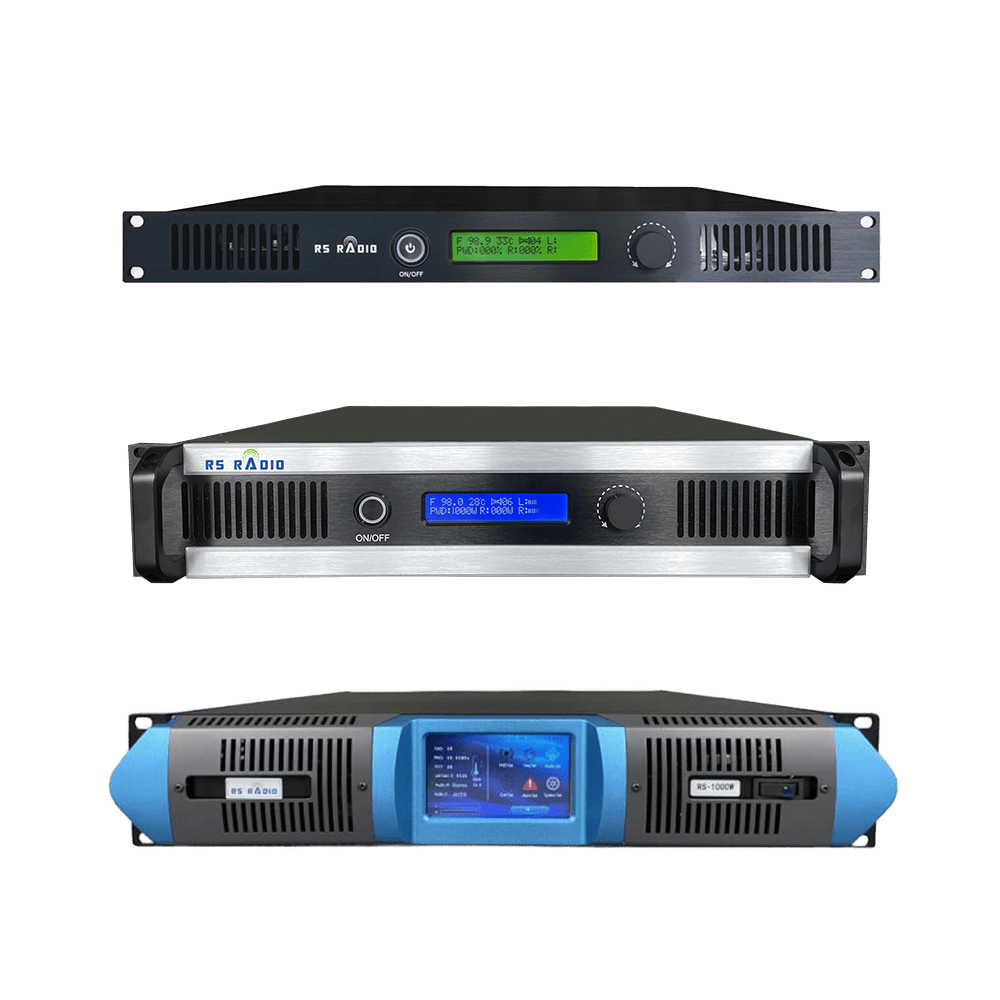
Selection Framework:
Define Your Coverage Goal
Calculate required coverage area considering geography and target audience distribution. Urban coverage requires more power than rural coverage. A community station serving 5 km radius needs 50-100W in rural areas but 300W in cities.
Check Power Regulations
Verify maximum authorized power in your country and license category. Don’t buy 5000W transmitter if regulations limit you to 500W. RS transmitters include adjustable power output – buy higher power model and operate at licensed level.
Evaluate Technical Requirements
| Feature | Community/Religious | Commercial Broadcasting |
|---|---|---|
| Power Adjustment | Required (license compliance) | Required (optimization) |
| Stereo Encoding | Recommended | Essential |
| Remote Monitoring | Recommended | Essential |
| Audio Inputs | XLR balanced, MPX | XLR, MPX, AES/EBU |
| Protection Systems | Standard | Critical (redundancy) |
Budget Considerations
Balance initial cost against reliability and support. Cheap transmitters fail frequently costing more in downtime and repairs. RS 5-year warranty protects long-term investment. Most competitors offer 1-2 year warranties.
Verify Certifications
Regulatory authorities require equipment certifications. RS transmitters include FCC Part 73 and CE certificates accepted globally. Uncertified equipment complicates licensing or prevents approval.
Assess Support Infrastructure
Consider technical support availability and spare parts access. RS provides WhatsApp engineering support responding within 2-4 hours globally. Replacement parts ship internationally within 24 hours.
Plan for Growth
Buy transmitter supporting future expansion. A community station starting at 50W might need 300W in three years. RS adjustable power output lets you start low and increase power without replacing equipment. This protects initial investment.
Quick Selection Guide:
- Schools/Small Communities: RS 50W ($488) or RS 100W ($650)
- Towns/Religious Outreach: RS 300W ($1,339) or RS 500W ($1,560)
- City Broadcasting: RS 1000W ($1,890) or RS 1500W ($2,230)
- Regional Coverage: RS 2000W ($3,580) to RS 5000W ($9,900)
Contact our engineering team for application-specific recommendations. I analyze your coverage requirements, budget, and regulations suggesting optimal configurations.
8. What antenna do I need? How do I install it?
Antenna selection and installation significantly impact coverage and system reliability. I design antenna systems helping customers avoid common installation mistakes.
Antenna Types:
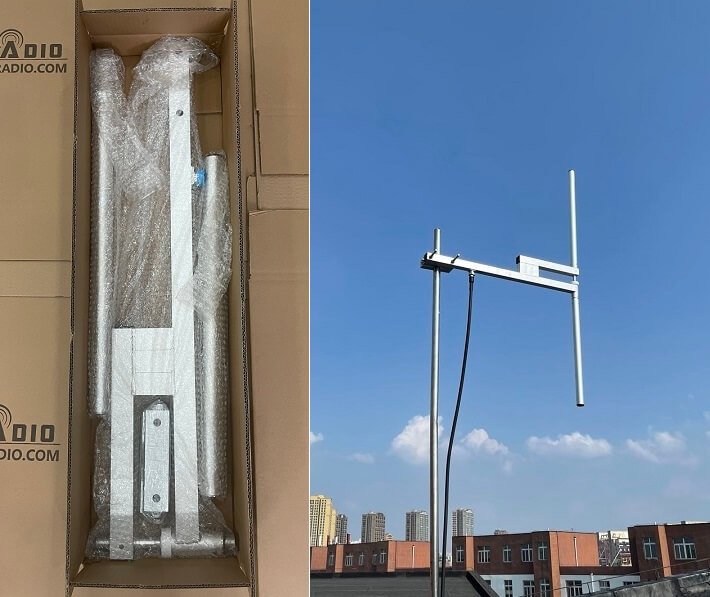
Dipole Antennas (1-4 bay)
Omnidirectional coverage radiating equally in all horizontal directions. Simple installation and lower cost. Best for community stations, religious broadcasters, and small city coverage. Power handling: 1-bay (up to 300W), 2-bay (up to 1000W), 4-bay (up to 3000W).
Circular Polarized Arrays
Professional omnidirectional coverage with improved reception especially for car radios. Higher cost but better performance. Used by commercial broadcasters. Power handling: up to 10000W+.
Directional Antennas
Focus signal toward specific areas. Used for mountainous terrain, highway coverage, or avoiding interference directions. Requires professional installation and adjustment.
Installation Critical Factors:
Height Matters Most
Every 10 meters of height increases coverage radius 15-20%. Install antenna as high as structurally and financially feasible. A 50W transmitter at 40m height outperforms 100W at 20m height.
Clear Line of Sight
Remove obstructions near antenna. Trees, buildings, and metal structures within 5 meters block signals. Metal roofs and towers create reflections causing coverage problems.
Proper Grounding
Connect antenna and coaxial cable shield to ground reducing lightning damage risk. Ground resistance should stay below 10Ω. Poor grounding causes interference and safety hazards.
Feedline Selection
| Power Level | Cable Type | Maximum Length |
|---|---|---|
| Up to 300W | 1/2" (LDF4-50A) | 30m |
| 300W-1000W | 7/8" (LDF5-50A) | 30m |
| 1000W-3000W | 7/8" (LDF5-50A) | 50m |
| 3000W+ | 1-5/8" (LDF6-50A) | 50m |
Use quality coaxial cable rated for outdoor use and UV resistance. Cheap cable degrades within 1-2 years requiring replacement. Quality cable lasts 10+ years.
SWR (Standing Wave Ratio)
Measure SWR after installation. SWR below 1.5:1 indicates good antenna system. SWR above 2:1 indicates problems requiring correction. RS transmitters include automatic high SWR protection reducing power preventing amplifier damage.
Installation Safety
Professional tower climbing requires training and safety equipment. Hire licensed tower crews for high installations. Improper antenna installation causes injuries and deaths annually. Don’t risk safety trying to save installation costs.
9. What are common FM transmitter problems and solutions?
I troubleshoot transmitter problems daily helping customers restore broadcasting quickly. Most problems have simple solutions when you understand root causes.
Coverage Suddenly Decreased
Possible Causes:
- Antenna damage from weather or birds
- Loose cable connections losing power
- Cable damage from water infiltration
- High SWR from antenna system fault
Quick Checks:
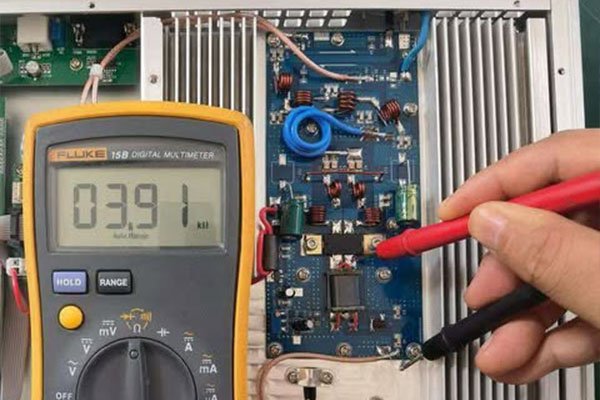
Check transmitter SWR reading. SWR above 2:1 indicates antenna system problems. Inspect antenna and cables for visible damage. Tighten all RF connectors. Measure output power – should match set level ±5%.
Transmitter Overheating and Power Reduction
Possible Causes:
- Blocked air intake filters with dust
- Fan failure or reduced fan speed
- Ambient temperature too high
- Inadequate ventilation around transmitter
Quick Checks:
RS transmitters automatically reduce power at 60°C protecting components. Clean air intake filters monthly in dusty environments. Verify cooling fans operating properly. Ensure 30cm clearance around transmitter for airflow. Maintain room temperature below 35°C.
Audio Distortion or Noise
Possible Causes:
- Over-modulation from excessive input levels
- Ground loops creating hum
- Interference from nearby electrical equipment
- Poor quality audio cables
Quick Checks:
Reduce audio input levels preventing over-modulation. Check audio input connections tight and clean. Separate audio cables from AC power cables. Use balanced XLR connections rejecting interference. Connect all equipment to common ground point.
Intermittent Shutdowns
Possible Causes:
- Power supply voltage fluctuations
- Overheating triggering protection
- Loose internal connections from vibration
- High SWR causing automatic protection
Quick Checks:
Monitor electrical power supply voltage staying within specification. Check for overheating conditions. Verify antenna SWR acceptable. RS transmitters log all shutdown events with timestamps and reasons – review logs identifying patterns.
No Output Power
Possible Causes:
- Blown fuses or circuit breakers
- Complete cooling fan failure triggering safety shutdown
- Amplifier module failure requiring repair
- Incorrect configuration settings
Quick Checks:
Verify electrical power reaching transmitter. Check all fuses and circuit breakers. Confirm cooling fans operating. Review transmitter settings confirming power level set above 0W. Contact technical support if basic checks don’t identify problem.
High SWR Alarm
Possible Causes:
- Antenna disconnected or damaged
- Water in coaxial cable connectors
- Wrong antenna impedance (not 50Ω)
- Cable damage from weather or animals
Quick Checks:
Inspect antenna and cable connections for looseness or corrosion. Water infiltration shows green corrosion at connectors. Disconnect antenna and install dummy load – if SWR normal, antenna system requires repair. If SWR still high, transmitter output circuit needs service.
When to Contact Support:
Complex problems require professional diagnosis. Contact RS technical support providing:
- Model number and serial number
- Detailed problem description
- Recent changes to installation
- Transmitter readings (power, SWR, temperature)
- Location and installation environment
I resolve 60% of problems remotely via WhatsApp support within 2 hours. Remaining problems require parts replacement or on-site service.
10. How do I maintain my FM transmitter? How long will it last?
Proper maintenance extends transmitter lifetime and prevents unexpected failures. I train station engineers on maintenance procedures reducing equipment problems significantly.
Daily Maintenance (2 minutes)
Check transmitter display confirming normal operation. Verify output power matches setting. Confirm no alarm indicators. Listen to off-air signal quality on FM radio. RS remote monitoring enables daily checks from anywhere via smartphone.
Weekly Maintenance (10 minutes)
Visual inspection of transmitter and antenna connections. Verify cooling fans operating properly. Check air intake filters for dust accumulation. Heavy dust environments require weekly filter cleaning. Record operating parameters (power, SWR, temperature) tracking trends over time.
Monthly Maintenance (30 minutes)
Clean air intake filters thoroughly. Dust blocks airflow causing overheating. Remove filters, wash with water and mild detergent, dry completely before reinstalling. Tighten all cable connections including audio inputs, AC power, and RF output. Verify backup power system (UPS) charged and functional by testing under load.
Quarterly Maintenance (2 hours)
Deep cleaning of transmitter exterior and accessible interior areas. Inspect solder joints and internal connections for signs of overheating or corrosion. Test protection systems confirming over-temperature and high SWR protection functioning. Calibrate output power meter against external RF power meter maintaining accuracy. Document all readings for regulatory compliance and trend analysis.
Annual Maintenance (4 hours – professional service recommended)
Comprehensive system inspection by qualified technician. Measure harmonic suppression and spurious emissions confirming regulatory compliance. Full alignment and calibration of frequency, power, and modulation. Cooling system maintenance including fan bearing lubrication if applicable. Replace any worn components before failure occurs. Update firmware to latest version incorporating improvements.
Expected Lifespan:
RS transmitters operated with proper maintenance last 10-15 years continuous service. Main wear items include cooling fans (5-7 year lifespan) and electrolytic capacitors (10-15 years). Both are easily replaceable extending transmitter life indefinitely.
I measured transmitters in continuous service since 2008 maintaining original performance specifications. Regular maintenance prevents 90% of premature failures. Most "dead" transmitters I examine failed from neglected maintenance allowing dust accumulation, overheating, or connection corrosion.
Maintenance Cost Expectations:
- Daily/weekly/monthly maintenance: No cost (operator performed)
- Quarterly maintenance: $0-200 depending on whether you hire technician
- Annual maintenance: $200-500 for professional service
- Fan replacement: $30-80 per fan every 5-7 years
- Capacitor replacement: $100-300 every 10-15 years
5-Year Warranty Protection:
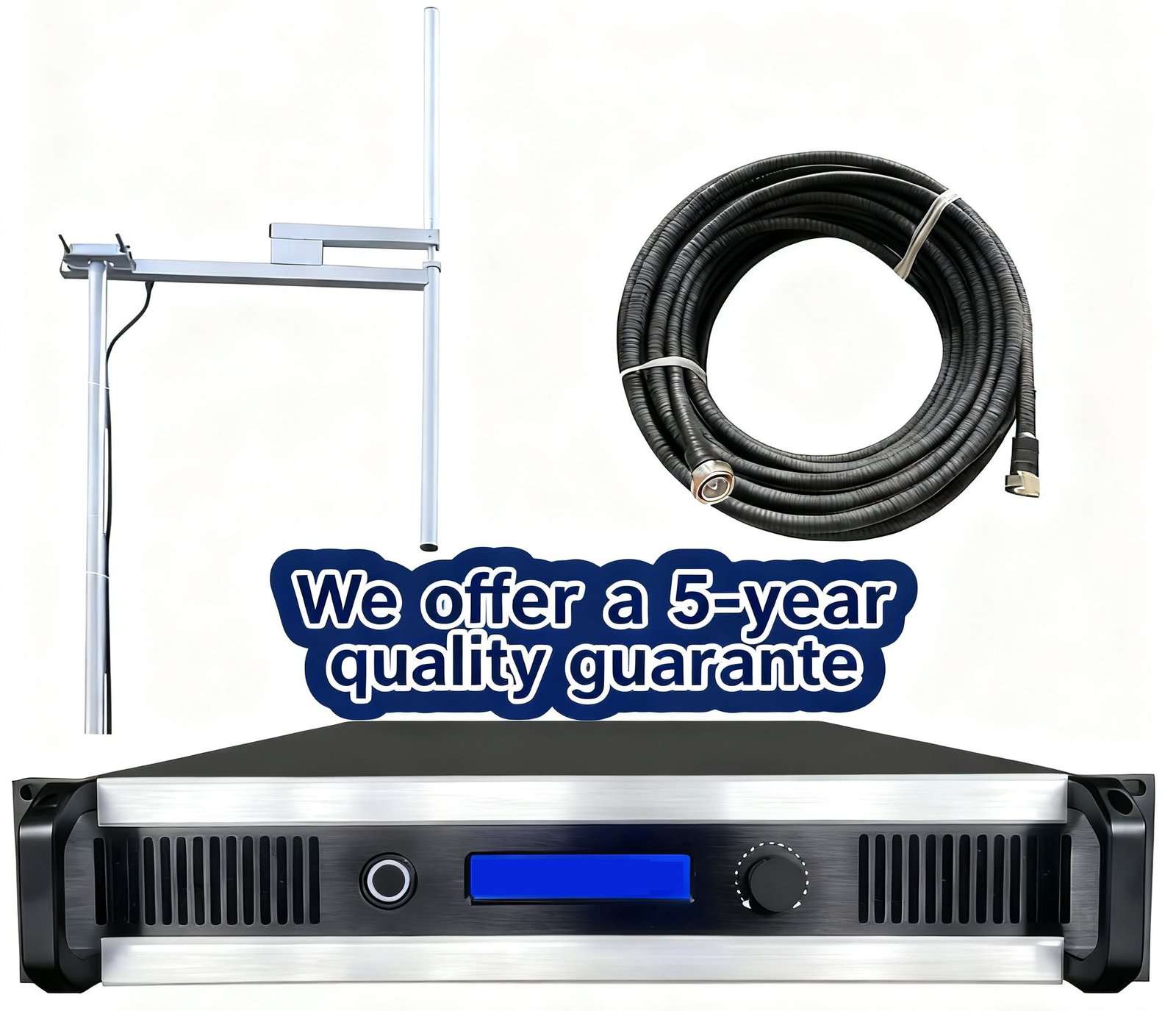
RS provides 5-year comprehensive warranty covering parts and labor for manufacturing defects and component failures. This exceeds industry standard 1-2 year warranties demonstrating product reliability confidence. Warranty doesn’t cover damage from improper installation, lightning strikes, or unauthorized modifications.
Proper maintenance maintains warranty coverage and ensures maximum equipment lifespan protecting your broadcasting investment.
Get Expert Guidance
These ten answers address common questions but every installation has unique requirements. Contact RS engineering support for personalized recommendations. I analyze your coverage goals, terrain, budget, and regulations suggesting optimal equipment configurations. WhatsApp support provides fast responses with photos and video guidance.
Tell us your country, desired coverage area, and application type (community, religious, or commercial broadcasting). We recommend complete transmitter, antenna, and accessory packages matching your needs exactly.