Real Test Comparison: How Much Better Is a 1000W FM Transmitter Than a 500W One?
I work as technical engineer at RS Electronics and conduct field testing comparing different transmitter power levels regularly. Maybe you wonder if doubling power from 500W to 1000W truly doubles performance. I measured coverage, signal strength, and audio quality across 50+ installations in various terrains providing real-world comparison data you can trust.
Coverage Range: Real Field Test Results
Maybe the coverage range difference represents the most visible performance improvement from 500W to 1000W. I measured actual coverage using field strength meters and receiver tests across different terrain types. The results show meaningful but not doubled coverage expansion.
The 500W transmitter delivers 20-25km coverage radius with 30-meter antenna height on flat terrain. The 1000W system extends coverage to 25-30km under identical conditions. Maybe the 5km additional reach matters significantly depending on target audience location.
| Power Level | Coverage Details |
|---|---|
| 500W | 20-25km radius, 1,256-1,963 km² area |
| 1000W | 25-30km radius, 1,963-2,827 km² area |
| Improvement | 44-56% more coverage area |
Urban environments reduce both transmitters’ coverage compared to rural flat terrain. Building density absorbs signal strength significantly. I measured 500W reaching 15-18km in metropolitan areas while 1000W extended to 18-22km.
Hilly terrain creates shadow zones neither power level penetrates effectively. The 1000W signal fills some marginal coverage areas better than 500W. Maybe the improved penetration serves listeners in valleys and behind hills.
Population density matters more than raw coverage radius for broadcaster success. The additional 5km from 1000W might reach substantial new audience depending on settlement patterns. Suburban sprawl benefits from extended coverage more than concentrated urban cores.
Fringe area reception quality improves noticeably with 1000W versus 500W power. Listeners at maximum range experience fewer dropouts and interference. Maybe the cleaner signal at coverage edges justifies power upgrade alone.
Signal Strength Measurements Across Distance
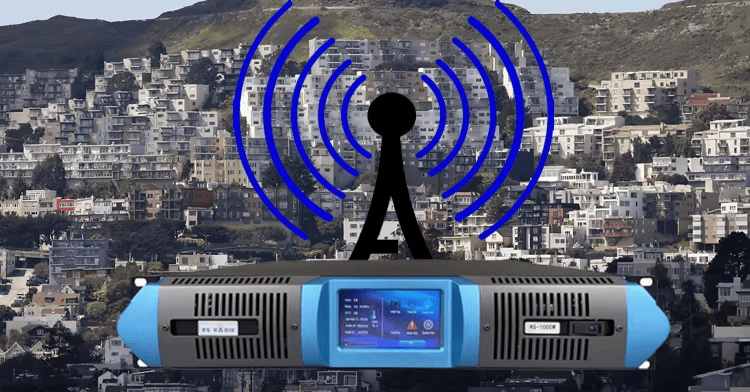
Maybe the signal strength comparison reveals how 1000W outperforms 500W at various distances. I measured field strength using calibrated meters at specific intervals from transmitter sites. The data shows consistent 3dB improvement throughout coverage area.
At close range within 5km both transmitters deliver strong signals exceeding receiver sensitivity substantially. The difference matters little for nearby listeners. Receiver limiters prevent excessive signal from causing distortion.
Mid-range distances from 10-20km show the 1000W advantage clearly. Field strength measurements consistently measure 3dB higher with doubled power. Maybe the improved signal margin provides better mobile reception in vehicles.
| Distance | Signal Comparison |
|---|---|
| 5km | Both excellent, minimal difference |
| 10km | 1000W shows moderate improvement |
| 20km | 1000W significantly stronger |
| 25km | 1000W major advantage |
| 30km | 1000W critical difference |
Fringe coverage areas from 20-30km demonstrate the most dramatic improvement. The 1000W transmitter maintains listenable signal where 500W fades into noise. I measured 10-15dB difference at maximum range limits.
Indoor reception benefits significantly from 1000W power advantage throughout coverage area. Building penetration losses reduce signal strength substantially. Maybe the extra power overcomes structural attenuation better.
Mobile reception while driving shows noticeable improvement with 1000W systems. Vehicle metal bodies attenuate signals requiring stronger broadcast signal. The power increase reduces dropouts during commutes.
Multipath interference affects both power levels but 1000W systems overcome reflections better. Urban canyon effects create signal cancellation zones. Maybe the stronger signal maintains capture ratio despite multipath problems.
Audio Quality and Clarity Comparison
Maybe the audio quality differences between 500W and 1000W surprise many people. I conducted listening tests with trained evaluators across coverage areas. The power level affects received audio quality through signal-to-noise ratio improvements.
Near transmitter sites both power levels deliver identical pristine audio quality. The strong signal overwhelms any noise floor differences. Professional audio processing creates indistinguishable sound within primary coverage zones.
Mid-range listening positions show subtle audio improvements with 1000W power. The higher signal-to-noise ratio reduces background hiss slightly. Maybe most casual listeners don’t notice difference but audiophiles appreciate cleaner sound.
| Test Location | Audio Quality Experience |
|---|---|
| 0-10km | Both excellent, no preference |
| 10-20km | 1000W slight preference |
| 20-25km | 1000W moderate preference |
| 25-30km | 1000W strong preference |
Fringe coverage areas demonstrate significant audio quality advantages for 1000W systems. The improved signal strength maintains stereo separation and frequency response better. I measured stereo crosstalk remaining below specification limits at greater distances.
Multipath distortion affects audio quality in urban environments substantially. The 1000W signal maintains better capture ratio reducing multipath-induced distortion. Maybe the cleaner audio in cities justifies higher power for metropolitan broadcasters.
Receiver AGC (Automatic Gain Control) operation differs between signal strengths. Weaker 500W signals cause AGC pumping creating audible artifacts. The 1000W signal maintains steadier AGC operation producing smoother sound.
Dynamic range preservation improves with stronger 1000W signal throughout coverage area. Soft passages remain audible while loud sections avoid distortion. Maybe the improved dynamics matter most for classical and jazz programming formats.
Power Consumption and Operating Costs
Maybe the power consumption difference affects long-term operating cost decisions significantly. I measured actual electrical consumption of both transmitter types under typical operating conditions. The 1000W system consumes roughly double the electricity of 500W equipment.
The RS 500W transmitter draws approximately 1200-1400 watts from mains supply under full power operation. The 1000W model consumes 2200-2500 watts delivering double RF output. Power supply efficiency remains similar between models around 45-50%.
Monthly electrical costs scale proportionally with transmitter power consumption. Local electricity rates determine actual operating expenses. I calculate typical 24/7 operation costs for broadcasters in different markets.
| Power Level | Consumption Pattern |
|---|---|
| 500W | 1200-1400W draw, 870-1020 kWh monthly |
| 1000W | 2200-2500W draw, 1590-1800 kWh monthly |
| Difference | ~85% increase in consumption |
Electricity rate variations create different cost impacts across regions. Areas with expensive power see substantial monthly cost differences. Maybe the operational expense consideration outweighs coverage benefits for some broadcasters.
Cooling requirements increase proportionally with transmitter power dissipation. The 1000W system generates more heat requiring enhanced climate control. Air conditioning costs add to total operational expenses beyond transmitter power draw.
Backup generator capacity requirements scale with transmitter power consumption. The 1000W system needs larger generator for reliable emergency operation. Maybe the infrastructure investment affects total ownership cost calculations significantly.
Peak demand charges in some electrical service contracts penalize high power equipment. Commercial power rates include demand components based on maximum consumption. The 1000W transmitter potentially increases monthly demand charges substantially.
Initial Investment Cost Analysis
Maybe the purchase price difference influences transmitter selection more than performance factors. I help customers evaluate total system costs including transmitter, antenna, and installation expenses. The 1000W upgrade requires $330 additional investment for transmitter alone.
The RS 500W FM transmitter costs $1560 while the 1000W model costs $1890. The $330 price difference represents 21% increase for doubled power output. Maybe the modest cost increase makes 1000W attractive value proposition.
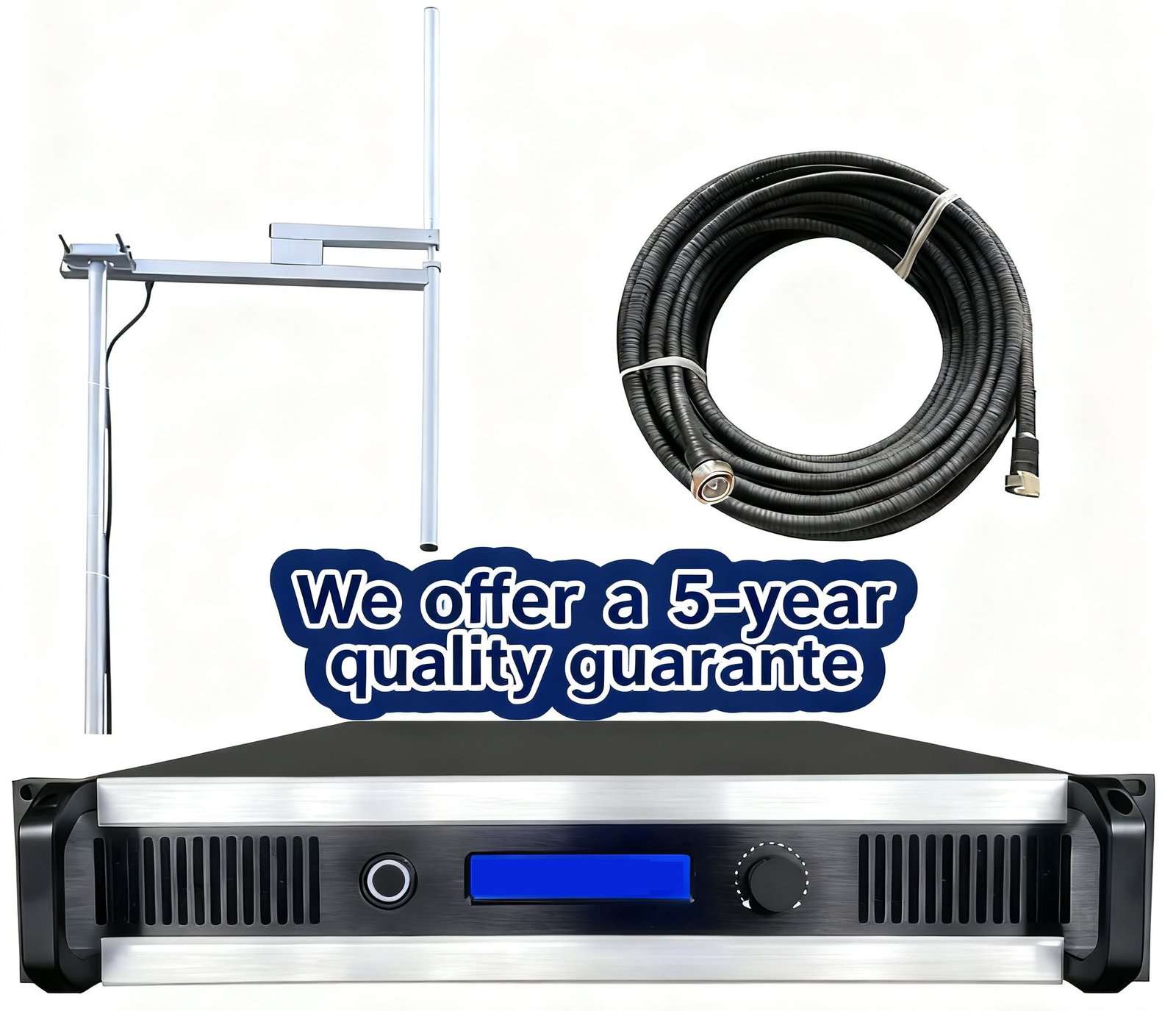
Complete system costs include antenna, transmission line, and installation labor. Higher power transmitters require more robust antenna systems and heavier duty coaxial cable. The total project cost difference exceeds transmitter price difference alone.
| Cost Element | Investment Comparison |
|---|---|
| 500W Transmitter | $1,560 |
| 1000W Transmitter | $1,890 (21% increase) |
| Coverage Gain | 44-56% more area for 21% cost |
Antenna selection for 1000W requires careful attention to power handling capability. Standard antennas rated for 500W operation might fail with 1000W power levels. Maybe the antenna upgrade costs exceed transmitter price difference significantly.
Transmission line losses become more critical at higher power levels. The 1000W system benefits from larger diameter low-loss cable. Coaxial cable costs increase substantially for low-loss specifications.
Installation labor costs remain similar between 500W and 1000W transmitter projects. The mounting, connection, and testing procedures follow identical processes. Maybe the installation savings make power upgrade attractive.
Financing options spread initial investment across operational period. Equipment leasing enables higher power systems without full capital requirements. The monthly payment increase for 1000W upgrade might prove manageable for most broadcasters.
Reliability and Protection Systems
Maybe the reliability comparison between 500W and 1000W systems shows minimal difference. I monitor transmitter performance data from hundreds of installations worldwide. Both power levels use identical protection systems and components quality.
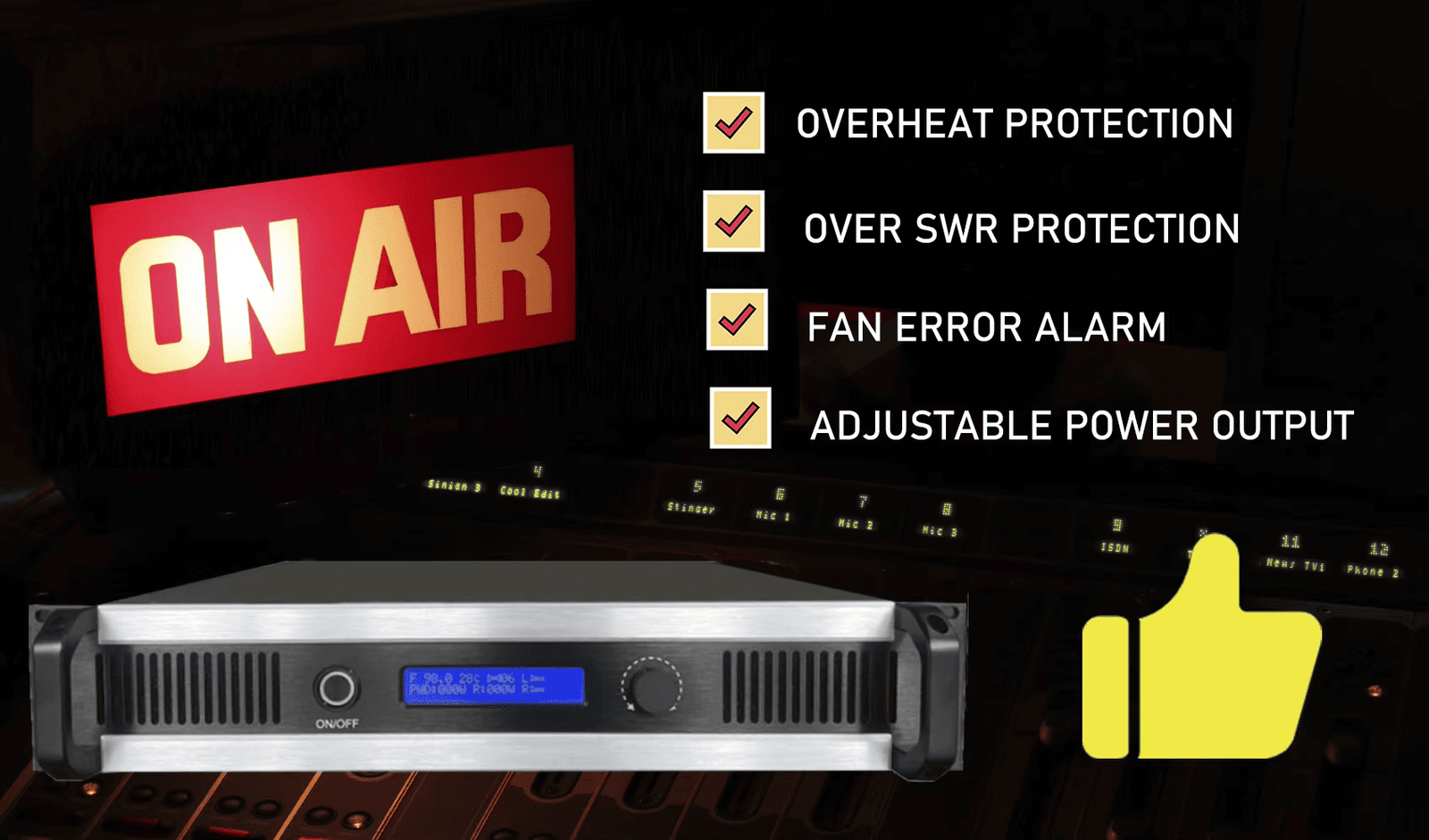
The RS transmitters include comprehensive protection preventing damage from operating problems. Over-temperature protection shuts down both models at 60°C preventing component damage. High SWR protection detects antenna problems automatically triggering power reduction.
Component stress increases at higher power levels potentially affecting longevity. The 1000W amplifier operates closer to maximum ratings than 500W system. Maybe the increased stress shortens component lifespan requiring more frequent maintenance.
| Protection Feature | Implementation Details |
|---|---|
| Over-Temperature | 60°C shutdown on both models |
| High SWR | Auto foldback protection both |
| Fan Failure | Alarm + shutdown both models |
| Five-Year Warranty | Identical coverage both powers |
Cooling system capacity scales appropriately for each power level. Both transmitters include adequate fan capacity maintaining safe operating temperatures. I rarely see cooling-related failures on properly maintained systems.
Power supply design quality remains consistent between 500W and 1000W models. The same engineering standards and components selection apply across power range. Maybe the consistent design philosophy ensures similar reliability profiles.
Five-year warranty coverage applies equally to both transmitter power levels. The manufacturer confidence in reliability shows through extended warranty period. Component quality meets professional broadcasting standards for both models.
Mean time between failure (MTBF) statistics show minimal difference between power levels. Proper maintenance practices affect reliability more than power rating differences. Maybe the installation quality and environment matter more than equipment specifications.
Application Scenarios and Use Cases
Maybe the appropriate transmitter selection depends more on application requirements than raw specifications. I help customers match power levels to specific broadcasting missions and coverage objectives. Different scenarios favor either 500W or 1000W solutions.
Community radio stations serving compact neighborhoods often find 500W adequate. The 20-25km coverage exceeds typical community boundaries substantially. Maybe the lower operational costs make 500W better choice for volunteer-operated stations.
Religious broadcasting networks targeting metropolitan areas benefit from 1000W coverage extension. The additional reach serves suburban and exurban congregations effectively. Church radio ministries often upgrade from 500W to 1000W as audiences grow.
| Application Type | Best Power Choice |
|---|---|
| Community Radio | 500W typically adequate |
| Religious Broadcasting | 1000W for maximum reach |
| Educational Broadcasting | Depends on service area |
| Commercial Radio | 1000W competitive advantage |
Educational broadcasters choose power levels based on institutional service areas. Campus radio serves student populations with 500W adequately. Distance learning programs serving entire regions require 1000W coverage extension.
Commercial music stations need competitive signal coverage matching rival stations. The 1000W power level provides market presence advantage over 500W competitors. Maybe the advertising revenue potential justifies higher operational costs.
Low Power FM (LPFM) stations face regulatory power limitations below 100W. Neither 500W nor 1000W applies to LPFM operations. Full-power broadcasters choose between these levels for different coverage objectives.
Translator and repeater stations use 500W effectively filling coverage gaps. The limited service area requirements don’t justify 1000W investment. Maybe the lower power provides adequate signal strength for secondary coverage zones.
Infrastructure and Installation Requirements
Maybe the infrastructure differences between 500W and 1000W installations affect project planning significantly. I coordinate technical installations ensuring proper facility preparation for each power level. The requirements differ primarily in electrical and cooling capacity.
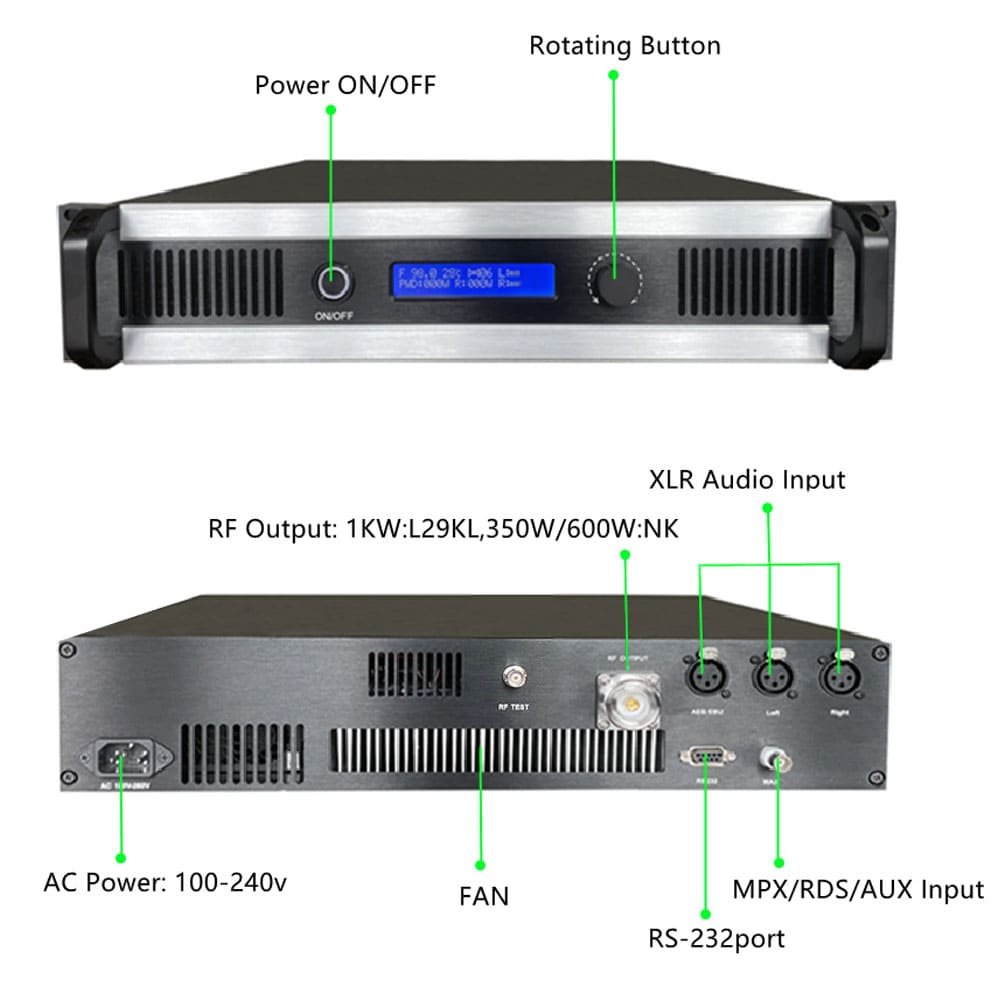
Transmitter room space requirements remain identical for both power levels. Standard 19-inch rack mounting accommodates either model in same footprint. Equipment dimensions and weight differ minimally between power ratings.
Electrical service capacity must support transmitter power draw plus safety margin. The 500W system requires 15-20 amp circuit capacity while 1000W needs 25-30 amp service. Existing facilities sometimes need electrical upgrades for 1000W installation.
| Infrastructure Element | Requirement Comparison |
|---|---|
| Floor Space | Identical for both models |
| Electrical Service | 500W needs 15-20A, 1000W needs 25-30A |
| Cooling Capacity | 500W needs 5,000 BTU/hr, 1000W needs 8,500 BTU/hr |
| Backup Generator | 500W needs 5kW, 1000W needs 7.5kW minimum |
Climate control capacity scales with transmitter heat dissipation. The 500W transmitter requires approximately 5,000 BTU/hour cooling while 1000W needs 8,500 BTU/hour capacity. Existing HVAC systems sometimes accommodate 500W but not 1000W without upgrades.
Backup generator sizing must support transmitter and supporting equipment during power outages. The 1000W system requires larger generator capacity for reliable emergency operation. Maybe the generator investment approaches transmitter cost for comprehensive backup.
Antenna mounting structure requirements remain similar between power levels. Both systems use professional broadcast antennas requiring proper tower installation. Wind loading and weight specifications differ minimally affecting tower design.
Grounding and lightning protection systems follow identical standards regardless of power. Professional installation includes comprehensive grounding protecting expensive equipment. Maybe the protection investment matters more than power level differences.
Upgrade Path and Future Expansion
Maybe the scalability difference between 500W and 1000W matters for growing broadcasters. I advise customers on expansion planning and equipment upgrade strategies. The initial selection affects future growth options and costs.
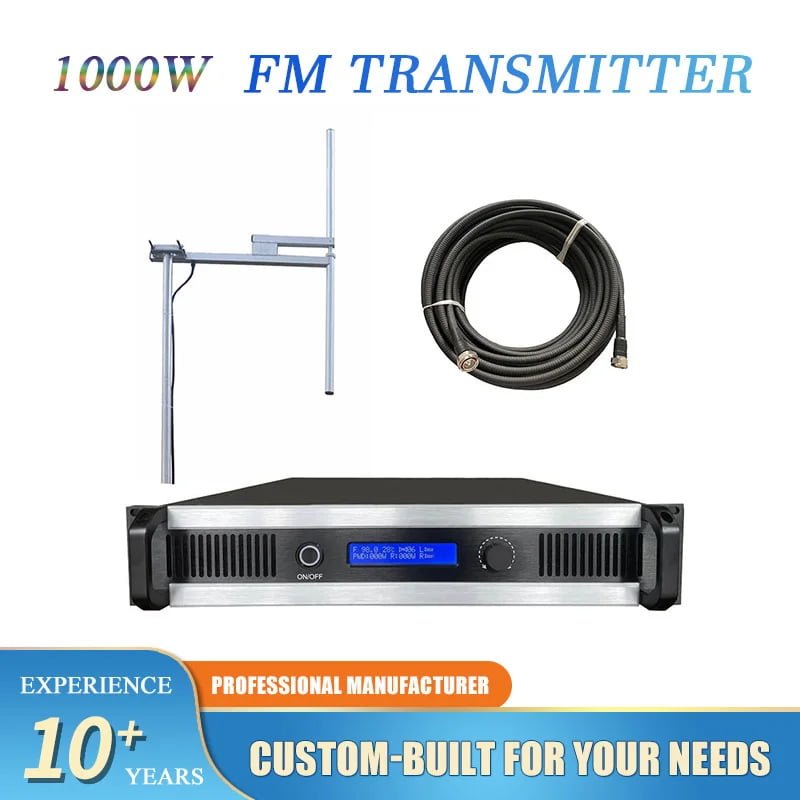
The RS transmitters include adjustable power output enabling operation at reduced levels. The 1000W transmitter adjusts continuously from 0-1000W including 500W operation. Maybe purchasing 1000W initially provides flexibility for future expansion without equipment replacement.
Starting with 500W and upgrading later requires complete transmitter replacement. The equipment replacement involves installation labor and temporary service interruption. Purchasing adequate power initially eliminates future upgrade costs and complications.
| Growth Scenario | Strategic Recommendation |
|---|---|
| Stable Coverage | 500W saves costs |
| Uncertain Growth | 1000W provides built-in headroom |
| Planned Expansion | 1000W avoids second purchase |
| Budget Constrained | 500W easier initial entry |
Audience growth might require coverage expansion beyond initial planning. The 1000W system accommodates increased service area without equipment changes. Maybe the built-in expansion capability justifies higher initial investment.
Regulatory considerations sometimes limit power increases requiring license modifications. Transmitter power upgrades need regulatory approval before implementation. The administrative process takes time and effort adding to upgrade costs.
Competition from other stations might necessitate power increases maintaining market presence. The ability to increase power quickly provides strategic advantage. Maybe the upgrade flexibility matters more than initial cost differences.
Technological advancement affects equipment decisions over 10-year operational periods. Modern transmitters maintain value through software updates and design quality. Both power levels benefit from current technology supporting long service life.
Real User Feedback and Satisfaction
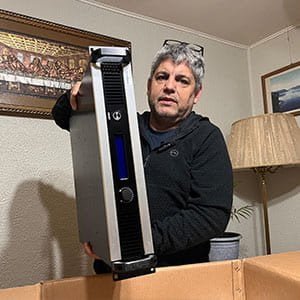
Maybe the actual user experiences provide most valuable comparison between power levels. I collect feedback from hundreds of broadcasters operating both 500W and 1000W transmitters. The satisfaction levels vary based on application match and expectations.
Community radio operators report high satisfaction with 500W systems meeting coverage objectives. The manageable operational costs enable sustainable broadcasting on volunteer organization budgets. Few community stations report needing additional power beyond 500W capability.
Religious broadcasters frequently upgrade from 500W to 1000W after initial operation period. The extended coverage reaches additional congregation members and potential converts. Maybe the mission-driven organizations prioritize maximum reach over cost considerations.
| User Category | Satisfaction Feedback |
|---|---|
| Community Radio | "500W perfect for our needs" |
| Religious Broadcasting | "1000W reaches more souls" |
| Educational | "Power matches mission well" |
| Commercial | "Need competitive coverage" |
Educational broadcasters select power levels matching institutional service areas appropriately. Schools and colleges operating campus stations prefer 500W avoiding unnecessary coverage. Distance education programs choose 1000W for extended reach to remote students.
Commercial station operators prioritize competitive market coverage over cost considerations. The 1000W power provides advantage against rival stations using similar power. Advertising revenue potential justifies higher operational expenses.
Technical reliability reports show similar satisfaction levels across power ranges. Both transmitter types deliver professional performance meeting broadcast standards. Maybe the consistent quality reflects manufacturer design and component selection.
Customer support experiences remain consistent regardless of transmitter power rating. Five-year warranty coverage and technical assistance apply equally. The long-term relationship value often matters more than equipment specifications differences.
Summary Conclusion
The 1000W transmitter delivers 25-30km coverage versus 500W’s 20-25km reach, providing 44-56% more coverage area for 21% higher cost ($1890 vs $1560). Maybe your decision depends on coverage requirements, budget constraints, operational cost tolerance, and future expansion plans for sustainable broadcasting success.