How to find the unused frequency for FM radio transmitters?
You bought an FM transmitter but can’t find a clear frequency without interference from other stations. Random frequency selection causes signal conflicts that make your broadcasts sound terrible or get completely blocked. The right frequency-finding method ensures clean, interference-free broadcasting from day one.
Find unused FM frequencies by scanning the FM band with a radio receiver, checking online frequency databases, or consulting local telecommunications authorities. Most areas require at least 0.4-0.5 MHz separation between stations to prevent interference.
I’ve helped over 500 customers find clear frequencies during my 15 years at RS. The process seems complicated at first but becomes straightforward once you understand the basic rules. Most customers find multiple usable frequencies within an hour using simple scanning methods.
What is the frequency of the FM transmitter?
You need to understand FM frequency basics before starting your search for available channels. Wrong frequency band selection violates regulations and causes equipment to work improperly. Knowing your local FM broadcast band helps you search efficiently in the right frequency range.
FM transmitter frequencies range from 87.5-108 MHz in most countries, 76-95 MHz in Japan, and 65.8-74 MHz in the discontinued OIRT band. RS transmitters operate across the standard 87.5-108 MHz band with 10KHz frequency steps for precise tuning.
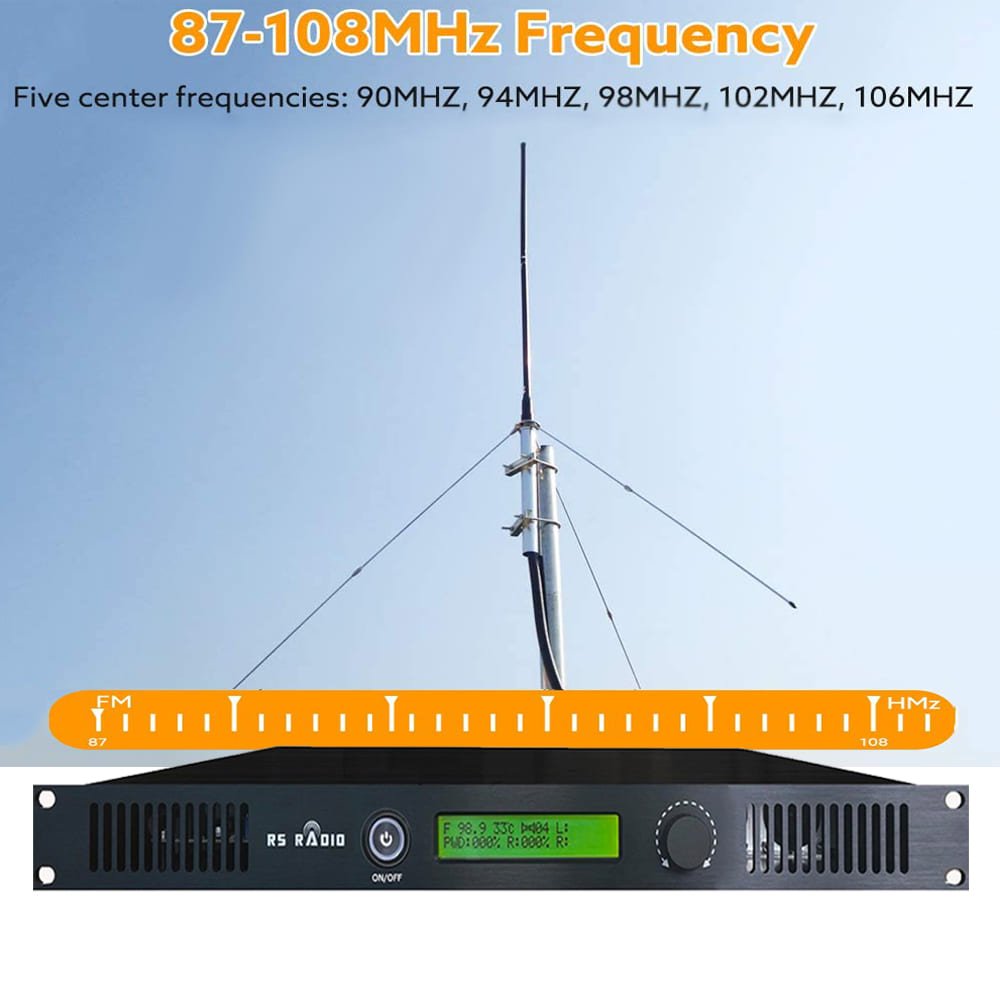
The FM broadcast band sits within the VHF range of 30-300 MHz, which is why it’s often called the VHF FM frequency band. The most widely used band worldwide is 87.5-108 MHz, known as the "standard" FM broadcast band. This frequency range provides the best balance between signal propagation and antenna size.
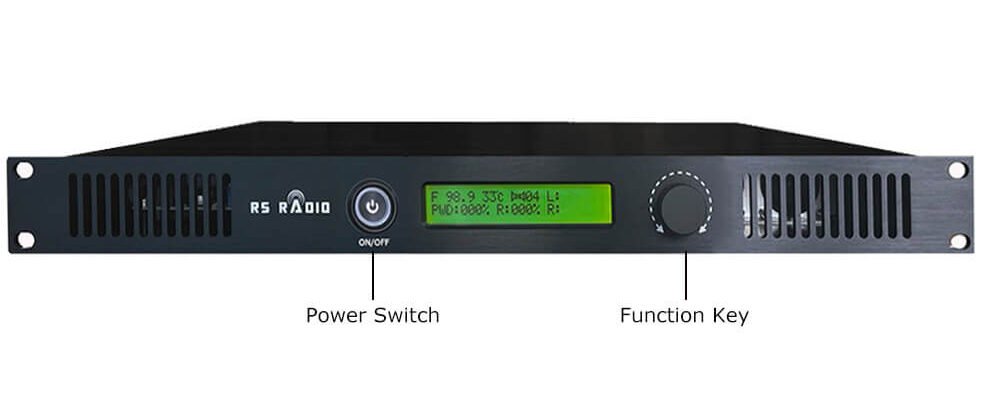
Our RS transmitters cover the entire standard FM band from 87.0-108 MHz with exceptional precision. The carrier frequency precision is ±200Hz across the entire range, ensuring stable operation that doesn’t drift off your assigned frequency. You can adjust frequency in 10KHz steps by rotating knobs, making it easy to select any frequency within the band.
Japan uses a different FM band from 76-95 MHz, which doesn’t overlap with the standard band used elsewhere. If you’re broadcasting in Japan, you need equipment specifically designed for this frequency range. The historical OIRT band from 65.8-74 MHz was used in Eastern Europe but most countries have now switched to the standard band.
| FM Band Type | Frequency Range | Geographic Use |
|---|---|---|
| Standard Band | 87.5-108 MHz | Most countries worldwide |
| Japan Band | 76-95 MHz | Japan only |
| OIRT Band | 65.8-74 MHz | Discontinued, few users |
| RS Transmitters | 87.0-108 MHz | Standard band coverage |
| Frequency Step | 10 KHz | Precise tuning control |
| Frequency Precision | ±200 Hz | Stable operation |
Commercial FM broadcasting stations occupy different bandwidth depending on country regulations. In the United States, each station gets 0.2 MHz bandwidth allocation while other countries assign 0.1 MHz bandwidth. This affects how close together stations can operate without interfering with each other.
The residual wave radiation specification of our RS transmitters exceeds -65dBc, ensuring clean operation without interference to adjacent frequencies. This high specification means your transmitter won’t create problems for other stations operating nearby frequencies, which is critical in crowded urban markets.
How to avoid interference with other FM stations?
Your new transmitter creates interference with existing stations or receives interference that ruins broadcast quality. Poor frequency selection wastes your investment and creates conflicts with other broadcasters in your area. Smart frequency selection and proper separation prevent interference problems before they start.
Avoid FM station interference by maintaining at least 0.4-0.5 MHz frequency separation from nearby stations, using proper antenna separation, and selecting frequencies with low local usage. Online frequency search tools and manual scanning help identify clear channels in your area.
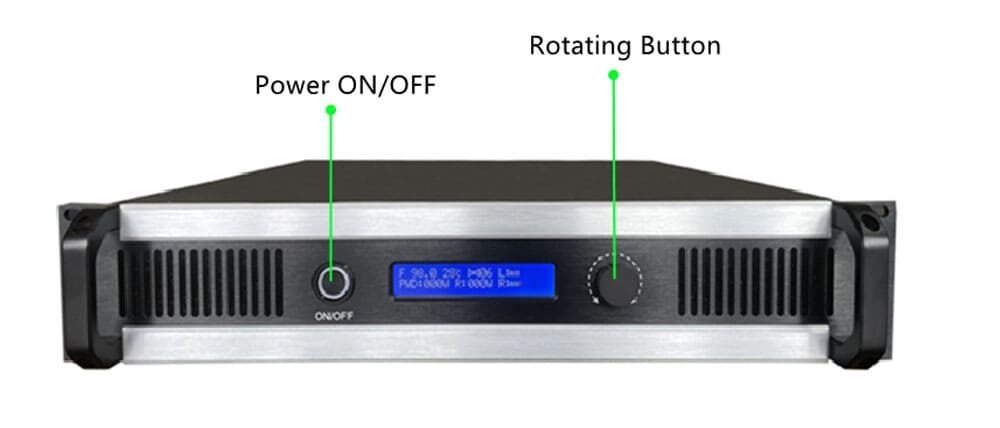
Frequency separation is the most critical factor in preventing interference. Two stations with similar coverage areas should use frequencies at least 0.4-0.5 MHz apart. For example, if one station broadcasts on 89.1 MHz, the next station should use 89.5 MHz or higher to avoid overlap and interference.
Manual frequency scanning provides the most accurate information about local frequency usage. Start with a good quality radio receiver and scan the entire FM band in your area. Write down all frequencies with active stations, noting their signal strength. The gaps between active stations are your potential frequency options.
Our RS transmitters make frequency testing simple with their precise 10KHz frequency steps. You can start testing at 88.1 MHz, then try 88.3 MHz, 88.5 MHz, and continue through the band. The digital frequency display shows exactly where you’re operating, making it easy to document your testing results.
| Interference Factor | Recommended Action | Minimum Requirement |
|---|---|---|
| Frequency separation | Use 0.5 MHz spacing | 0.4 MHz minimum |
| Geographic distance | Increase antenna spacing | 5+ miles between stations |
| Power output | Reduce if necessary | Match coverage needs |
| Antenna height | Optimize placement | Avoid excessive height |
| Testing method | Manual scanning | Check all band |
| Time of testing | Multiple times daily | Peak and off-peak hours |
Geographic factors affect interference significantly. Urban areas have more stations competing for limited frequencies, making interference more likely. Rural areas typically have fewer active stations, providing more frequency options. The terrain between stations affects signal propagation and potential interference patterns.
Online frequency databases help identify licensed stations in your area. In the United States, Radio Locator allows searching by city, state, or zip code to find active frequencies. These databases show official licensed stations but may not include low-power or unlicensed operations in your immediate area.
Testing at different times provides better information about frequency availability. Some stations only broadcast during certain hours, leaving their frequencies available at other times. I recommend testing during peak listening hours when all stations are likely to be active to avoid choosing a frequency that becomes problematic later.
Can two FM transmitters use the same frequency?
You’re wondering if multiple transmitters can share the same frequency to serve different areas. Same-frequency operation seems like it would save spectrum space but creates serious interference problems in most situations. Understanding co-channel operation rules prevents broadcasting conflicts and regulatory violations.
Two FM transmitters cannot use the same frequency in overlapping coverage areas without causing severe interference. However, stations separated by sufficient distance (50+ miles typically) can reuse frequencies without conflict. This frequency reuse allows efficient spectrum utilization across regions.
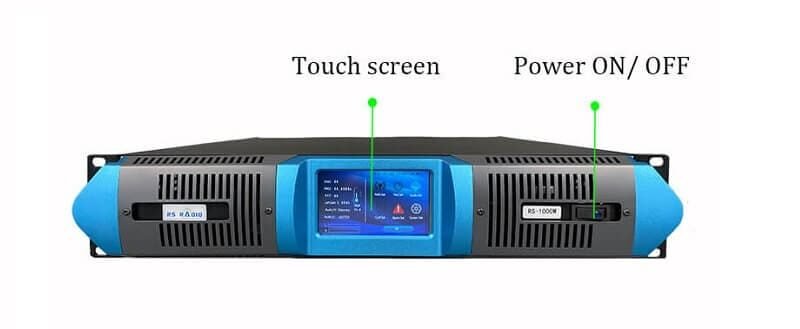
Same-frequency operation in overlapping areas creates a phenomenon called co-channel interference. When two transmitters operate on the same frequency within range of each other, receivers cannot distinguish between the signals. The result is garbled audio, fading, and unusable reception in the overlap zone.
Geographic separation allows frequency reuse across larger regions. A station broadcasting on 89.5 MHz in New York can coexist with another station on 89.5 MHz in Los Angeles because the signals never overlap. The distance required for frequency reuse depends on transmitter power and terrain between locations.
Our RS transmitters include precision frequency control that maintains exact frequency assignment. The ±200Hz frequency precision ensures your transmitter stays on its assigned frequency without drift that could cause interference to adjacent channels. This stability is critical for professional broadcasting that meets regulatory requirements.
| Scenario Type | Same Frequency Possible | Minimum Separation |
|---|---|---|
| Same city | No – severe interference | Use different frequencies |
| Adjacent cities | No – likely interference | 20+ miles minimum |
| Distant cities | Yes – no overlap | 50+ miles typical |
| Different countries | Yes – no overlap | National boundaries |
| Different times | Yes – time sharing | Coordinate schedules |
| Different powers | Sometimes – careful planning | Professional analysis needed |
Translator stations intentionally operate on the same frequency as their parent station. These low-power transmitters extend coverage into shadow zones that the main transmitter cannot reach. Careful placement prevents overlap between the main transmitter and translator coverage areas, allowing same-frequency operation.
Single Frequency Networks represent advanced same-frequency technology. These systems use precise timing and signal processing to operate multiple transmitters on identical frequencies. The technology requires expensive equipment and professional engineering that exceeds typical small station capabilities.
I worked with a customer who tried using two 100W transmitters on the same frequency just 5 miles apart. The overlap zone received garbled signals that made both stations unusable in that area. We solved the problem by changing one transmitter to a frequency 0.6 MHz away, which provided clean reception throughout both coverage areas.
Conclusion
Finding unused FM frequencies requires systematic scanning, proper frequency separation of 0.4-0.5 MHz, and understanding local regulations. Manual testing combined with online databases provides the best results for identifying clear channels that avoid interference with existing stations.