How far will a 50 watt FM transmitter reach?
I get asked about 50 watt transmitters more than any other power level. Churches, small schools, and neighborhood stations all want to know if 50W is enough for their needs.
A 50 watt FM transmitter typically covers about 3–5 km (2–3 miles) in normal mixed conditions with a 30 m antenna. In very open rural areas with good antenna placement, coverage can extend to 8–12 km. In cities with buildings, expect closer to 2–4 km of solid listening.
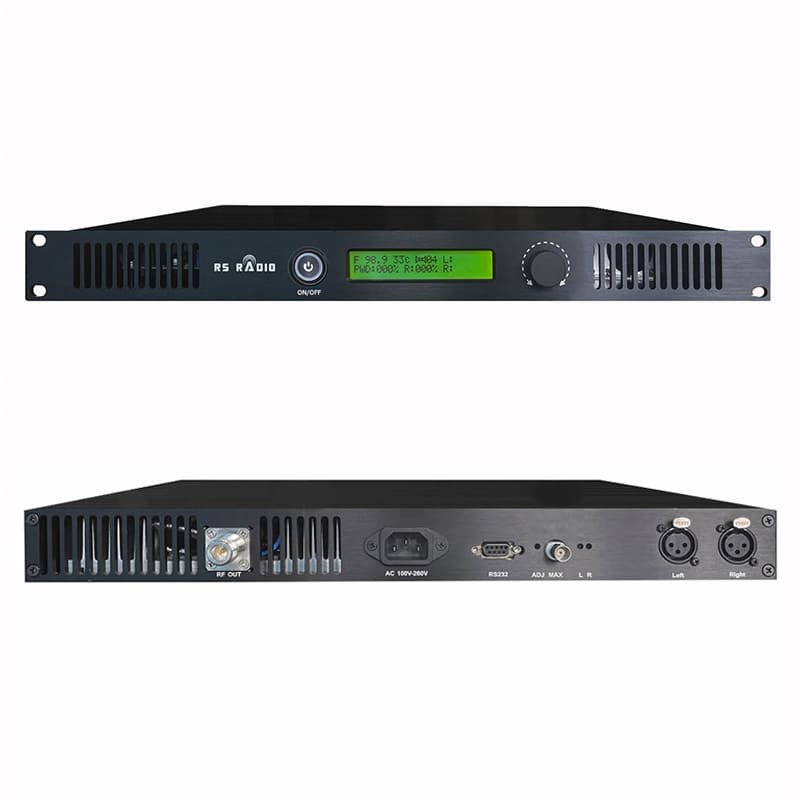
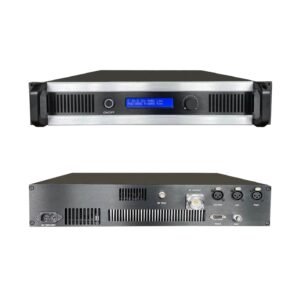
50W FM Transmitter
Advanced 50-watt FM broadcast transmitter, high stability, low power consumption, and ideal for local stations and network expansions.
These numbers come from tracking actual RS customer installations around the world. Our 50W transmitter sells for $488, and I have probably helped set up over a hundred of them by now. The feedback I get is pretty consistent when I account for different environments and setups.
What is the realistic range for 50 watts?
When I started working with smaller transmitters, I was surprised how much variation I saw in coverage reports. Some people said 2 km, others claimed 10 km, all with the same 50W power.
Most 50W stations report about 3–5 km of good usable coverage with a 30 m antenna in typical conditions. Open rural sites with clear views can push toward 6–8 km or occasionally more. Dense urban areas usually see 2–4 km at best.
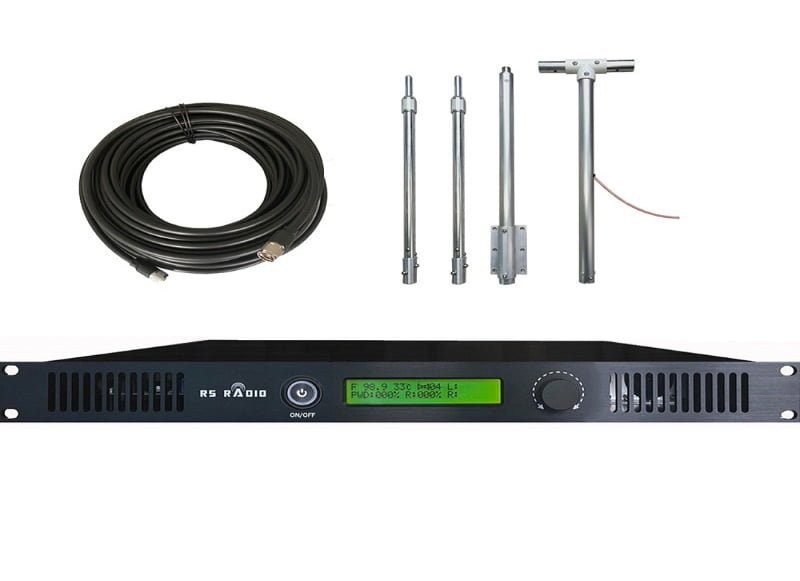
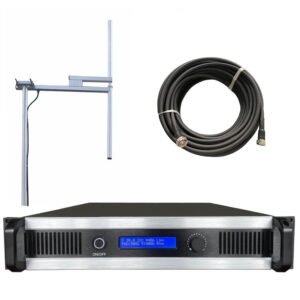
50W FM Transmitter Basic Kit
Advanced 50-watt FM broadcast transmitter, high stability, low power consumption, and ideal for local stations and network expansions.
At RS, our 50W transmitter customer base includes a lot of churches, small community stations, school radios, and local announcement systems. Most of them are not broadcasting from mountaintops or across perfectly flat deserts. They are in normal places with normal terrain.
When I collect their feedback and average it out, here is what I see:
In typical mixed environments with some buildings, some trees, and a 30 m antenna, most people report solid coverage around 3–5 km. They can push a car radio farther and sometimes pick up weak signal at 6–7 km, but I do not count that as good coverage.
In more favorable rural settings with higher antennas or good site selection, coverage often extends to 6–10 km. I have seen a few really well-placed stations reach close to 12 km, but those are the exception with perfect conditions.
In city environments with lots of buildings, coverage usually falls to 2–4 km depending on how dense the urban area is. A small downtown might give you 3 km. A dense city with high-rises might only give you 2 km.
The engineering formulas support these real-world numbers. When I plug 50W into line-of-sight and field strength calculators with typical antenna heights and receiver sensitivity, I get ranges between 3 km and 10 km depending on conditions. That matches what customers tell me they actually measure.
A church in Mexico uses our 50W transmitter to cover their parking lot and the neighborhood around them. They measured about 3.5 km of good coverage in all directions with their 25 m antenna on the church roof. That lets them reach about 15,000 people in their immediate area, which is exactly what they wanted.
How do terrain and buildings affect 50 watt range?
With lower power like 50W, obstacles have an even bigger impact than with higher power transmitters. I learned this when two customers bought the same 50W unit and got completely different results.
Buildings and terrain can easily cut 50W coverage by 40–60%. In open areas you might see 5–8 km. In a town with moderate buildings, expect 3–5 km. In a dense city, you may only get 2–3 km of consistent signal.
Here is what I observe when customers map their actual coverage:
Open rural areas with flat or gently rolling terrain give the best results. With a decent 20–30 m antenna, 50W often reaches 5–8 km fairly reliably. In the very best directions with nothing blocking the path, some customers measure clear signal out to 10 km or slightly more.
Small villages or light suburban areas usually deliver 3–5 km of good coverage. Houses and trees absorb some signal, but not enough to kill it completely. Car radios work well throughout this range.
Towns with more buildings typically show 2.5–4 km of solid coverage. You start to see pockets where buildings block signal, especially behind large structures or down narrow streets between tall buildings.
Dense city environments really limit 50W. Even with a 30 m antenna, you might only get 2–3 km of reliable coverage. High-rise buildings create RF shadows where the signal cannot reach. I have seen city installations where one direction reaches 3 km across low buildings while another direction only reaches 1.5 km because of a cluster of towers.
Hills and elevated sites change everything in a good way. A customer in the Philippines mounted their 50W transmitter on a hill about 50 meters above the surrounding farmland. Even though their antenna was only 25 m tall measured from ground level, they were effectively much higher relative to their coverage area. They reported excellent signal out to 9 km in most directions.
| Environment Type | Typical 50W Range | Key Factor |
|---|---|---|
| Open flat rural | 5–8 km | Few obstacles |
| Rolling hills | 4–6 km | Some blocking |
| Small town | 3–5 km | Moderate buildings |
| Suburban | 2.5–4 km | Houses and trees |
| Dense city | 2–3 km | Many tall buildings |
| Hilltop site | 6–10 km | Elevation advantage |
The difference between 50W and higher power becomes really obvious in cities. A 50W transmitter might barely reach 2 km through downtown buildings while a 300W transmitter at the same location reaches 8 km. In open rural areas, the difference is smaller because terrain is not blocking either signal as much.
I always tell 50W customers to really think about their site before they commit to a location. With only 50 watts, site selection matters more than almost anything else. A good site with 50W beats a terrible site with 100W.
Is 50 watts enough for my needs?
This is the real question most people want answered. They do not care about kilometers as much as they care about whether 50W will reach their specific audience.
50 watts works great for small local coverage: a single neighborhood, a school campus, a church plus surrounding blocks, a small village, or a drive-in theater. For anything bigger than about 5 km radius or dense urban areas, you probably want more power.
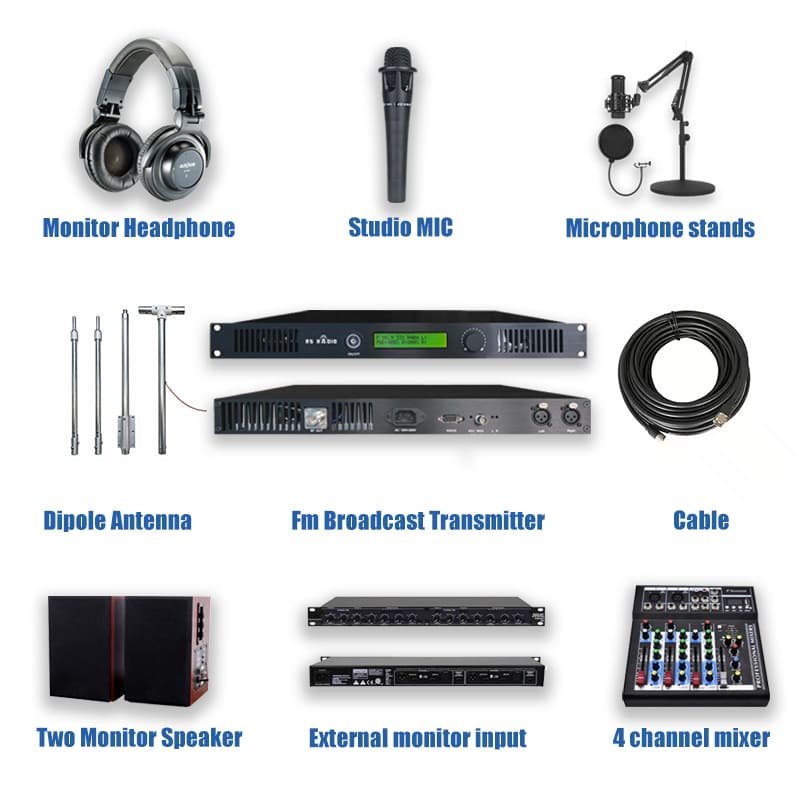
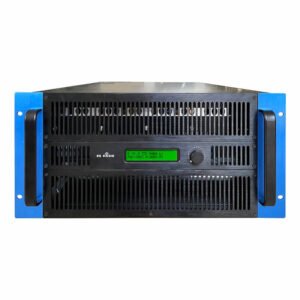
50W FM Transmitter Complete Kit
Advanced 50-watt FM broadcast transmitter, high stability, low power consumption, and ideal for local stations and network expansions.
From the hundreds of 50W setups I have helped with, here are the applications where 50W is usually perfect:
Church parking lot FM systems are one of the most common uses. The church wants to reach cars in their parking lot and maybe the neighborhood within a kilometer or two. 50W with even a simple antenna handles this easily.
Small school or campus radio stations love 50W. A typical school campus is maybe 1–2 km across at most. 50W covers the whole campus and reaches some surrounding neighborhoods. Students can listen while walking around or driving nearby.
Very small community stations serving a single neighborhood or village do well with 50W. If your target area is truly just one neighborhood or a small village, 50W is enough and costs way less than bigger transmitters.
Drive-in theaters and outdoor events use 50W all the time. They need to cover a parking lot or field, maybe 1–2 km radius. 50W is actually more power than many of these applications need.
Farm or factory announcement systems sometimes use 50W to cover their property and communicate with workers across the site. A large farm might be 3–5 km across, which fits 50W coverage perfectly.
Small religious or educational broadcasts in rural villages often choose 50W. The village itself might only be 2–3 km across, and 50W reaches everyone in the community.
Here are situations where 50W is probably not enough:
If you want to cover a whole town or small city of 50,000+ people, you need more power. 50W might reach some neighborhoods but not the whole urban area.
If you want to broadcast to multiple villages or towns spread across 10–20 km, 50W will not make it. You need at least 100–300W depending on terrain.
If you are trying to compete with commercial stations and need strong signal throughout a large area, 50W sounds too weak. Listeners will switch to stronger stations.
If your area has lots of tall buildings or difficult terrain, 50W might not penetrate well enough even for a small coverage area. You might need 100W just to overcome the obstacles.
A customer in Nigeria wanted to reach three small villages spread across about 8 km. I recommended against 50W and suggested our 100W or 150W model instead. They went with 100W and reported good coverage across all three villages. If they had bought 50W, they would have only reached one or maybe two villages well.
How does 50W compare to other power levels?
People often ask me whether they should buy 50W or spend more on 100W or 300W. The decision depends on what coverage area you actually need.
In our real customer data, 15W reaches about 1–3 km, 50W reaches about 3–5 km, 100W reaches about 7–12 km, and 300W reaches about 15–20 km. Each power jump gives you roughly 60–100% more coverage distance, not a linear multiple.
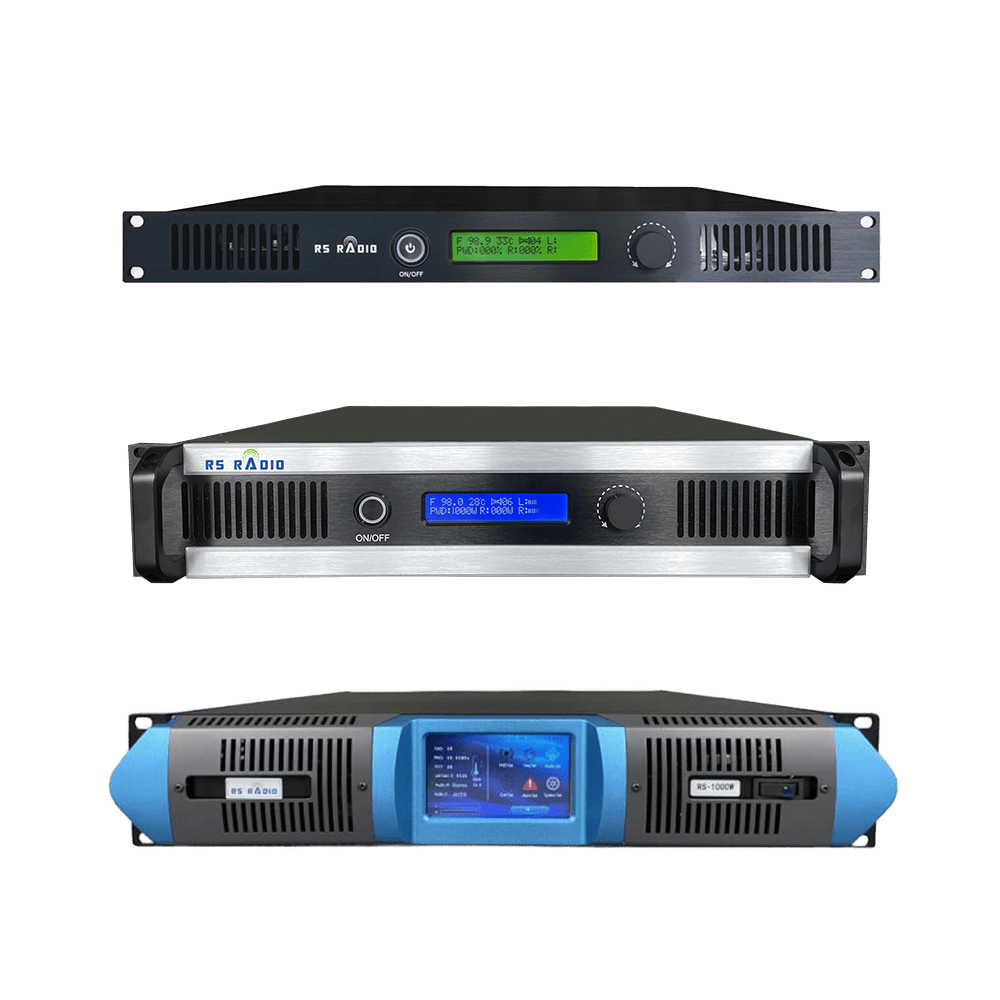
Here is the coverage progression we see with different power levels, all assuming around 30 m antenna height and typical mixed terrain:
Our 15W kit at $249 covers about 1–3 km. This is really just for parking lots, very small campuses, or short-range applications.
The 50W transmitter at $488 reaches about 3–5 km. This is the entry level for actual neighborhood or small community broadcasting.
At 100W for $650, coverage extends to roughly 7–12 km. This is where you start being able to cover a small town or multiple villages.
The 300W model at $1339 reaches about 15–20 km. This handles small cities or a whole cluster of towns and villages.
| Power Level | Price | Typical Range | Best For |
|---|---|---|---|
| 15W | $249 | 1–3 km | Parking lots, very local |
| 50W | $488 | 3–5 km | Neighborhoods, villages |
| 100W | $650 | 7–12 km | Small towns |
| 300W | $1339 | 15–20 km | Small cities, regions |
The price difference between 50W and 100W is only $162. That is not much money for roughly doubling your coverage area. So I often tell people, if you are on the fence between 50W and 100W, just get the 100W. The extra coverage gives you room to grow and ensures good signal quality throughout your area.
The jump from 50W to 300W is much bigger: $851 more. But you are also getting 3–4 times the coverage distance. For most small local stations, 300W is overkill. But for stations that need to reach a whole region, it is worth every dollar.
One pattern I notice is that customers who buy 50W and later wish they had more power almost always needed 100W from the start. They tried to save $162 and ended up frustrated with their coverage. I recommend being honest about your coverage goals and buying the power level that meets them comfortably, not barely.
Can I extend 50 watt coverage with better equipment?
A lot of 50W customers ask me if they can get more range by upgrading antennas, cables, or antenna height rather than buying a bigger transmitter.
Better equipment definitely helps with 50W. Upgrading to a 4-bay antenna can add 1–2 km of coverage. Good coax cable can recover 0.5–1 km if your old cable was cheap. Raising your antenna 10 meters often adds 2–3 km. Combined, you might extend coverage from 4 km to 6–7 km.
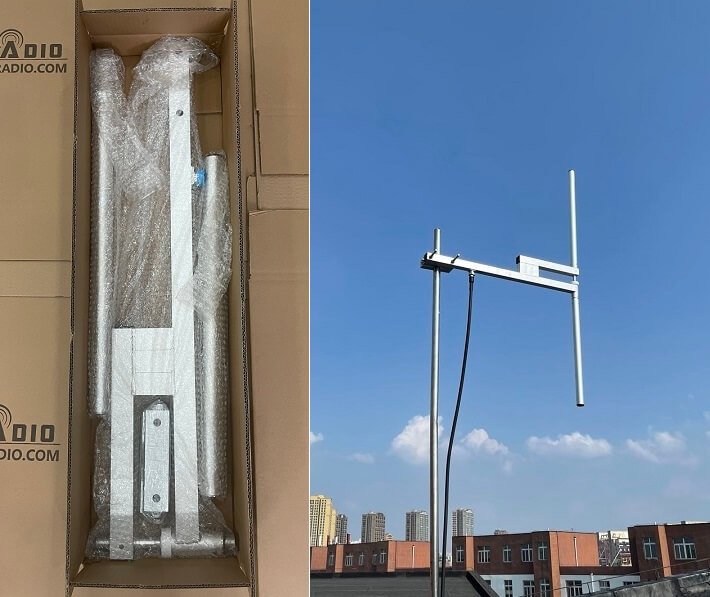
With lower power transmitters like 50W, every little improvement matters more because you are starting with less signal. I have seen customers make meaningful coverage gains with fairly simple upgrades.
Antenna quality makes a noticeable difference. Most people start with whatever basic antenna comes with their kit or the cheapest option they can find. Upgrading from a basic dipole or 1-bay antenna to a proper 2-bay or 4-bay antenna can easily add 20–30% to your coverage. For a 50W station at 4 km, that means extending to about 5–5.5 km.
A customer in Kenya used our 50W transmitter with a cheap single dipole antenna and got about 3 km coverage. He upgraded to a 2-bay antenna for about $400 and his coverage extended to 4.5 km. Same transmitter, same location, much better antenna, and he gained 50% more range.
Cable losses hurt more with lower power. If you have 30 meters of cheap coax cable losing 30% of your power, you are down to effectively 35W reaching your antenna. That might cost you a kilometer or more of coverage. Upgrading to LMR-400 cable for $250–350 can recover most of that loss. You still only have 50W at the transmitter, but now 45W actually makes it to the antenna.
I helped a school in the Philippines troubleshoot their 50W station that barely reached 2.5 km when they expected more. We checked their cable and found really cheap stuff that was bleeding power. They replaced it with LMR-400 and immediately gained about 0.8 km, reaching 3.3 km total. Not huge, but meaningful for them.
Antenna height affects 50W just like higher power, but the gains are a bit more modest. Adding 10 meters of height might add 2–3 km to your coverage. Going from 20 m to 30 m typically extends your range from maybe 3 km to 5 km. That is a worthwhile improvement if your site allows for a taller mast.
One creative solution I have seen work well is moving to a better location rather than upgrading equipment. A church had 50W on a low building downtown reaching only 2 km. They moved their antenna to a willing member’s house on a hill 3 km away, used internet to send audio to the transmitter site, and suddenly reached 7 km because of the elevation advantage. Moving the site cost them $300 in internet equipment and a better antenna mount, way less than upgrading to 100W.
| Improvement Option | Typical Cost | Coverage Gain | Worth It? |
|---|---|---|---|
| Basic to 2-bay antenna | $300–500 | +1–2 km | Yes |
| Cheap cable to LMR-400 | $250–400 | +0.5–1 km | Yes |
| Add 10 m antenna height | $600–1200 | +2–3 km | Often yes |
| Better site location | $200–800 | +1–4 km | Very worth it |
| 50W to 100W upgrade | $162 | +3–7 km | Usually better than equipment |
Here is my honest advice: if you need a lot more coverage than 50W gives you, just buy the 100W transmitter. The $162 extra gets you way more range than spending $500–1000 on antenna and cable upgrades. Save the equipment upgrades for when you already have the right power level and just want to optimize.
But if you are close to your coverage goals and just want to squeeze an extra kilometer or two, then yeah, better antenna and cable are worth it.
What equipment do I need for good 50W coverage?
Some people think 50W is so low that equipment quality does not matter. That is wrong. With less power, you need to be even more careful about not wasting what you have.
For solid 50W performance reaching 3–5 km, use at least a 20–25 m antenna height, a decent 1 or 2-bay antenna, and quality coax like LMR-400 for runs over 15 meters. Cheap components can easily cut your coverage in half, down to 2–3 km or less.
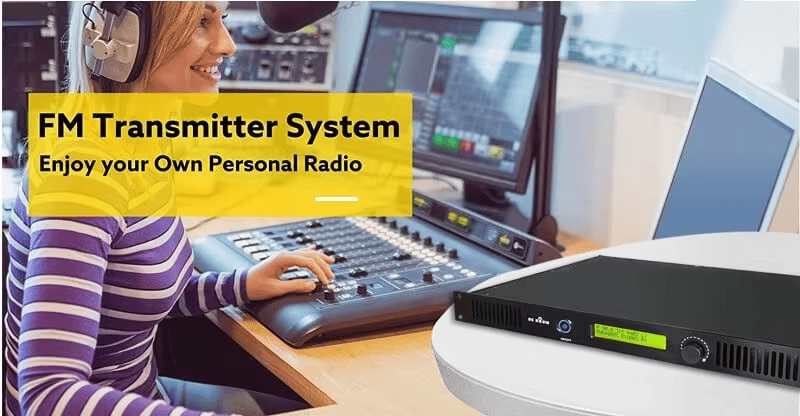
Based on successful 50W installations I have helped set up, here is what works:
Antenna height should be at least 20 m if possible, 25–30 m is better. I know not everyone can get that high, but every meter helps. Even going from 15 m to 25 m makes a noticeable difference in coverage.
Antenna choice depends on your goals. For basic parking lot or very local coverage, even a simple dipole works. For neighborhood or village coverage, step up to at least a 1-bay or 2-bay antenna. The difference in performance is worth the extra $200–400.
Cable should be decent quality, especially if your run is longer than 20 meters. LMR-400 is a good choice. If you are on a really tight budget and your cable run is under 15 meters, you can get away with cheaper cable, but I still recommend LMR-400.
Site selection matters more than people think. Even with perfect equipment, 50W from a bad location gives poor results. A rooftop that sees the surrounding area beats a ground-level spot every time.
For a typical 50W station setup, I usually suggest:
RS 50W transmitter at $488, a 2-bay antenna around $400–600, 20–30 meters of LMR-400 cable at $200–350, and some kind of 20–30 m support structure. Total equipment cost runs maybe $1100–1500 depending on what kind of mast or tower you need.
Some customers try to do 50W super cheap: $488 transmitter, $150 antenna, $50 of thin coax. They end up with 2 km coverage and wonder why. I always say, do not spend $488 on the transmitter and then ruin it with $200 of junk around it. Spend the extra $400 on proper supporting equipment and get the coverage you actually need.
Conclusion
From real customer feedback and broadcast engineering data, a 50 watt FM transmitter with a 30 m antenna typically gives about 3–5 km of reliable coverage in normal conditions. Very open rural sites or elevated locations can push toward 6–10 km. Dense urban areas usually see 2–4 km. The 50W power level works really well for neighborhoods, small villages, schools, churches, and other localized broadcasting needs. If you need broader regional coverage beyond 5–7 km, consider our 100W ($650) or 300W ($1339) models instead. Contact us at sales@fmradiotx.com or WhatsApp +86 188 4203 6851 and I can help you figure out which power level fits your specific coverage requirements and budget.