How far will a 300 watt FM transmitter reach?
When I first started working with FM transmitters, I was confused by all the different numbers online. Some people claimed "up to 60 km," others said "only 10 km," and none of it felt very real.
In normal real-world conditions, a 300 watt FM transmitter usually covers about 15–20 km (9–12 miles) with a 30 m antenna. In open rural or high-elevation sites, it can sometimes reach 20–30 km. In dense cities, the range can drop to around 8–15 km.
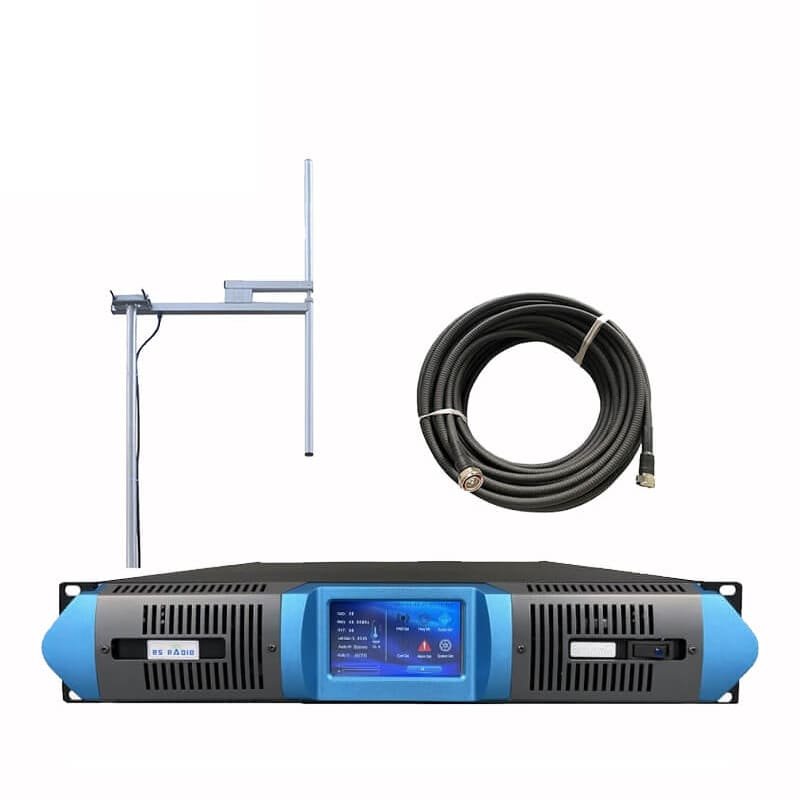
300W Touch Screen FM Transmitter Basic Kit
Advanced 300-watt FM broadcast transmitter featuring a touch-screen control panel, high stability, low power consumption, and ideal for local stations and network expansions.
I base these numbers on two things. First, the real feedback I get from RS customers in different countries. Second, the engineering rules that broadcast people use worldwide. When I compare our average customer data with what broadcast engineers and handbooks say, the results line up pretty well, as long as I ignore the marketing hype.
What is a realistic coverage range for a 300W FM transmitter?
Lots of websites throw out huge numbers for coverage, but those "perfect condition" claims rarely match what people see in real life. I learned to ignore anything that sounds too good to be true.
Most stations using a 300W FM transmitter report about 15–20 km of solid, usable coverage with a 30 m antenna in normal terrain. In very open rural areas or on a good hill, the range can sometimes stretch closer to 25–30 km, but that is more the exception than the rule.
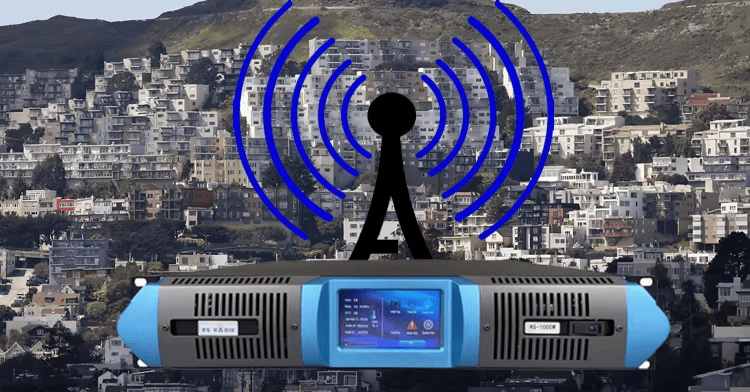
With RS, we track feedback from customers who use our 300W transmitter (priced around $1339 for the transmitter itself). Many of them are not in perfectly flat farmland. Some are in small cities, some in towns with hills, and some in open rural areas. When I average their test results, I keep seeing the same pattern:
In normal mixed terrain with a 30 m antenna, strong comfortable listening happens at about 15–20 km. You can often pick up a weaker but still usable signal a bit beyond that, but I do not count that as clean coverage.
In more open or higher locations, I have seen 20–25 km often. In really favorable spots, like on a hill looking over flat land, people sometimes report close to 25–30 km.
When I look at engineering references, they basically say the same thing in a more technical way. They use radio line-of-sight formulas and field strength curves. If I plug in 300W, 30 m antenna height, and normal receiver sensitivity, I get roughly the same ranges that our customers report. That makes me feel confident that 15–20 km is a good honest answer for most people.
In big cities, the numbers are smaller, and that leads to the next question.
How much do terrain and city buildings change the range?
I used to think transmitter power was everything. Then I watched two customers with the same 300W model get totally different results. One hit almost 25 km. The other barely got 12 km. The only real difference was where they put their antenna.
Terrain and buildings can easily change a 300W range by 30–50%. On fairly open ground you may see 15–20 km. In a dense city with high buildings, that may drop to around 8–15 km. On a hill above flat land, you might reach 20–30 km.
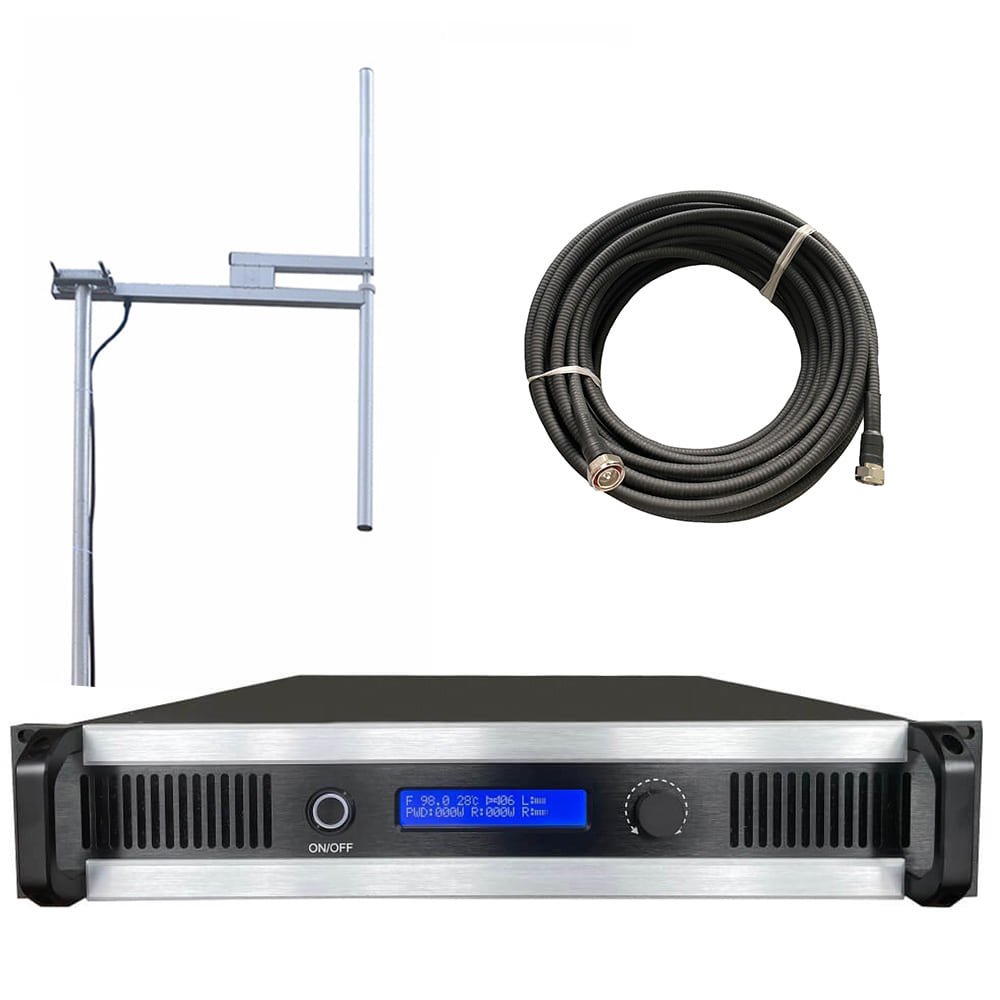
300W Touch Screen FM Transmitter Basic Kit
Advanced 300-watt FM broadcast transmitter, high stability, low power consumption, and ideal for local stations and network expansions.
Here is what I see over and over when customers send me their test maps:
Flat or gently rolling rural areas with a 30 m antenna usually give 15–20 km of good listening. In the best direction with no hills and no dense trees, they sometimes hear clean signal a bit farther, up to low-20s km.
Small towns or light suburbs usually sit around 12–18 km. Buildings and trees eat part of the signal, but car radios still do pretty well.
Dense cities with tall buildings show actual consistent coverage closer to 8–15 km, even with the same 30 m height. You get pockets where high-rises block the signal and create small dead spots.
Hilltop or elevated sites change everything. If your antenna sits on a hill or tower that sees the surrounding area, 300W can behave like a much stronger setup. Range in the best directions can push toward 20–25 km, sometimes a bit more.
I remember one station we helped in East Africa. They mounted a 300W transmitter on a modest hill with about 30 m tower height. In the flat directions, they measured around 20 km of reliable coverage. Toward a small ridge line, it dropped to about 12–14 km. Same transmitter, same power, different direction, different result.
| Terrain Type | Typical 300W Range | Main Challenge |
|---|---|---|
| Flat rural | 15–20 km | Open fields help signal travel |
| Rolling hills | 12–18 km | Hills block some directions |
| Small towns | 12–18 km | Buildings absorb signal |
| Dense city | 8–15 km | Tall buildings create shadows |
| Hilltop site | 20–30 km | Clear view extends range |
So when someone asks me how far 300W will reach, I always ask back, where is your antenna, and what does the land around you look like. Power is just one piece of the story.
How does 300W compare with other power levels in real life?
Some people think if 100W gives 10 km, then 300W should give 30 km. I thought like that too when I started. But radio does not scale in such a simple way.
Going from 100W to 300W does not triple your range. In our customer data, 100W with a 30 m antenna usually covers about 7–12 km, while 300W reaches about 15–20 km. So you gain around 50–70% more distance, not 200%.
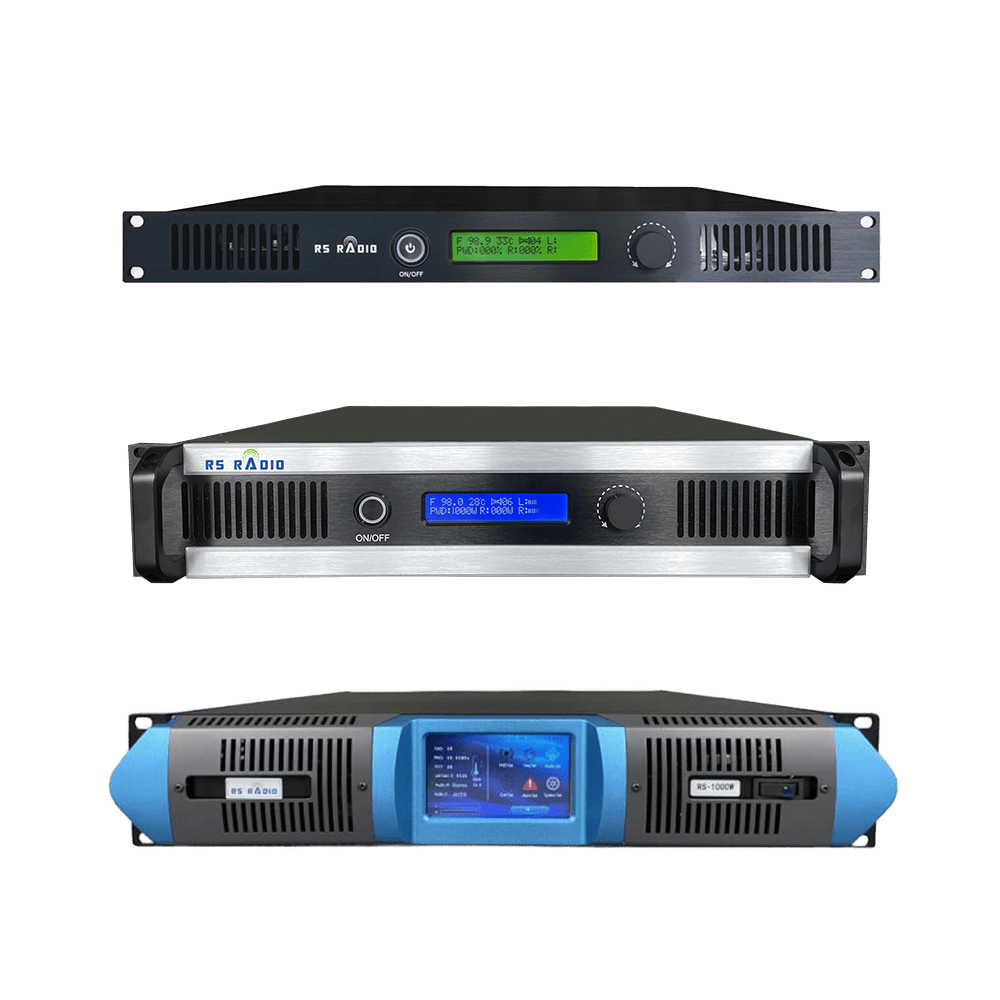
Here is what our real feedback looks like when I line it up side by side. All of this assumes around 30 m antenna height and fairly normal terrain, not a perfect mountain site and not a deep downtown canyon:
Our 15W kit at $249 covers about 1–3 km. Good for drive-in church, parking lot, small campus.
The 50W unit at $488 reaches around 3–5 km. Works for schools, small neighborhoods, small villages.
At 100W for $650, you get roughly 7–12 km. Typical for small-town community stations.
The 300W transmitter at $1339 covers about 15–20 km. Good for a small city, or a town plus some surrounding villages.
Step up to 500W at $1560 and you see around 20–25 km. Covers a larger town or compact city.
The 1000W model at $1890 reaches about 25–30 km. More like full city or bigger region, depending on terrain.
| Power Level | Price | Typical Range | Cost Per km (avg) |
|---|---|---|---|
| 100W | $650 | 7–12 km | $54–93 per km |
| 300W | $1339 | 15–20 km | $67–89 per km |
| 500W | $1560 | 20–25 km | $62–78 per km |
| 1000W | $1890 | 25–30 km | $63–76 per km |
From an engineering point of view, this makes sense. To double your distance, you need a lot more than double the power because the signal spreads out in all directions. That is why many engineers say it is better to invest in antenna height and a good site instead of only chasing higher transmitter watts.
If your goal is around 15–20 km of solid coverage, 300W with a 30 m antenna is usually a very reasonable and honest choice. If you truly need 30+ km, then you either need more power, a better site, or both.
Can I extend 300 watt coverage with better equipment?
A lot of people ask me this after they set up their station and realize they want just a bit more coverage. They wonder if they can squeeze more distance out of their 300W setup before spending money on a bigger transmitter.
Better equipment can definitely extend your 300W range. Upgrading from a basic 2-bay antenna to a 4-bay antenna usually adds about 3–5 km. Better coax cable can recover 2–3 km if your old cable was cheap. Raising your antenna another 10 meters often adds 4–6 km. Combined, these improvements can push you from 15 km to maybe 22–25 km.
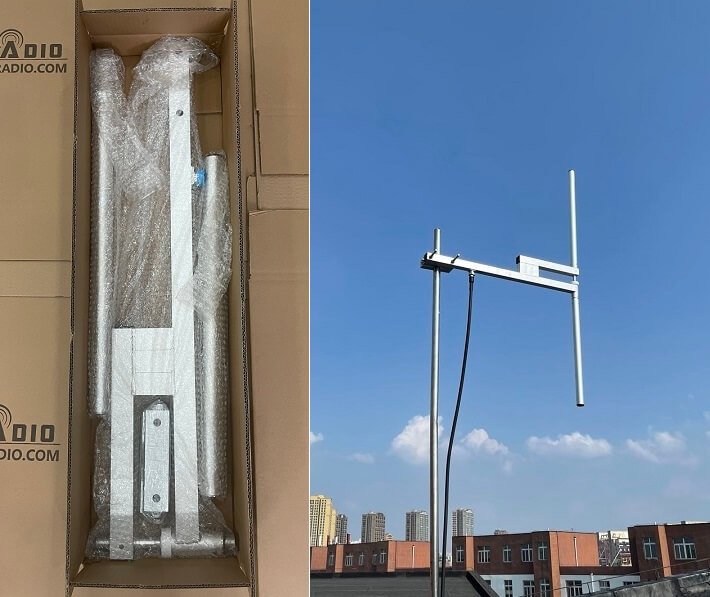
I have watched customers do this upgrade path many times. The ones who get the best results focus on three main things: antenna quality, cable quality, and antenna height.
Starting with antennas, most stations begin with a basic 2-bay or even a single dipole antenna. Those work fine, but they are not very efficient. A quality 4-bay antenna costs around $1200–1600, but it radiates your signal much more evenly in all horizontal directions while wasting less energy shooting up into the sky. The gain improvement usually translates to about 20–30% more range. So if you were hitting 15 km with a basic setup, a 4-bay might push you to around 18–20 km.
One customer in the Philippines started with our 300W transmitter and a 2-bay antenna. He measured about 16 km of good coverage. After upgrading to a 4-bay antenna for about $1400, he remeasured and found clear signal out to 21 km. Same transmitter, same location, just a better antenna. He told me it was a way better investment than jumping to 500W.
Cable matters more than most people realize. Cheap coax cable bleeds away your power as heat. I have seen setups where nearly 40% of the transmitter power never made it to the antenna because of bad cable. If you have 40 meters of cheap RG8 cable, you might lose 30–40% of your power. Upgrading to LMR-400 cable drops that loss to about 15–20%. Better yet, LMR-600 cable only loses around 8–10%. For a 30–40 meter run, switching from cheap cable to LMR-400 can cost $300–400, but you effectively get back 20–25% more power reaching your antenna. That can easily mean an extra 2–3 km of coverage.
I helped a station in Kenya figure out why their 300W transmitter barely reached 13 km. When I asked about their cable, they said they bought whatever the local shop had. I suspected that was the problem. We calculated their cable losses and found they were only getting about 180W to the antenna. After they upgraded to LMR-400, their coverage jumped to 17 km. No change to the transmitter at all.
Antenna height is probably the single most effective upgrade if you have the space and budget for a taller tower. Every 10 meters you go up adds roughly 4–6 km to your line-of-sight horizon. If you can raise your antenna from 30 m to 40 m, you will almost certainly see your coverage extend by several kilometers. Going from 30 m to 50 m can sometimes add 8–12 km, depending on terrain. Tower work costs money, though. Adding 10–20 meters might cost $800–2000 depending on your location and whether you need a whole new tower or can extend your existing one.
| Upgrade Option | Typical Cost | Coverage Gain | Cost-Effectiveness |
|---|---|---|---|
| 2-bay to 4-bay antenna | $1200–1600 | +3–5 km | Very good |
| Cheap coax to LMR-400 | $300–500 | +2–3 km | Excellent |
| Add 10 m tower height | $800–1500 | +4–6 km | Very good |
| Add 20 m tower height | $1500–3000 | +8–12 km | Good |
| 300W to 500W upgrade | $221 | +3–5 km | Moderate |
Some people ask about RF amplifiers or signal boosters. I do not usually recommend them for FM broadcast because they add complexity, create potential points of failure, and often do not give you much real gain for the cost. If you want more power, it is better to just buy the next level transmitter. If you want more range, it is better to fix your antenna system or raise your antenna.
Audio processing is another thing people ask about. A good audio processor does not extend your coverage distance, but it can make your signal sound louder and clearer at the edges. This helps listeners stick with your station instead of switching to a competitor when they drive to the edge of coverage. A decent processor costs $800–1500. It is worth it for stations that want a professional sound, but it will not add kilometers to your map.
So if you already have 300W and you are hitting maybe 14–16 km, here is what I would do in order of priority:
First, check your cable. If it is cheap stuff, replace it with LMR-400. This is the easiest win for the money.
Second, look at your antenna. If you have a basic 1 or 2-bay, consider upgrading to a 4-bay. This gives you better signal all around your coverage area.
Third, if you can afford it and your site allows it, raise your antenna another 10–20 meters. This almost always delivers measurable improvement.
Put those three things together and you can often stretch a 300W station from 15 km to 22–25 km without changing the transmitter.
What setup do I really need to get that 15–20 km?
I learned the hard way that you cannot just buy a 300W box, stick it anywhere, and expect 20 km. The setup around the transmitter matters just as much as the power rating on the label.
To realistically reach 15–20 km with 300W, you usually need around 30 m antenna height, a decent site that is not deep in a valley, good coax cable like LMR-400, and a proper FM antenna such as a 2–4 bay system. Cheap cable, low mounting, or bad placement can easily cut your range in half.
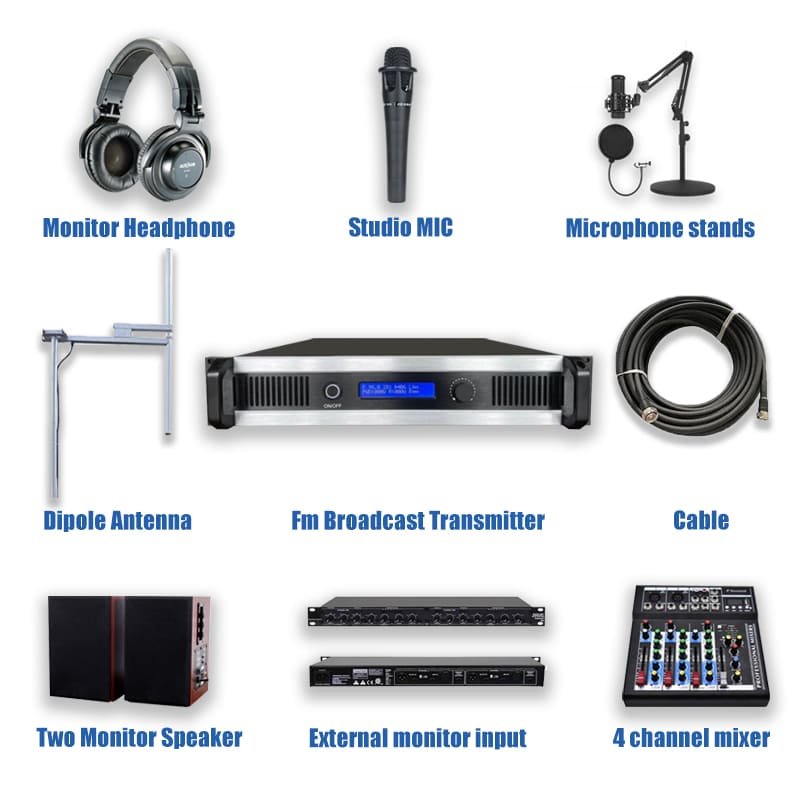
300W FM Transmitter Complete Kit
Advanced 300-watt FM broadcast transmitter, high stability, low power consumption, and ideal for local stations and network expansions.
From my experience helping RS customers, this is what tends to work:
For antenna height, around 30 m is a good minimum target. If you can go higher safely, that almost always helps more than just buying more watts. I have seen 300W at 40 m outperform 500W at 20 m.
For antenna type, most serious 300W stations use a multi-bay antenna, either 2 or 4 bays. A 4-bay antenna gives a smoother, stronger signal over your whole coverage area than a small single antenna. It costs more upfront but the performance difference is real.
For cable, use good quality coax like LMR-400 or better for longer runs. Cheap cable can eat a lot of your power before it even reaches the antenna. On a 30–40 meter run, cheap cable might waste 100W of your 300W. That is throwing money away.
For site choice, avoid putting the antenna at the very bottom of a valley or right behind a hill if you can. Even a small rise or rooftop that looks out over the town makes a big difference. I always tell people, spend a day driving around and looking at potential sites before you commit. The best site will save you money on power and equipment later.
When we put together station kits at RS, we usually plan power, antenna, cable, and tower height together. For a typical 300W station aiming for that 15–20 km honest circle of coverage, I usually spec something like this:
RS 300W transmitter ($1339), a 4-bay antenna ($1400–1600), about 35–40 meters of LMR-400 cable ($350–450), and a 30 m tower or mast. Total equipment cost runs around $3000–3500 not counting tower installation. That setup reliably delivers the 15–20 km range in normal conditions.
Some customers try to cut costs by using cheaper components. I have seen people spend $1339 on the transmitter, then buy a $300 antenna and $100 in cheap cable. They end up with maybe 10–12 km coverage and wonder why. I always say, if your budget is really tight, it is better to buy a 100W transmitter with good supporting equipment than a 300W transmitter with junk around it.
Conclusion
From what I have seen in real installs and from what broadcast engineering data says, a 300 watt FM transmitter with a 30 m antenna usually gives about 15–20 km of real usable coverage in typical mixed terrain. In very favorable locations like hilltops overlooking flat land, you might see 20–30 km. In dense cities or rough terrain, expect more like 10–15 km. The actual range depends heavily on your specific site, antenna system, and local geography. If you need help figuring out what power level works for your situation, contact us at sales@fmradiotx.com or WhatsApp +86 188 4203 6851 and I can walk you through the calculations based on your specific location and coverage goals.