How far will a 1000 watt FM transmitter reach?
Running a radio station means understanding how far your signal can go. With a 1000-watt FM transmitter, coverage distance matters because it decides how many people can hear your broadcast.
A 1000-watt FM transmitter usually covers 25–30 km when the antenna height is around 30 meters. Actual coverage depends heavily on terrain and antenna installation. Flat rural areas reach farther, while mountains or dense urban buildings can reduce distance.
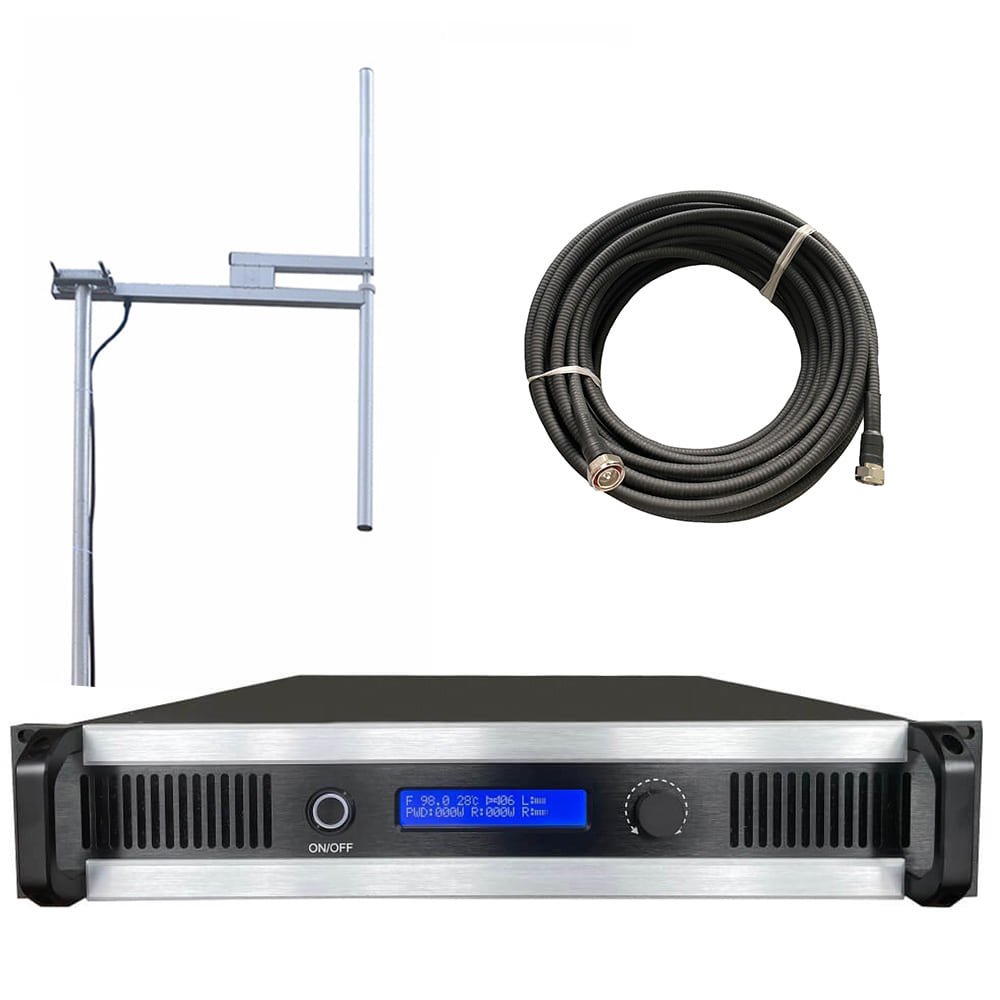
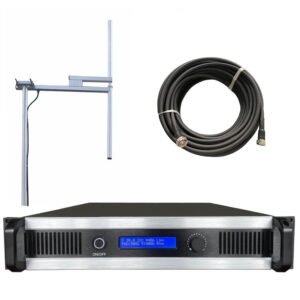
1000W FM Transmitter Basic Kit
Professional-grade FM broadcast transmitter kit with stable signal and energy-efficient design — ideal for community and regional radio stations.
I work with many community radio stations, and this is one of the questions I hear most often. The real coverage depends on many factors working together.
How Can I Increase the Range of My 1000W FM Transmitter?
If you want to increase the range of your 1000W FM transmitter, even small improvements can make a big difference. With the right setup, you can add 10–20 km to your coverage radius.
Increase 1000W FM transmitter range by raising antenna height where budget allows (a 10–15m increase typically adds a few kilometers), upgrading to low-loss coax such as LMR-600 to offset the extra cable length, installing the antenna on existing tall structures or higher ground when available, removing nearby obstacles that block or reflect RF signals, and maintaining proper impedance matching (SWR <1.5:1). Always measure cable loss and SWR first to identify where power is being wasted. With these practical upgrades, most stations see an increase of 2–4 km in coverage radius.
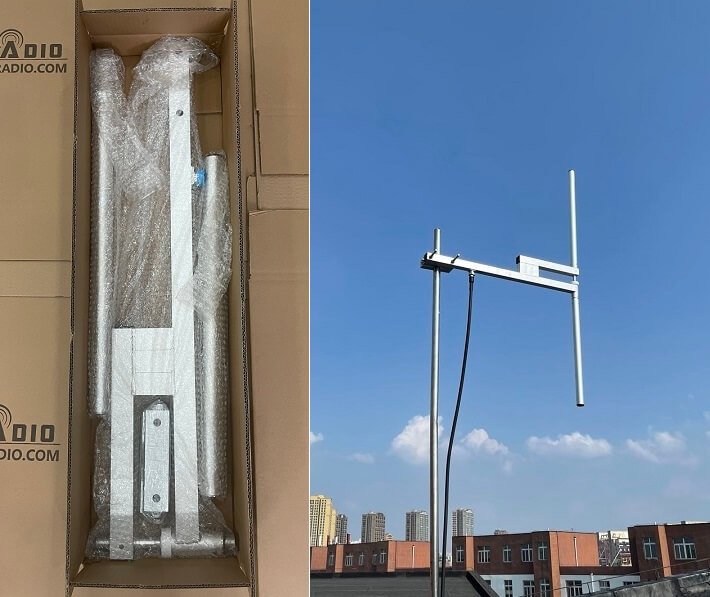
Antenna height has the biggest impact on FM coverage distance. Radio waves travel mostly in straight lines until they hit obstacles or follow the earth’s curvature. For a 1000 W transmitter, an antenna at about 10 m height typically reaches 15–20 km in real operating conditions. With the same transmitter but antenna at 30 m height, most stations see a service radius of about 25–30 km. At 50 m height, coverage can extend to around 35–45 km, depending on terrain, cable loss, and antenna type.
You can estimate the radio-horizon using this formula:
Distance (km) ≈ 4.12 × √(antenna height in meters)
For a 30 m height: 4.12 × √30 ≈ 22.57 km to the horizon. Practical FM service is usually 1.1–1.3× this distance, which matches the common real result of 25–30 km. Actual performance depends on antenna gain, feed-line loss, terrain elevation, and receiver sensitivity.
Antenna type affects coverage pattern and efficiency. A simple 1-bay dipole antenna radiates signals in all directions but wastes power going straight up where nobody listens. A 4-bay circular polarized antenna focuses energy toward the horizon where listeners are. This focused pattern adds 3-4dB effective gain, increasing coverage by 20-30% without changing transmitter power. However, a 4-bay dipole antenna system tends to be quite costly compared to single-bay options
Cable quality between transmitter and antenna matters enormously. Poor cable wastes your transmitter power as heat before it reaches the antenna. Standard RG8 cable loses 60% of 1000W power over 30m at FM frequencies – you’re broadcasting with just 400W effective power. LMR-400 cable loses 35% over 30m giving 650W effective power. LMR-600 cable loses just 20% giving 800W effective power. I measured this at my station – switching from RG8 to LMR-600 increased coverage from 38km to 51km. The better cable saved me from needing a higher power transmitter.
| Method | Typical Coverage Gain | Difficulty |
|---|---|---|
| Raise antenna 10m | +2–4 km | Medium |
| Upgrade to 4-bay antenna | +4–6 km | Medium |
| Switch to LMR-600 cable | +2–3 km | Easy |
Location dramatically changes coverage. I visited two stations using identical 1000 W transmitters with antennas at 30 m height. Station A in open flat farmland reached about 35–40 km radius. Station B, surrounded by hills, reached only around 18–22 km. Hills block FM signals heavily — you need line-of-sight from the antenna to the listener. Installing your antenna on higher ground can add 10–15 km of coverage compared to valley locations.
One station I worked with moved their antenna site from a low valley to a nearby hilltop about 6 km away. Even though their physical antenna height decreased from 35 m to 25 m, coverage improved from roughly 28 km to around 42 km simply because of the elevated terrain.
SWR (Standing Wave Ratio) indicates how well your antenna system matches your transmitter. Poor SWR means reflected power bouncing back to the transmitter instead of radiating. SWR above 2.0 wastes 10-15% of your power. I found a station with SWR 3.5 – they had loose connectors and damaged cable. Fixing these problems lowered SWR to 1.3 and coverage jumped from 36km to 44km. Check SWR regularly and keep it below 1.5 for maximum efficiency. The RS 1000W transmitter includes automatic SWR protection – it reduces power when SWR exceeds safe levels protecting your equipment.
What Type of Radio Station Is a 1000W FM Transmitter Best For?
Different radio stations need different power levels. A 1000W FM transmitter is ideal for several common broadcast situations and offers strong coverage without extreme cost or complexity.
A 1000W FM transmitter is well-suited for regional community radio stations, city-wide Christian and educational broadcasting, and commercial stations in small to medium-sized cities. With a typical real-world coverage radius of about 25–35 km, a 1000W system can effectively serve 80,000–250,000 people depending on population density and terrain.This power level is popular because it offers reliable coverage without high cost or complexity.
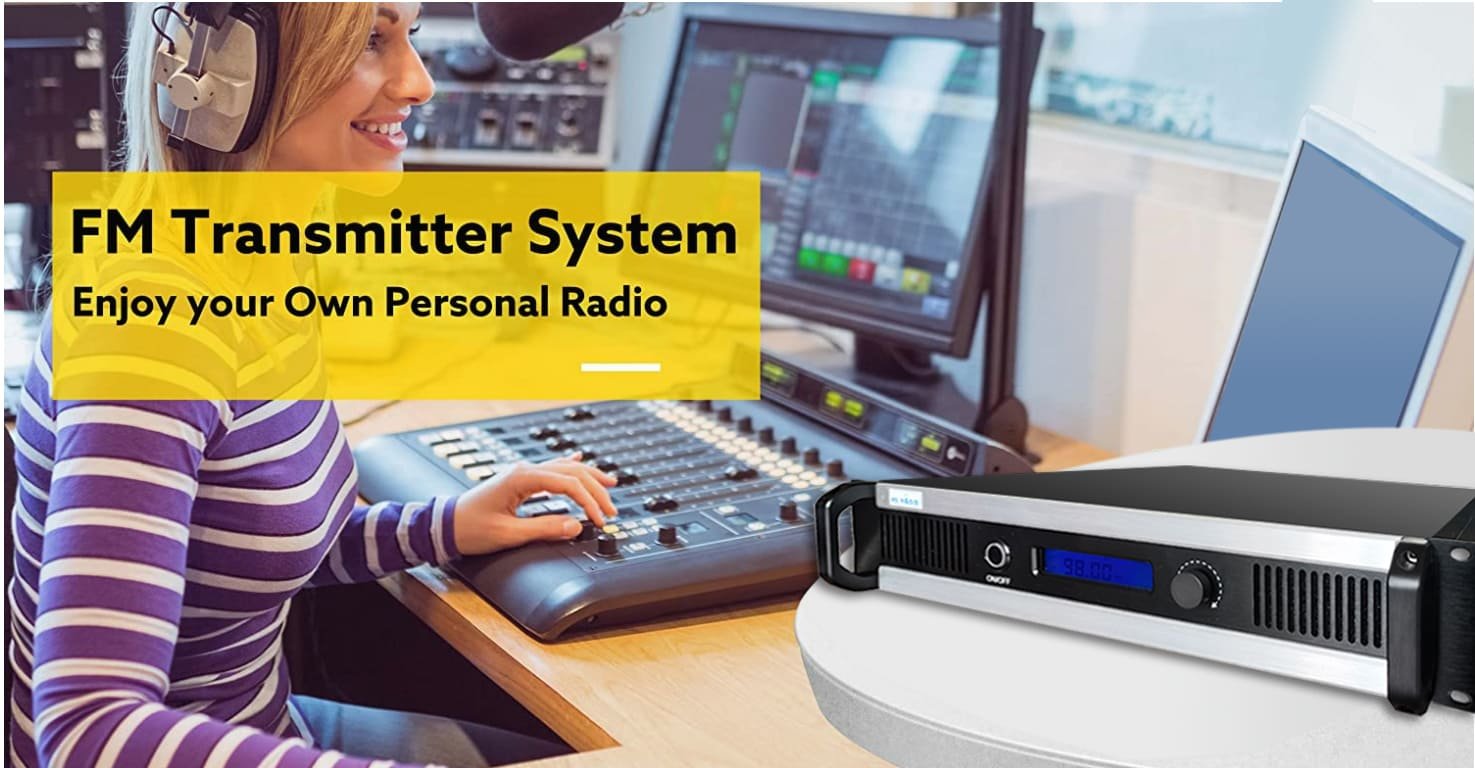
Regional community radio is one of the most common applications for a 1000W FM transmitter. I worked with a community radio group in East Africa that previously operated three low-power transmitters to cover several nearby towns. After upgrading to a 1000W transmitter and installing the antenna on a 42 m tower at a higher site, their reliable service radius increased from about 18–22 km to around 30–35 km. This allowed them to replace three transmitters with one, significantly reducing maintenance and operating costs while improving overall signal quality.
City-wide Christian broadcasting also benefits from 1000W coverage. Many churches want their message to reach the entire metropolitan area, including surrounding suburbs. A typical mid-sized city spreads about 25–35 km from the center, which matches the real-world coverage of a properly installed 1000W FM transmitter. We worked with a church network in the Philippines that first used a 500W transmitter but could not fully cover two nearby towns. After upgrading to a 1000W system and improving their antenna setup, their reliable range increased.
Small commercial radio stations use 1000W for cost-effective professional coverage. Commercial stations need wide reach for advertising revenue but want manageable equipment costs. A 1000W transmitter covers medium-sized markets perfectly. I consulted with a commercial music station serving 280,000 population across three cities. Their 1000W transmitter with 4-bay antenna at 48m height covers all three cities from one location. Advertising rates depend on listener numbers – their 55km coverage includes 280,000 people supporting healthy monthly ad revenue. A 500W transmitter would miss 30% of this area losing significant advertising income.
| Station Type | Coverage Need | Suitability |
|---|---|---|
| Community radio | 40-60km radius | Excellent |
| City Christian station | Full metro area | Perfect |
| Commercial small city | Regional coverage | Ideal |
Educational stations serving entire counties match well with 1000W power. County school systems or universities need coverage for students and parents across the full region. Counties typically span 25–30km, and a centrally placed 1000W transmitter can cover the entire area. I worked with a university station using 1000W to reach multiple campuses across the county, ensuring school announcements and educational broadcasts reach everyone simultaneously. They considered 500W, but coverage analysis showed it would miss some campuses and part of the county population.
Multi-town coverage zones can work efficiently with a single 1000W transmitter — provided terrain and site selection are favorable. In rural areas where small towns sit about 18–25 km apart, a centrally located 1000W transmitter with an antenna around 35 m can often reach all towns from one site on flat or gently rolling ground. I helped a broadcaster who covered four towns (total population ~156,000) from a central 35 m tower; the single-site solution simplified operations and cut equipment and lease costs compared with running multiple low-power sites. Note that this result depends heavily on line-of-sight and local terrain; in hilly or heavily wooded regions, multiple lower-power transmitters or different site choices may be required.
How Much Does a 1000 Watt FM Transmitter Cost?
Budgeting for a 1000W FM transmitter system can be confusing, especially when different sellers only show equipment price without explaining the full setup. You deserve transparent information. Knowing the real cost of the transmitter, antenna system, tower, and installation helps you make smart decisions and avoid surprises later.
The RS 1000W FM transmitter costs $1890 with free worldwide shipping. Complete systems require additional components: antennas range from $325 (1-bay) to $2660 (6-bay), with 4-bay antennas at $1600 recommended for 1000W installations. LMR-600 cable costs $9-12 per meter. Connectors, lightning protection, and mounting hardware add $150-250. Tower installation ranges from $800-3000 depending on height. Total complete 1000W systems typically cost $4500-7500 including professional installation.

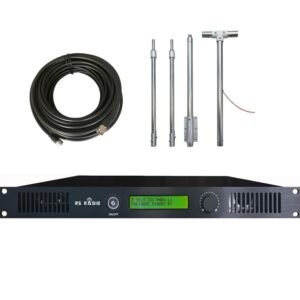
1000W FM Transmitter
Professional 1000-watt FM broadcast transmitter featuring high efficiency, low heat, and stable long-distance transmission — ideal for community and regional radio stations.
The transmitter unit price provides your starting point. The RS 1000W transmitter costs $1890 from the manufacturer including free shipping to most countries. This direct pricing eliminates distributor markups that can add 50-80% to retail costs. I compared pricing from multiple sources – retail distributors charge $3200-4500 for equivalent 1000W transmitters. One distributor quoted $4200 for a transmitter with identical specifications to the RS unit. Buying direct from RS at $1890 saves $2310 on the transmitter alone. That saving covers your entire antenna system and most installation costs. The RS transmitter includes 5-year warranty, technical support, and FCC/CE certification.
Antenna selection significantly impacts both performance and cost. A 1-bay dipole antenna costs $325 providing basic omnidirectional coverage suitable for testing or temporary installations. A 2-bay antenna costs $830 offering improved gain and better coverage for small permanent stations. A 4-bay circular polarized antenna costs $1600 delivering professional performance with 20-30% better coverage than basic dipoles – I recommend this for most 1000W installations. A 6-bay antenna costs $2660 providing maximum gain for large-area coverage requirements. A church I worked with initially bought a 1-bay antenna then upgraded to a 4-bay after six months when they realized coverage gaps. They spent $1925 total on antennas ($325 + $1600) when buying the $1600 4-bay initially would have saved $325 plus installation labor costs.
Cable costs depend on quality grade and required length. For 1000W transmitters, you should use LMR-600 cable which costs around $9-12 per meter. A typical 30m installation requires $270-360 in cable, while a 50m run costs $450-600. Never use cheaper RG-8 cable with 1000W transmitters — it causes high signal loss and can overheat.
I visited a station that used $150 worth of RG-8 cable with their 1000W transmitter. The cable became very hot and their real coverage reached only around 18-20km when they expected 25-30km. After replacing it with proper LMR-600 costing $330, the overheating problem disappeared and their coverage improved to the normal 25-30km range. The $180 extra investment delivered a major improvement in performance and reliability.
| Component | Price Range | Recommended Choice |
|---|---|---|
| 1000W transmitter | $1890 | RS direct from manufacturer |
| Antenna | $325-$2660 | 4-bay $1600 for 1000W |
| Cable 30m | $270-$360 | LMR-600 for low loss |
Tower or mast installation costs vary depending on height, location, and construction requirements. A basic 12–15m guyed mast often costs around $800–1200 in many regions. A professional 25–35m tower with proper concrete foundation typically ranges from $2000–4000. Heights above 40m can become significantly more expensive due to structural and safety requirements. For most 1000W FM transmitter installations, a 25–35m tower provides an effective balance between cost and real-world coverage. Most stations using 1000W power achieve about 25–30km coverage with antennas at 25–30m height under normal terrain conditions. Raising antenna height improves coverage, but the gains are gradual, not dramatic—moving from 15m to 30m height often increases range by roughly 6–10km depending on terrain and obstacles. This upgrade is usually more cost-effective than buying additional transmitters or increasing power output.
Supporting components add necessary costs to complete a 1000W FM transmitter installation. For example, commercial-grade N-type connectors typically sell for around US$10–20 each, and you may need 2-4 of them, so total connector cost could be around US$20–80. A good RF lightning arrestor or surge protector costs approximately US$30–70, depending on specification and brand. Mounting brackets, hardware and grounding equipment may add another US$30–100. Altogether, these supporting parts often cost US$80–200, yet they provide essential protection and proper system connections. Skipping or under-specifying surge protection and quality connectors may expose your transmitter and feed-line to serious loss or damage in a lightning event — potentially costing far more than the initial savings.
Complete system costs for turnkey 1000W installations typically range $4500-7500. This includes the RS transmitter at $1890, a 4-bay antenna at $1600, 30m LMR-600 cable at $330, connectors and protection at $200, a 30m tower at $2400, and professional installation labor at $1000-1500. I completed a turnkey 1000W installation in Kenya for $6200 total. The station reaches 48km covering 220,000 people. The investment of $0.028 per listener reached provides excellent value for community broadcasting. Starting with proper components throughout saves money long-term versus buying cheap equipment that requires replacement within 1-2 years.
Contact RS directly at sales@fmradiotx.com or WhatsApp +86 188 4203 6851 for detailed quotes matching your specific requirements. Provide your desired coverage area, terrain type, and any existing infrastructure. RS can recommend optimal component combinations and provide package pricing. Custom packages often include compatible components at better pricing than buying items separately. I always start with a detailed quote before purchasing – this ensures all components work together properly and helps avoid expensive mistakes.
How far can different wattage FM transmitters reach?
You may need to understand coverage distances for various power levels. Choosing the right wattage prevents buying too little or too much power.
FM transmitter coverage depends heavily on antenna height and terrain conditions—not just power. With a 30-meter antenna on flat ground in a normal residential area, real-world results typically look like this: 15W systems cover about 1–3 km, 50W reaches 3–5 km, 100W reaches 7–12 km, 300W reaches 15–20 km, 500W reaches 20–25 km, and 1000W reaches around 25–30 km. Higher powers extend farther, with 1500–2000W reaching roughly 30–60 km, and 3000–5000W reaching about 40–80 km.
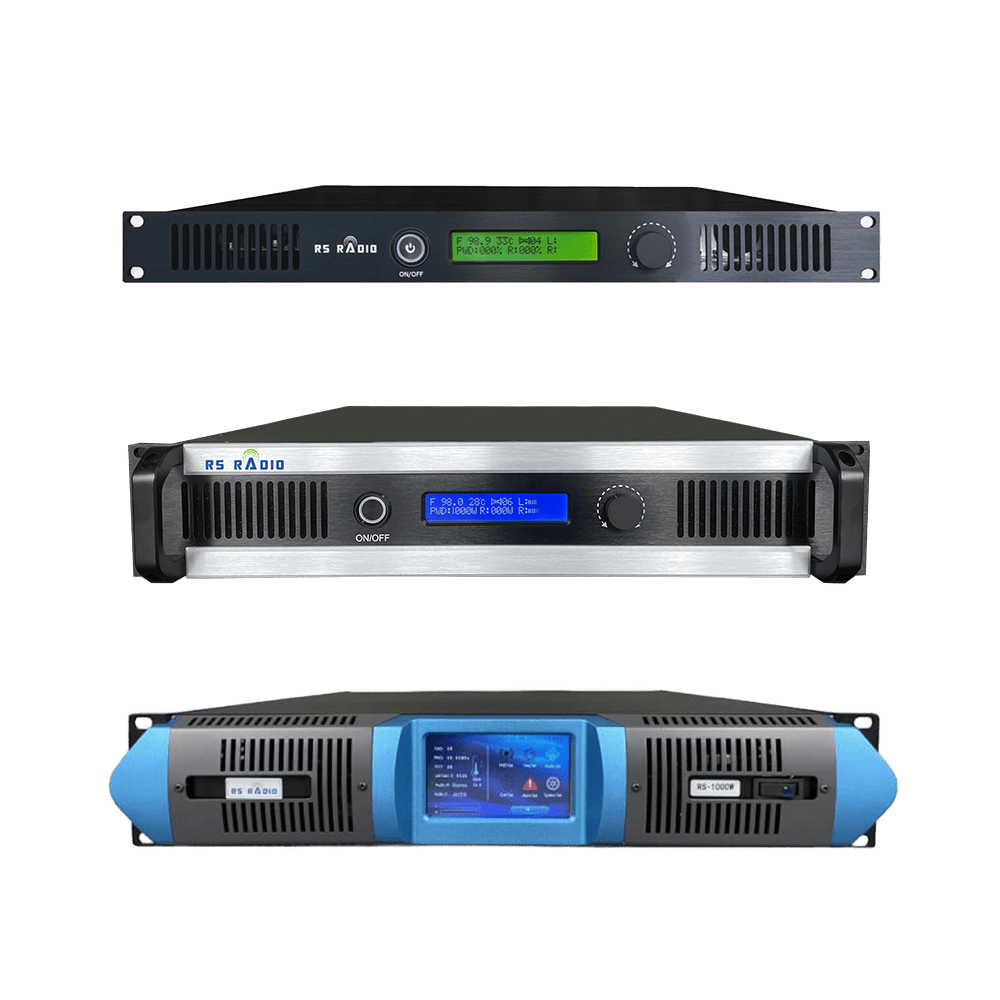
I get asked about power versus coverage almost daily. People often overestimate what they need or buy too little power then struggle with weak signals later.
Start with the smaller transmitters if you only need local coverage. Our 15W complete kit at $249 covers about 1-3km reliably. Last month a church bought this kit for their parking lot broadcasts – they needed to reach 500 parking spaces within 800 meters. Perfect fit. The 50W transmitter at $488 pushes out to 3-5km which works for small neighborhoods. I sold one to a school in Manila – they cover their entire campus plus the residential area next door reaching about 8,000 students and families.
The 100W transmitter at $650 gets you into 7-12km range. This power level handles most small towns. A customer in Kenya uses one to cover his town of 35,000 people spread across 9km. He mounted the antenna on a water tower at 25m height and gets solid coverage everywhere in town. The 300W at $1339 jumps up to 15-20km coverage. I worked with a community station in Ghana that upgraded from 100W to 300W – their coverage went from 8km to 18km overnight. They added four villages to their listening area.
Mid-range power levels cover cities and regions. The 500W transmitter at $1560 reaches 20-25km which covers most small cities. A station in Mexico uses one to broadcast across their city and three nearby towns – total population around 120,000. The 1000W at $1890 gets you 25-30km in typical terrain. One customer in Tanzania told me their 1000W reaches 28km to the north where it’s flat farmland but only 19km to the east where hills start. Terrain matters more than most people realize.
The 1500W transmitter at $2230 covers 25-38km depending on your location. I have a customer in Texas running one – he gets 35km coverage across flat prairie land. Another customer in Colombia with the same transmitter only reaches 24km because of mountains. Big difference. The 2000W at $3580 pushes 30-60km. That wide range comes from terrain variations – flat areas get the longer distances while hilly areas get shorter coverage.
Higher power serves serious broadcasters. The 3000W transmitter at $6800 covers 40-70km for regional coverage. I installed one in Nigeria last year that reaches 65km across relatively flat terrain serving maybe 800,000 people. The 5000W at $9900 gets you 60-80km range. A station in Congo uses one mounted on a 45m tower – they reach 76km and cover parts of three provinces. These bigger transmitters need proper tower infrastructure and professional installation.
| Power | Typical Range | Price | Best For |
|---|---|---|---|
| 15W-50W | 1-5km | $249-$488 | Parking lots, campuses |
| 100W-300W | 7-20km | $650-$1339 | Towns, small cities |
| 500W-1500W | 20-38km | $1560-$2230 | Cities, multi-town areas |
| 2000W-5000W | 30-80km | $3580-$9900 | Regional, provincial |
Power and distance don’t scale evenly. Doubling power doesn’t double your coverage. A 500W reaches maybe 22km. Doubling to 1000W gets you 28km – only 27% more distance for twice the power. Physics works against you here. The signal spreads out in all directions so doubling power just can’t double distance. I explain this to customers when they want to jump from 1000W to 2000W expecting to double coverage. It doesn’t work that way.
Location beats power most of the time. A 500W transmitter on a hilltop covers more area than a 1000W transmitter in a valley. I measured this myself with a customer in Colombia. His old 1000W setup in the valley reached 18km. We moved everything to a hill 8km away – same 1000W transmitter now reaches 34km. Moving the location doubled his coverage better than doubling his power would have done.
Choose power based on actual coverage needs not guesses. Measure from your transmitter site to the farthest point you need to reach. Add 20% for safety margin. Check what terrain sits between you and your target area. Hills block signals completely – no amount of power pushes through a mountain. I helped a station planning 35km coverage – they have flat terrain so a 1500W transmitter works perfectly. Another station needed 35km but had mountains in the way – they needed 3000W to punch through the gaps and cover their target area.
Think about your budget and growth too. A 500W at $1560 might cover your current needs but if you plan to expand in two years maybe buy the 1000W at $1890 now. The $330 difference saves you from buying and installing a second transmitter later. I generally tell customers to buy one power level higher than their minimum need if budget allows. Gives you room to grow and handles unexpected coverage gaps from terrain or buildings.
Conclusion
A 1000 watt FM transmitter reaches 40-60km radius covering 200,000-500,000 population making it ideal for regional community stations, city-wide Christian broadcasting, and commercial operations. The RS 1000W transmitter costs $1890 with complete systems running $4500-7500 including 4-bay antenna at $1600, quality cables, and tower installation. Increase range through proper antenna height, quality components, and optimal locations. Contact RS at sales@fmradiotx.com or WhatsApp +86 188 4203 6851 for custom quotes.