How far will a 100 watt FM transmitter reach?
I remember when I first started working with FM transmitters at RS. A customer called me and asked this exact question. He wanted to set up a church radio station. I could hear the excitement in his voice. But I also heard the worry.
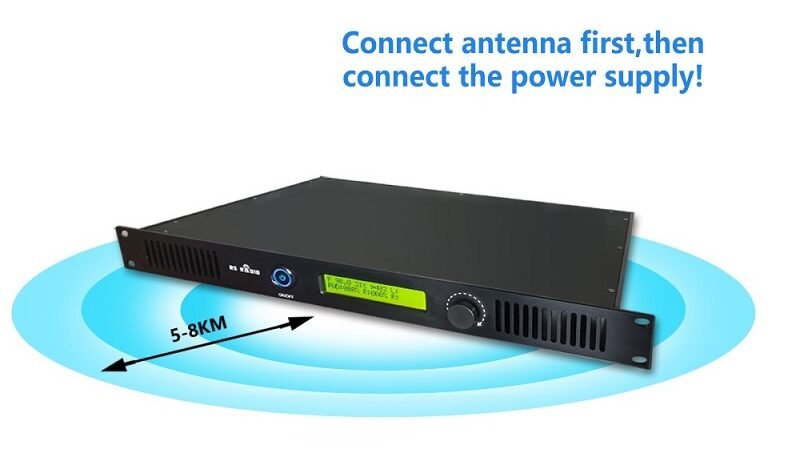
A 100W FM transmitter typically reaches 10 to 15 kilometers (6 to 9 miles) in ideal conditions. The actual range depends on antenna height, terrain, obstacles, and the quality of your equipment. In urban areas with buildings, you might see 5-8 km. In flat, open areas, you could reach up to 20 km.
I’ve helped hundreds of customers set up their stations over the years. The distance question always comes first. But here’s what most people don’t realize. The transmitter is just one part of the system. Your antenna matters just as much. Your cable matters too. I’ll show you exactly how to maximize your coverage.
How Can I Increase the Range of My 100W FM Transmitter?
I learned this lesson the hard way. My first station barely covered 3 kilometers. I thought the transmitter was broken. But it wasn’t. The problem was my setup.
You can increase your 100W FM transmitter range by using a higher antenna, choosing better cable, selecting the right antenna type, and positioning your station on elevated ground. These changes can double or even triple your effective coverage area without buying more power.
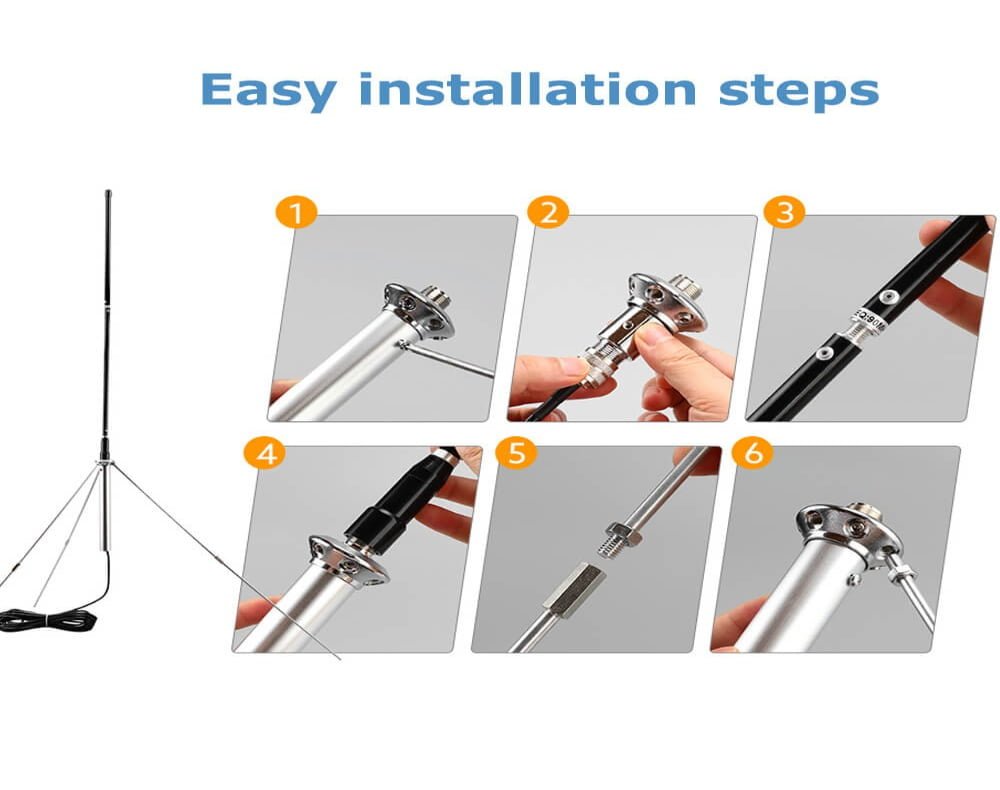
Let me break down each method. I use these techniques at RS every day.
Antenna Height Is Everything
The higher your antenna sits, the farther your signal travels. This is basic physics. Radio waves travel in straight lines. The earth curves away from your signal. A higher antenna means your signal can travel farther before the earth blocks it.
Here’s what I recommend:
| Antenna Height | Expected Range Increase |
|---|---|
| 10 meters | Baseline (10-15 km) |
| 20 meters | +30% range (13-20 km) |
| 30 meters | +50% range (15-23 km) |
| 50 meters | +80% range (18-27 km) |
I once helped a customer in Tanzania. His transmitter sat on the ground floor. He only covered 4 kilometers. We moved the antenna to the roof. The height was 25 meters. Suddenly he covered 18 kilometers. Same transmitter. Same power. Just height.
Cable Quality Matters More Than You Think
Many people use cheap cable. This is a huge mistake. Bad cable loses your signal before it even reaches the antenna. We use LDF4-50A cable at RS. This is professional grade. The signal loss is minimal.
Compare different cables:
| Cable Type | Loss per 10m at 100MHz |
|---|---|
| RG58 (thin) | 3.0 dB |
| RG213 (medium) | 1.8 dB |
| LDF4-50A (pro) | 0.7 dB |
Every decibel you lose in the cable means less range. If you lose 6 dB in your cable, you lose half your effective power. Your 100W transmitter becomes a 50W transmitter. Choose quality cable.
Pick The Right Antenna Design
Not all antennas are equal. A dipole antenna radiates in all directions. This is good for covering an area around you. A Yagi antenna focuses the signal in one direction. This is good for reaching far in one specific direction.
At RS, we recommend:
- Circular polarized antenna for general broadcast
- Dipole for local coverage
- Yagi for directional needs
- Colinear for maximum vertical reach
I had a customer who wanted to cover a valley. He used a dipole first. The signal went everywhere but not far enough into the valley. We switched to a directional antenna. Problem solved.
What Type of Radio Station Is a 100W FM Transmitter Best For?
I talk to customers every week. They all have different needs. But 100W fits a sweet spot for many uses.
A 100W FM transmitter is ideal for community radio stations, church broadcasts, small town stations, campus radio, drive-in theaters, and local event broadcasting. It provides enough power to cover a small city or large rural area without the high cost of larger transmitters.
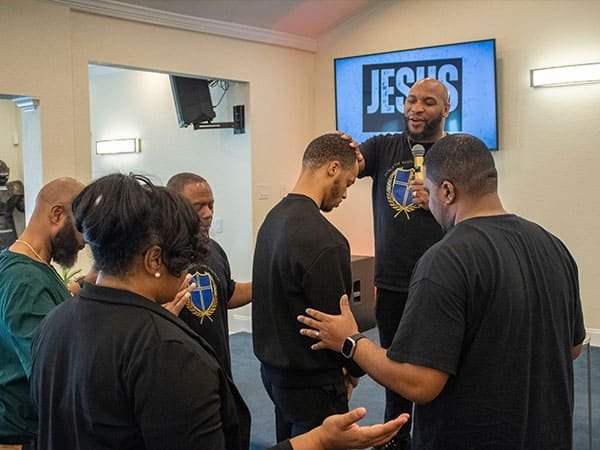
100W transmitter for churches
Community And Local Broadcasting
Most community stations serve 20,000 to 50,000 people. A 100W transmitter covers this perfectly. You reach your audience without wasting power. You also save on electricity costs.
We sell many 100W units to churches. A typical church wants to reach members within 10 kilometers. They broadcast sermons, music, and community announcements. The 100W transmitter handles this easily.
I remember a pastor from Nigeria who bought our 100W unit. He told me later that his entire town could now hear the Sunday service. People in their homes, in their cars, at work. The community felt more connected. That’s the power of local radio.
Educational And Campus Radio
Universities love 100W transmitters. A campus usually spans 2-3 kilometers. The 100W signal covers the entire campus plus the surrounding student housing areas. Students can tune in from dorms, libraries, or while walking between classes.
One university in Mexico uses our RS-CM100W for student broadcasting. They run it 16 hours a day. It’s been working for 3 years without issues. The students learn real broadcasting skills. The station reaches about 15 kilometers into the city.
Drive-In Theaters And Special Events
Drive-in theaters need a specific type of coverage. The transmitter sits near the screen. Cars park within 500 meters. A 100W transmitter has more than enough power for this. In fact, you might only run it at 30W or 50W. But having the 100W capacity means the signal stays strong even with many cars absorbing the signal.
How Much Does a 100 Watt FM Transmitter Cost?
I get price questions every day. People worry about the investment. Let me be honest about costs.
A quality 100W FM transmitter costs $650 from RS as direct manufacturer pricing. Complete 100W station kits with all necessary equipment cost $800-1,400 depending on included components. Retail distributors charge $1,200-1,800 for transmitter units alone. Buying direct from the manufacturer saves you significant money while getting the same 5-year warranty and technical support.
What You Get With The RS 100W Transmitter
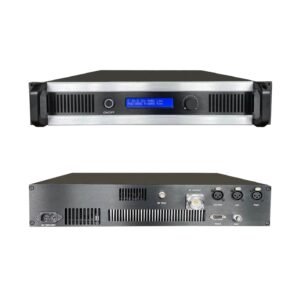
The RS 100W transmitter is a standard 1U rack mount unit with LED indicators and button controls. It does not have a touchscreen – touchscreen models start at 300W power level. The 100W unit includes all essential features for professional broadcasting. You get Phase Lock Loop frequency control, stereo encoding, adjustable output power from 0-100W, and built-in SWR protection.
Here’s what comes standard:
| Feature | RS 100W Model |
|---|---|
| Display type | LED indicators |
| Control type | Buttons and knobs |
| Power adjustment | 0-100W continuously adjustable |
| Frequency range | 87.5-108MHz |
| Warranty | 5 years |
| Price | $650 transmitter only |
The 5-year warranty sets RS apart. Most manufacturers offer only 1 year. We stand behind our products because they last. I have stations running RS 100W transmitters for 8+ years without major problems.
Complete Station Package
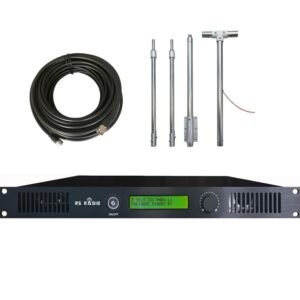
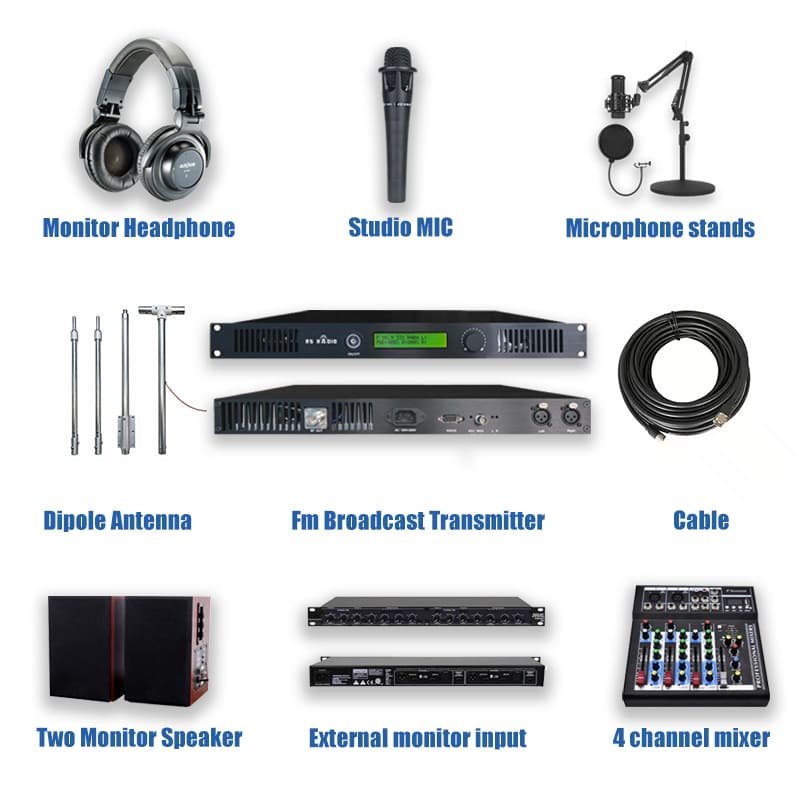
You need more than just the transmitter. RS offers complete station kits that include everything needed to start broadcasting immediately. A complete 100W station kit includes: transmitter, antenna, 30m cable, 4-channel mixer, audio processor, speakers, microphone, headset, microphone stand, and pop filter.
Complete packages range from $800-1,400 depending on component quality and specific configuration. This covers all essential equipment to begin professional broadcasting. You avoid the hassle of sourcing compatible parts separately. Everything arrives tested and ready to connect.
Operating Costs Stay Low
A 100W transmitter consumes about 200-250 watts of electricity when running. That equals two or three light bulbs. Running 24/7 costs $15-30 monthly depending on your local electricity rates. This makes FM broadcasting incredibly affordable for long-term operation.
How Far Can Different FM Transmitter Power Levels Reach?
People get confused about power and distance. They think more power always means more range. That’s partly true but not linear.
Different power levels provide different coverage ranges with 30m antenna height on flat terrain. A 7W transmitter covers 1-2km, 50W covers 3-5km, 100W covers 7-12km, 300W covers 15-20km, 500W covers 20-25km, 1000W covers 25-30km, 2000W covers 30-60km, and 5000W covers 6080km. Doubling power increases range by roughly 40% not double.
%(FM transmitter power comparison)FM transmitter coverage by power level
Understanding The Power-Distance Relationship
The relationship between power and distance follows physics laws. When you double transmitter power, you don’t double coverage distance. You increase distance by about 1.4 times. This surprises people but it’s how radio waves work.
Real world coverage comparison:
| Power Level | Typical Range | Best Application |
|---|---|---|
| 7W-15W | 1-5km | Personal, drive-in theater |
| 50W-100W | 3-12km | Small community, church |
| 300W-500W | 15-25km | City station, commercial |
| 1000W-2000W | 25-60km | Regional broadcaster |
| 3000W-5000W | 40-80km | Major commercial station |
I always tell customers to think about actual needs first. Don’t buy a 1000W transmitter if you only need 15km coverage. You waste money on equipment, electricity, and probably break local regulations. Most countries restrict transmitter power strictly.
Real World Coverage Examples
Theory differs from reality significantly. I’ve installed transmitters in many environments. Results vary enormously based on local conditions.
In flat Kansas farmland with a 30m tower, a 100W transmitter reached 19km reliably. Perfect terrain. No obstacles. Good antenna height. Signals traveled far.
In dense urban areas with tall buildings, the same 100W transmitter covered only 10km. Buildings blocked and absorbed signals. Antenna height was limited to 18m because of roof restrictions. But 10km still covered the target urban area adequately.
In mountainous regions, coverage becomes unpredictable. A 100W transmitter might reach 25km down one valley direction. But only 4km toward a mountain. Terrain matters enormously. Hills completely block FM signals creating coverage shadows.
Choosing The Right Power Level
Start by mapping your coverage needs. Draw your target area on a map. Measure distance from transmitter location to the farthest point you must reach. Add 20% as safety margin. Now pick the power level matching that distance.
For most small radio stations, 100W hits the sweet spot. It costs reasonable money. It covers meaningful areas of 7-12km radius. Many countries allow 100W without special licensing. At RS, we sell more 100W units than any other single power level except 300W. These sizes match what real customers actually need.
Conclusion
A 100W FM transmitter reaches 7-12km in typical conditions with proper antenna setup, making it ideal for community stations, churches, small town broadcasts, and neighborhood coverage. The RS 100W transmitter costs $650 for the unit alone or $800-1,400 for complete station kits including all broadcasting equipment. Focus on good antenna height and quality installation to maximize your coverage. Contact sales@fmradiotx.com or WhatsApp +86 188 4203 6851 for detailed quotes.